EN_US
 Іспанська
 Русский
 Арабська
 Португальська мова для Бразилії
 Французька
 Індонезійська
 Турецька
 Тьєнг В'єт
 Малайська мова
 Українська






 Технічна аналітика
How to Choose a Beam Lifting Gantry Crane Duty Class for Precast Yards
Огляд
In modern bridge precast component construction, scientific selection of beam lifting gantry crane duty class directly affects yard safety and ROI. As core heavy equipment for handling, storing, and loading, model selection must not blindly pursue large capacity or high specs. Production rhythm, lifting frequency, and actual load distribution are deep foundations for determining duty class and lifecycle stability.
This paper systematically breaks down how production rhythm affects equipment selection logic. It analyzes essential differences between overall machine and mechanism duty classes. Combined with mainstream standards (ISO, FEM, EN) and real project cases, it offers a six-step selection method and condition matrix. This guide helps bridge builders avoid common mistakes and optimize equipment efficiency and economic costs.
Are you planning your yard’s beam lifting gantry crane configuration?
Provide beam weight, target daily output, shifts, and site conditions to HSBRIDGE for initial advice matching real working conditions.
[Click to Upload Project Details]
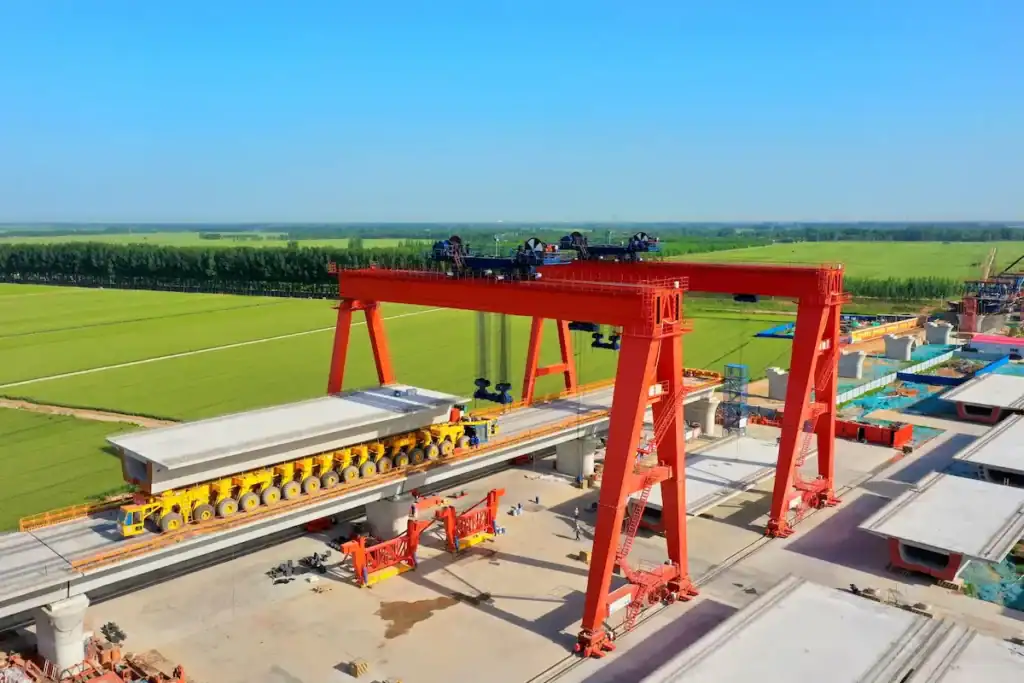
What Is a Beam Lifting Gantry Crane Duty Class? Which Metrics Need Attention During Selection?
In bidings and technical exchanges for precast yard equipment, “duty class” often causes confusion for designers and buyers. Many people define needs by “what capacity crane to buy”, ignoring actual work intensity throughout the lifecycle.
Basic Meaning of Beam Lifting Gantry Crane Duty Class
Simply put, beam lifting gantry crane duty class describes overall busy degree and load spectrum during design service life.
According to national standards (GB/T 3811) and international specifications, overall machine duty class relies on two core dimensions:
- Utilization Class: Total number of work cycles or total operating hours during design life.
- Load State: Size and distribution of loads carried during actual operations (i.e., load spectrum coefficient).
This means beam lifting gantry crane duty class cannot be determined solely by rated capacity or speed. Two 200-ton beam lifting gantry cranes show distinct needs: one operates continuously at full load while another handles light loads occasionally. Their structural fatigue life and electrical system design requirements will differ drastically.
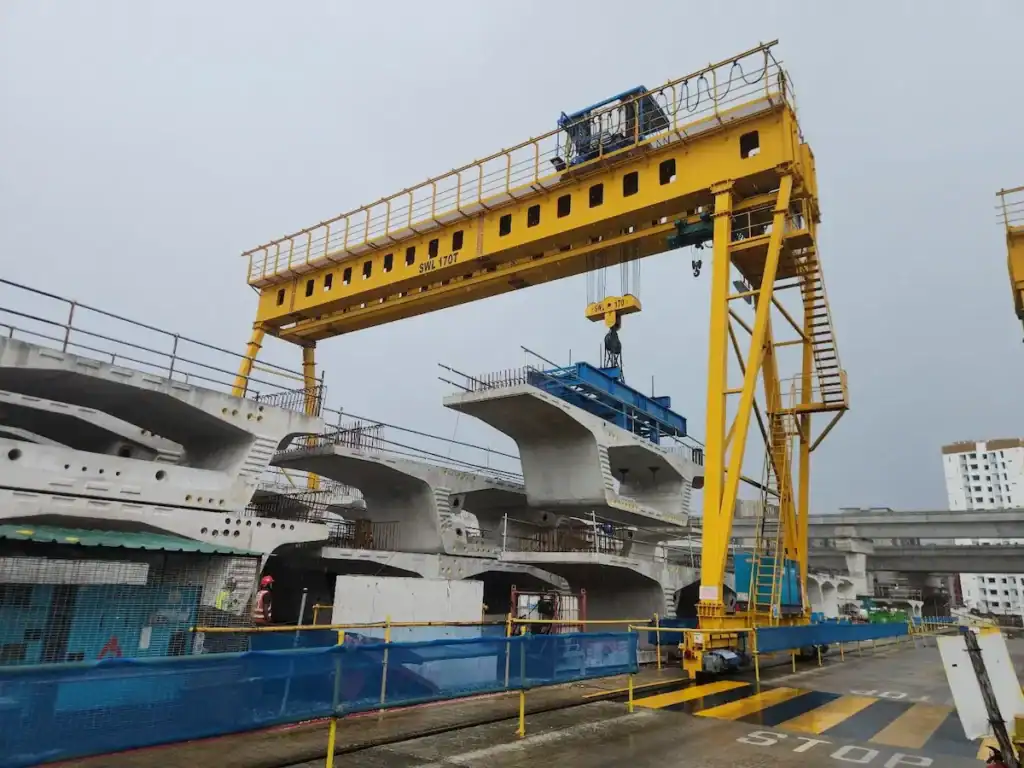
What Is the Difference Between Overall Machine Duty Class and Mechanism Duty Class?
In actual selection, many users easily confuse “overall machine duty class” with “mechanism duty class”. In fact, the overall machine represents the frame, while mechanisms act as specific muscles with clear labor division:
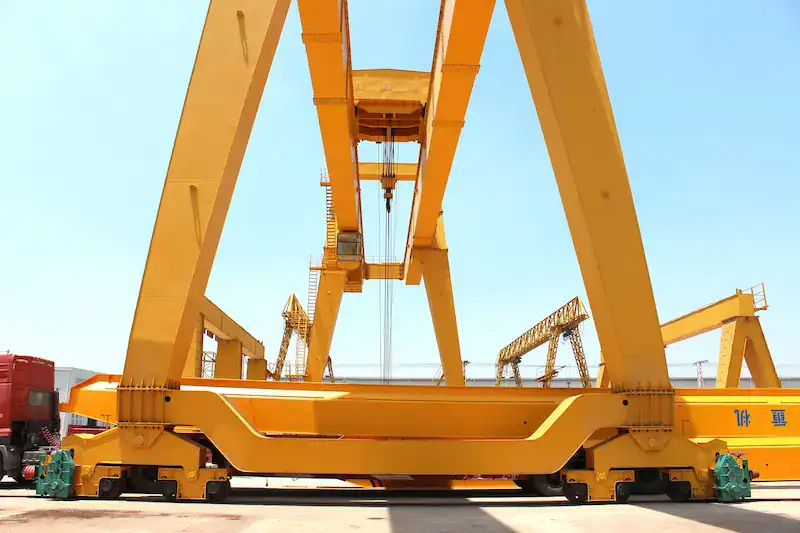
- Overall machine duty class: Evaluates total operating intensity, structural fatigue, and comprehensive load condition of the entire beam lifting gantry crane. It determines material selection and safety margins for major metal structures like main girders and support legs.
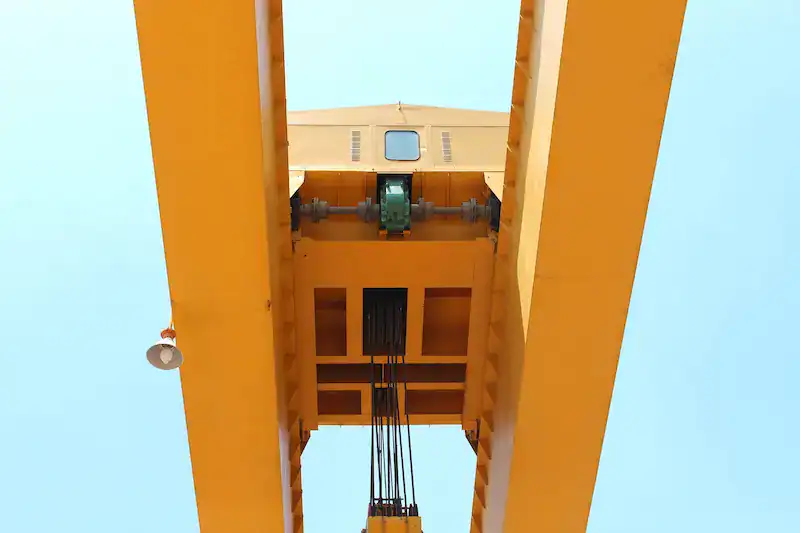
- Hoisting mechanism duty class: Represents the core burden of the beam lifting gantry crane. It focuses on single-lift load size, lifting frequency, lifting speed, and braking or thermal wear under frequent heavy loads. Usually, hoisting mechanism busy degree ranks among the highest in the system.
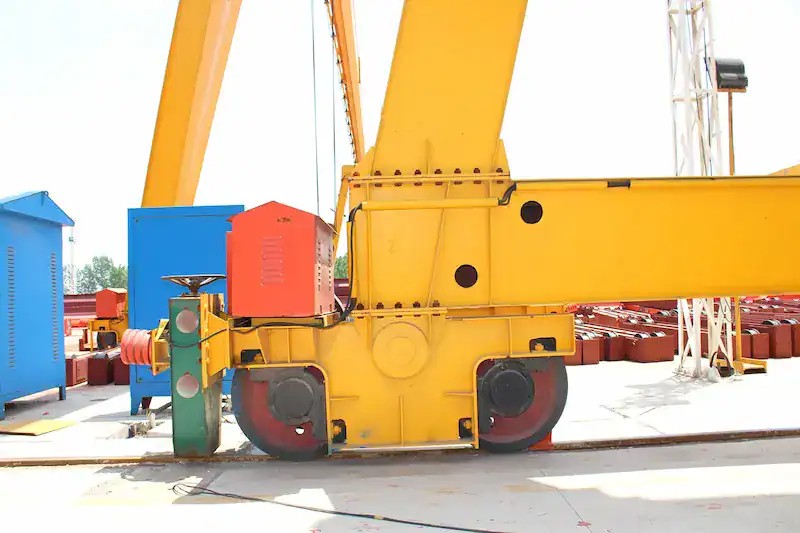
- Traveling mechanism duty class: Includes gantry traveling and trolley traversing mechanisms. It focuses on total travel distance over the lifecycle, mechanical wear from frequent starts and stops, and wind resistance on outdoor tracks or roads.
- Other key mechanisms (such as steering and hydraulic systems): For tire-type beam lifting gantry cranes or complex bridge equipment, auxiliary components like steering cylinders, hydraulic motors, and travel reducers require individual evaluation to prevent local failure from causing system downtime.
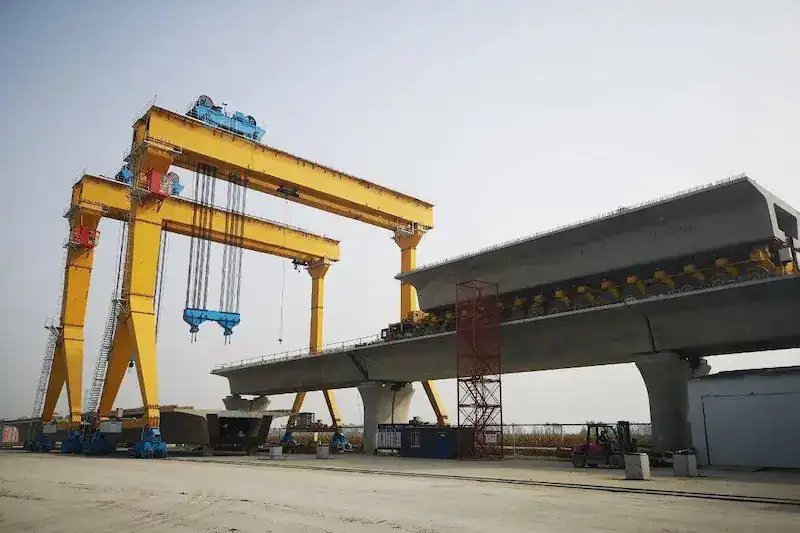
Why Might Beam Lifting Gantry Cranes with the Same Capacity Need Different Duty Classes?
To understand this logic intuitively, we can compare two yard scenarios with different beam lifting gantry crane duty classes:
| Вимір порівняння | Scenario A: Low-Frequency, Dispersed Small/Medium Yard | Scenario B: High-Intensity, Continuous High-Speed Railway/Expressway Yard |
| Номінальна ємність | 150 tons | 150 tons |
| Product Types | Segmental beams, small box girders with variable specifications | Standard high-speed railway 32m box girders, single and stable |
| Average Daily Lifting Frequency | 2 to 4 times per day, dispersed operations | 10 to 16 times per day, multi-shift continuous operations |
| Load Spectrum Characteristics | Long-term light or medium load states, occasional full load | Long-term near rated capacity (high proportion of heavy load) |
| Core Design Focus | Balance transfer flexibility with cost performance to meet peak demands | High structural fatigue life, continuous heavy load resistance, low failure rate |
| Selection Logic | Select a lower overall machine duty class to meet requirements | Benchmark high-intensity duty class to enhance electrical and structural safety margins |
As shown above, rated capacity only indicates how much weight the equipment can lift. Duty class determines how long equipment can operate under high intensity. Blindly pursuing low costs by selecting a low duty class causes girder deflection, reducer wear, and electrical faults in high-yield yards. Conversely, blindly over-specifying a high duty class in low-frequency yards leads to unnecessary initial investment waste.
How Does Beam Yard Production Rhythm Affect Beam Lifting Gantry Crane Duty Class?
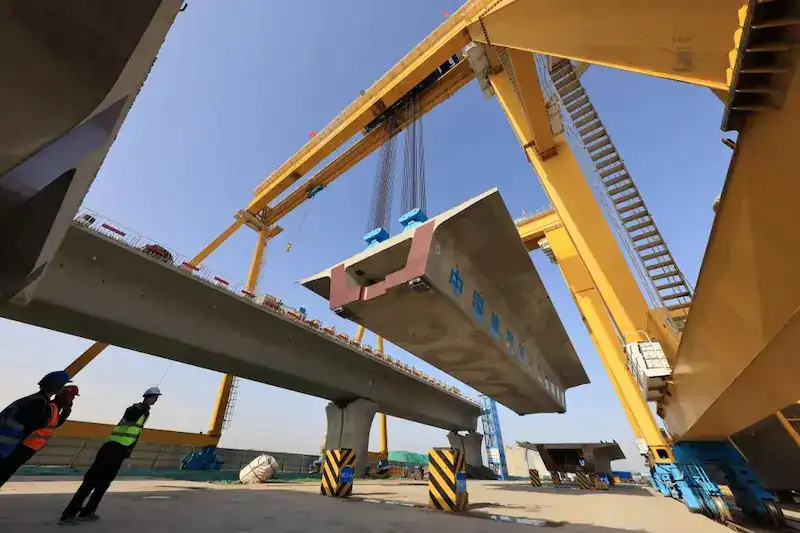
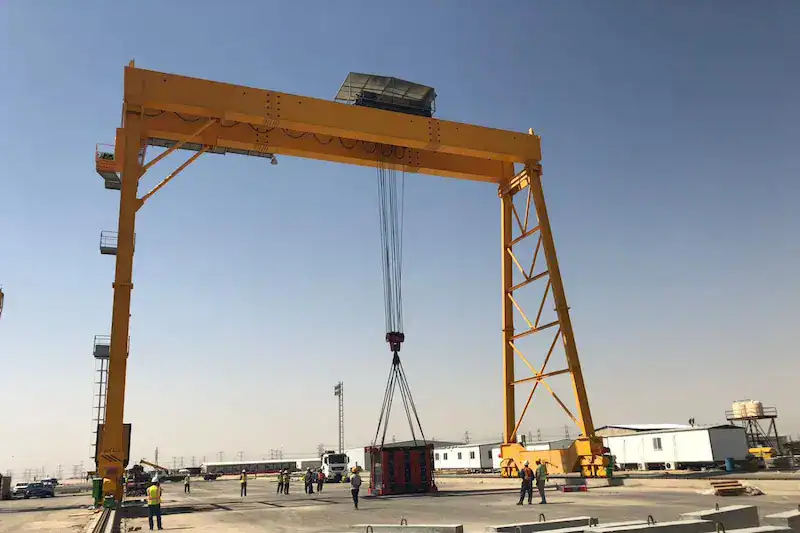
In actual bridge and precast yard construction, production rhythm acts like the pulse of the entire site. As high-frequency main equipment, козловий кран для підйому балки duty class selection is directly bound by this rhythm. Specifically, this impact can be analyzed from the following dimensions:
- Direct Link Between Rhythm and Lifting Frequency: Yard daily output determines box girder transfer counts from demolding, storage, to loading. Faster rhythms mean denser “lift-travel-lower-return” cycles per unit time, leaving mechanical and electrical systems no extra rest.
- Rough Calculation Logic for Work Cycles: Cycles cannot be estimated purely by subjective feeling. Calculations usually require design annual output, construction period, and transfer counts per girder. For a 500-girder annual yard with 3 lifts each, annual cycles exceed 1500, directly setting utilization class up.
- Invisible Power of Load Spectrum: Some builders think lifting capability suffices, but load spectrum dictates fatigue life. If lifting 32m standard beams plus occasional heavy non-standard parts, high loads accelerate fatigue, requiring safety margins.
- Dynamic Balance Between Flat and Peak Periods: Sites often fluctuate with slow starts, rushed midterms, and trailing ends. Selecting by average rhythm causes overload during peak months, triggering thermal trips or girder micro-deformation. Therefore, scientific selection must use peak daily output as a baseline to ensure smooth continuous operations.
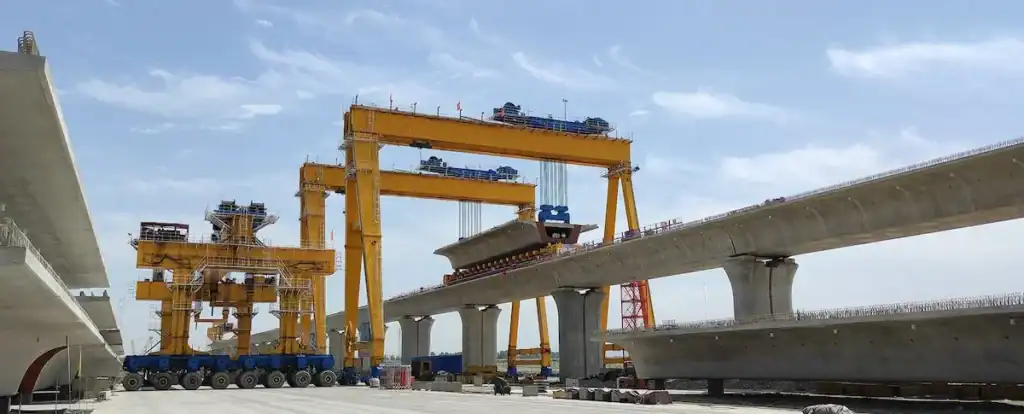
How to Determine Beam Lifting Gantry Crane Duty Class Based on Yard Production Rhythm?
Theory aside, practical selection requires engineers to follow a clear operational path. To translate production rhythm into feasible beam lifting gantry crane duty class technical parameters, follow this six-step calculation process:
| Selection Step | Data to Verify | Основне призначення |
| Step 1: Confirm Lifting Conditions | Max beam weight, spreader weight, rated capacity, beam dimensions | Confirm basic lifting and geometric clearance capabilities |
| Step 2: Count Work Cycles | Daily/peak cycle counts, annual work days, expected service life | Evaluate equipment utilization class throughout its lifecycle |
| Step 3: Evaluate Load Spectrum | Usage ratios of different weights, heavy load frequency | Assess actual load states and analyze fatigue strength demands |
| Step 4: Calculate Mechanisms Separately | Work time and load for hoisting, longitudinal/traverse travel | Determine duty class requirements for independent mechanisms |
| Step 5: Verify Site Conditions | Travel distance, speed, braking, environment, track/ground conditions | Validate scheme adaptability to ensure safety under adverse conditions |
| Step 6: Conduct Engineering Verification | Design standards, structural checks, fatigue and safety requirements | Confirm final configuration to ensure compliance and smooth delivery |
Through these progressive steps, buyers and designers can strip inflated parameters. This aligns beam lifting gantry crane duty class seamlessly with actual yard capacity. This avoids financial waste from over-design and prevents site shutdowns from under-configuration.
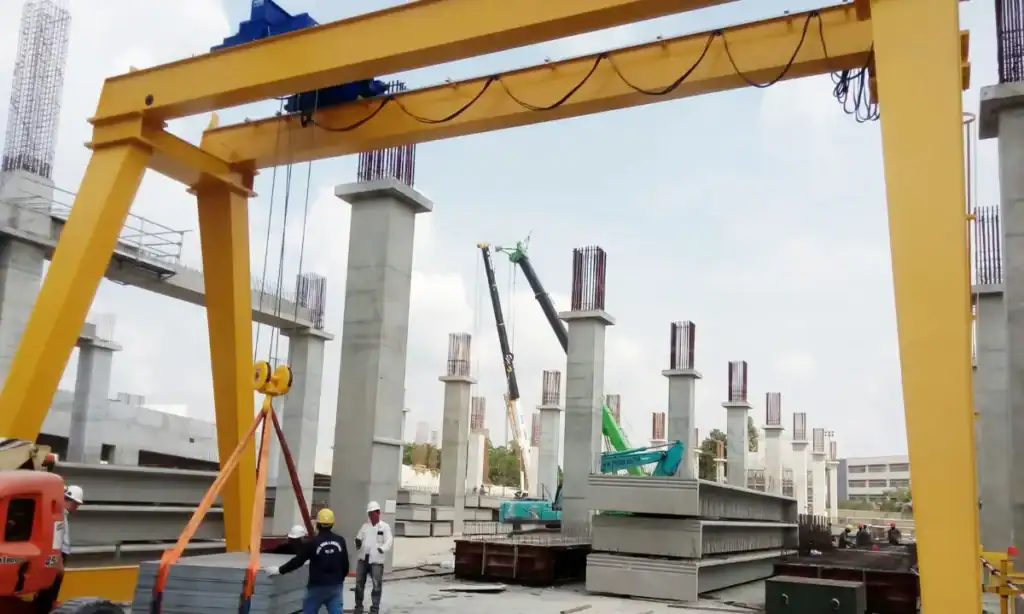
What Are the Selection Focus Differences Under Different Yard Production Rhythms?
In real precast yard planning, project volume, urgency, and terrain create completely different production rhythms. Applying duty classes without considering actual operational scenarios easily leads to equipment incompatibility. The table below outlines working characteristics and selection focuses for four typical rhythms for reference:
| Yard Operation Scenario | Main Working Characteristics | Selection Focus |
| Intermittent Production | Lifting tasks are dispersed, leaving equipment with idle time. | Verify actual work cycles and load distribution to avoid high-cost config burdens. |
| Stable Batch Production | Regular lifting/moving tasks per shift with patterned rhythms. | Evaluate daily cycles and annual utilization to balance durability and maintenance costs. |
| High-Capacity Continuous Operation | Extremely high frequency, long high-load runs like double shifts. | Check hoisting and travel mechanism duty classes to boost thermal, braking, and fatigue margins. |
| Fluctuating Capacity Yards | Calm normal periods with multiplied tasks during production peaks. | Review peak task distribution and design requirements to ensure smooth sprints. |
- Special Note: This table clarifies selection logic across different production scenarios. In actual engineering, never rigidly assign fixed overall machine (A-class) or mechanism (M-class) duty classes. Final equipment configuration must rely on lifting data, applicable standards (like GB/T 3811, ISO 4301), and strict calculations.
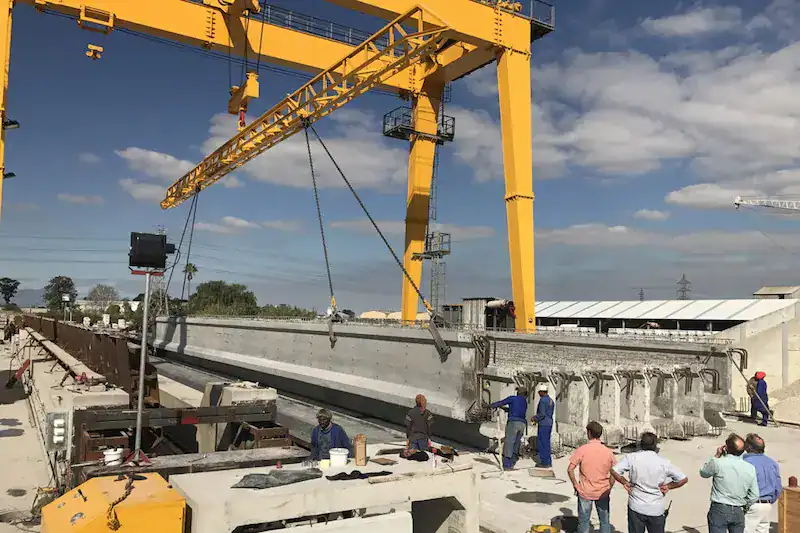
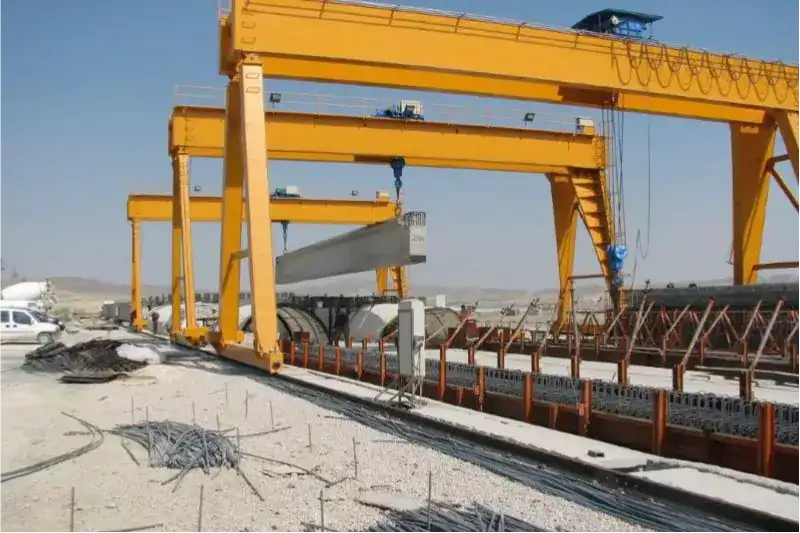
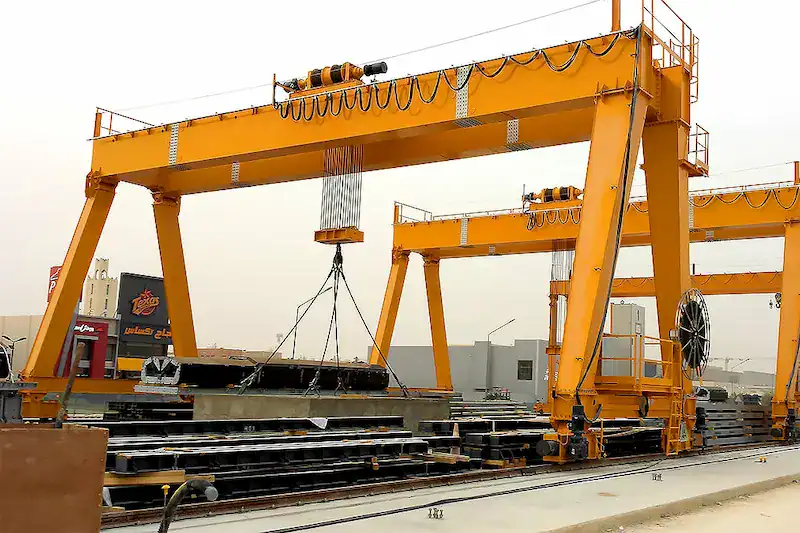
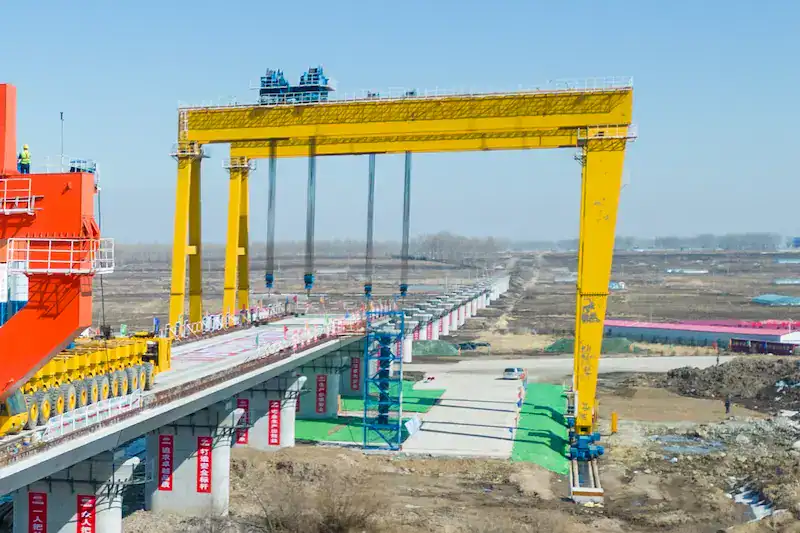
Common Misconceptions in Duty Class Selection for Beam Lifting Gantry Cranes
In technical communications and field projects, we often see construction teams or procurement personnel make mistakes when selecting a beam lifting gantry crane duty class. This not only creates future maintenance nightmares, but can also trigger severe safety hazards. Below are five typical pitfalls:
- Misconception 1: Focusing solely on rated capacity while ignoring duty class. Many believe that “being able to lift 200 tons solves everything”, ignoring whether the equipment can “lift 200 tons 10 times daily for 3 consecutive years”. Rated capacity only sets the single-lift limit, whereas duty class defines equipment durability and fatigue life.
- Misconception 2: Calculating daily output without breaking down actual work cycles. Equating “producing a few beams daily” to “equipment working a few times” is highly inaccurate. From demolding to storage and loading, a beam lifting gantry crane requires multiple lifts, traverses, and gantry travels per beam. Rough estimates without process cycle breakdowns lead to under-specification.
- Misconception 3: Confusing overall machine and mechanisms, ignoring load ratios and operating differences. Assuming a set overall class means all mechanisms are permanently sorted is wrong. Hoisting mechanisms face continuous heavy load heat, while traversing mechanisms often operate under light loads. Ignoring load differences causes premature wear in core mechanisms.
- Misconception 4: Replacing peak demands with average rhythms, ignoring expansion allowances. Selecting by average annual rhythm seems reasonable, but rushing deadlines, multi-shifts, or capacity expansion will overload equipment, cause frequent thermal trips, or deform girder structures. Selection must reserve margins for peaks.
- Misconception 5: Comparing initial purchase prices only, ignoring lifecycle costs (LCC). Choosing a low duty class saves money upfront, but frequent downtime, early replacement of reducers and brakes, and high repair labor costs quickly consume initial savings.
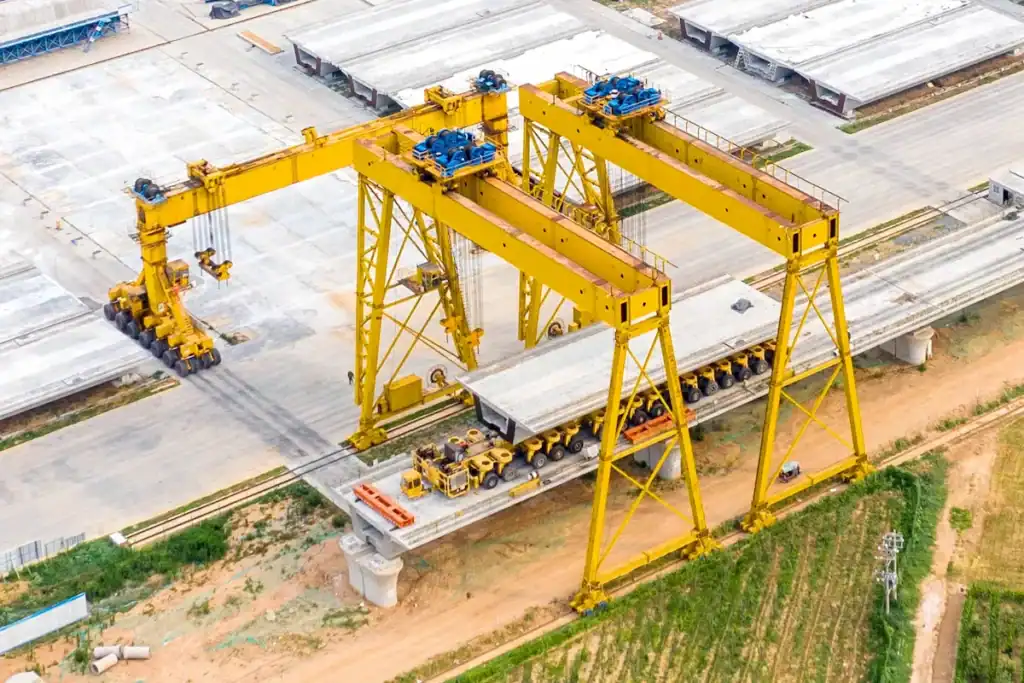
Product Advantages of HSBRIDGE Beam Lifting Gantry Cranes and Bridge Construction Equipment
In overseas large-scale bridge and railway construction, HSBRIDGE has established a design and manufacturing system strictly benchmarked against international standards for complex yard conditions. Its core advantages show in four key areas:
- Strict Alignment with International Standards for Design Compliance: Full-series structural design follows МСЕ 1.001 Rules for the Design of Hoisting Appliances (focusing on stress states, load spectrum classification, and fatigue strength calculations). Metal structures and mechanism selections strictly meet EN 15011:2011+A1:2014 Cranes – Bridge and Gantry Cranes safety standards. Manufacturing precision fully implements ISO 12488-1 (crane tolerances and stiffness measurement), ensuring main girder deflection is tightly controlled under full and dynamic loads for precise positioning.
- Deep Customization and All-Condition Adaptability: For space limitations and site transfer needs, HSBRIDGE supports non-standard customization for spans (20m to 50m), lifting heights, and cantilever lengths. Both tire-type beam lifting gantry cranes and rail-mounted gantry cranes accurately match duty classes (such as FEM 2m to 3m / ISO A5 to A6) based on work frequencies, preventing resource waste or underperformance.
- Comprehensive Safety Protection and Structural Stability: Equipment strictly enforces EN 13135 crane safety requirements, featuring limit switches, overload limiters, anemometers, and anti-wind rail clamps. Main girders use optimized box structures with internal stiffeners for high torsional and bending resistance, offering exceptional long-term stability in windy, humid outdoor environments.
- Lifecycle Support from Custom Design to Project Delivery: HSBRIDGE provides turnkey engineering services covering load spectrum analysis, scheme design, Finite Element Analysis (FEA), factory pre-assembly inspection, overseas installation guidance, and operator training to ensure immediate high-efficiency production upon arrival.
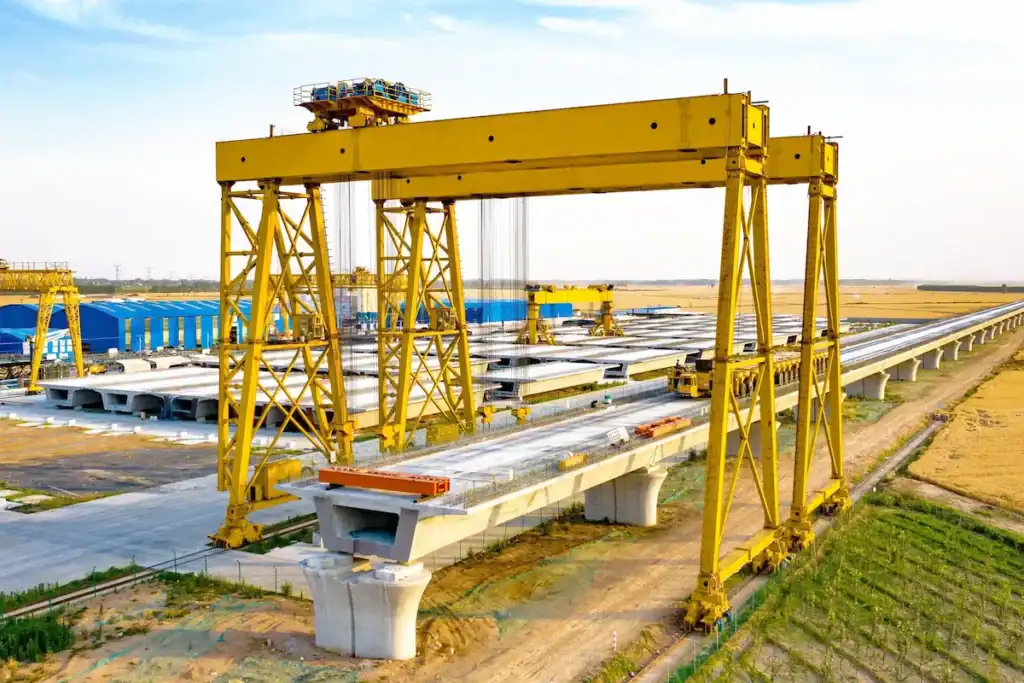
Classic HSBRIDGE Project Cases: Equipment Selection and Delivery in Real Engineering
In international bridge construction applications, paper parameters must withstand harsh working conditions. The following two overseas benchmark projects demonstrate HSBRIDGE’s selection wisdom and delivery strength under different rhythms and load demands:
Indonesia Project: 450-Ton Beam Lifting Gantry Crane Case
- Client Name / Project Background: General contractor for key sections of Indonesian national expressways and sea-crossing bridges (including top local infrastructure companies like PT Wijaya Karya (Persero) Tbk).
- Project Type and Country: Indonesia / Large box girder lifting and loading project for expressway precast yards.
- Equipment Configuration and Quantities:
- Model: HSBRIDGE 450T double-trolley synchronized beam lifting gantry crane (two units operating together achieve 900-ton dual lifting).
- Main Parameters: Rated capacity 450t, span 32m, lifting height 22m.
- Quantity: 2 complete systems operating cooperatively.
- Selection and Delivery Highlights: This yard presented a high-capacity, continuous operation scenario (12 to 16 standard box girders transferred daily). The HSBRIDGE technical team increased hoisting and gantry travel mechanism duty classes (corresponding to FEM 3m / ISO A6) per FEM standards, equipping a high-precision PLC dual-crane synchronization system. The equipment has maintained zero unplanned downtime in tropical, salt-spray environments, safely completing heavy box girder transfers.
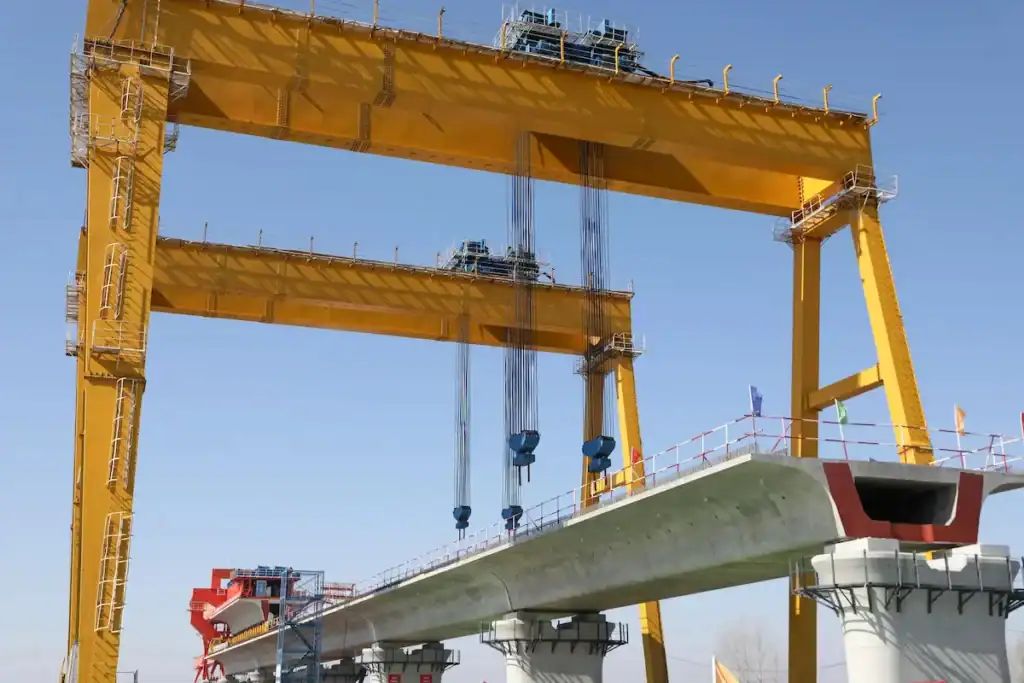
200-Ton Beam Lifting Gantry Crane Applied in Malaysia Railway Construction
- Client Name / Project Background: Designated precast plant and construction consortium for the Malaysia East Coast Rail Link (ECRL) project.
- Project Type and Country: Malaysia / National mainline railway standard T-beam precast and storage yard.
- Equipment Configuration and Quantities:
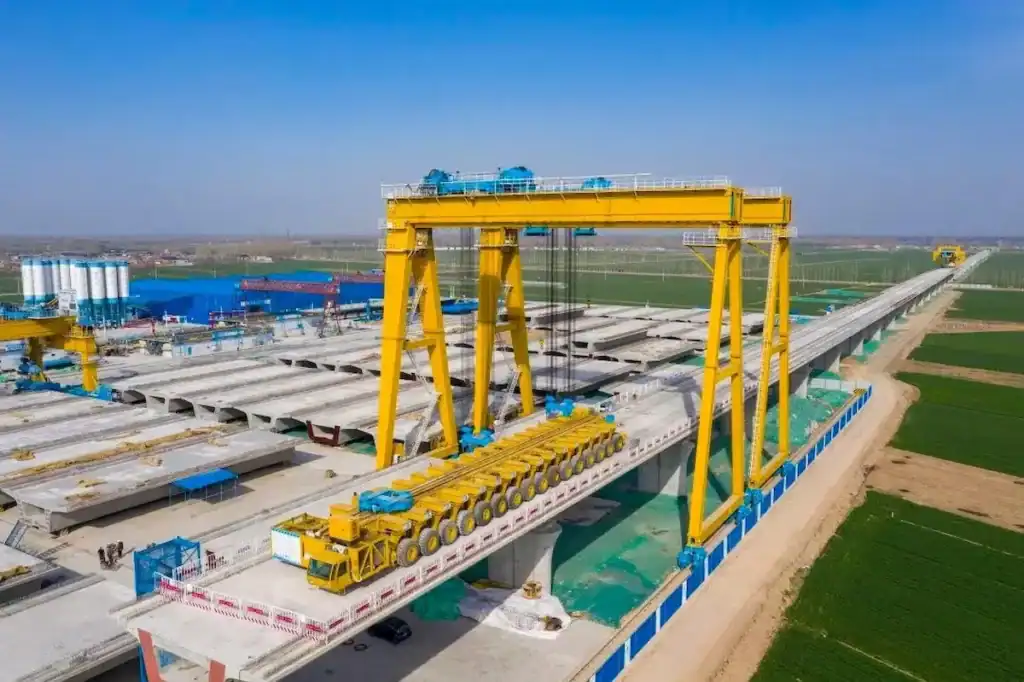
- Model: HSBRIDGE 200T A-type rail-mounted beam lifting gantry crane.
- Main Parameters: Rated capacity 200t, span 28m, lifting height 16m, duty class benchmarked against ISO A5/A6.
- Quantity: 4 identical units distributed across main precast bases along the line.
- Selection and Delivery Highlights: To tackle year-round heat and severe tropical downpours in Malaysia, the project adopted variable-frequency soft-start systems and anti-corrosion electrical configurations (moisture, mold, and salt-spray resistant) to reduce mechanical impacts during heavy-load starts and stops. Through accurate measurements of yard batch rhythms, the equipment ensured efficient turnover from demolding to storage and loading, while optimizing lifecycle costs (LCC) and earning high praise from owners.
Висновок
Precast yard construction is a systematic project. Equipment selection determines present construction efficiency and directly impacts lifecycle operating costs and safety baselines. As discussed, blindly stacking tonnage or applying fixed parameters can no longer address complex modern bridge construction.
Scientifically calculating production rhythm, accurately analyzing load spectra, and reasonably setting beam lifting gantry crane duty class serve as core keys to balancing performance and investment. From initial data benchmarking to later engineering verification, rigorous control over every detail builds a solid foundation for efficient yard operations.
Get Professional Duty Class Selection Support Now
If you are planning a new precast yard or facing upgrade pain points, contact the HSBRIDGE engineering team. We will customize cost-effective beam lifting gantry crane duty class solutions based on your capacity goals, spans, and operating features.
[Контакти HSBRIDGE Engineering Experts Now]
Recommended Reading
[Як працює козловий кран для підйому балок? Технологія обробки мостових балок]
Step into modern precast yards to explore hydraulic systems, hoisting and traveling mechanisms, and multi-crane synchronization technology behind efficient bridge component handling.
Найчастіші запитання
Q1: What is the core difference between beam lifting gantry crane duty class (e.g., A5, A6) and rated capacity?
В: Rated capacity sets max single-lift load capacity. Beam lifting gantry crane duty class determines operating frequency, intensity, and service fatigue life under continuous operations.
Q2: What happens if production speeds up without upgrading the beam lifting gantry crane duty class?
В: Equipment faces severe over-fatigue. This causes reducer overheating, rapid brake wear, frequent electrical faults, main girder deflection, or structural fatigue cracking, leading to downtime losses.
Q3: Why do cranes with identical capacities vary widely in price and lifespan?
В: High beam lifting gantry crane duty class models use stricter steel standards, higher safety factors, rigorous fatigue calculations, and advanced electrical components, offering lower lifecycle costs.
Q4: How to scientifically calculate work cycle counts in precast yards?
В: Base calculations on annual output multiplied by transfer steps per girder (demolding, storage, loading). Combine valid construction days and peak daily output for accurate cycle metrics.
Q5: What standards apply to harsh overseas environments like heat, rain, or salt spray?
В: Beyond beam lifting gantry crane duty class checks, require IP55+ tropicalized electricals, epoxy anti-corrosion coatings, and EN 13135 safety and wind-resistance standards for reliable outdoor operations.
Цей документ надано лише для довідки. Конкретні операції повинні суворо відповідати місцевим законам і нормам, а також інструкціям з експлуатації обладнання.

Отримайте експертну пораду щодо вашого проєкту мосту
Наша інженерна команда має багаторічний досвід роботи з обладнанням для будівництва мостів. Дозвольте нам допомогти вам знайти правильне рішення.