EN_US
 İspanyolca
 Русский
 العربية
 Portekizli Brezilya
 Fransızca
 Bahasa Indonesia
 Türkçe
 Tiếng Việt
 Bahasa Melayu
 Українська



 Teknik Bilgi
Beam Transporter vs. SPMT: A Complete Comparison of Structure, Function, and Applications
Genel Bakış
In heavy transport and bridge construction, many field engineers often confuse the technical boundaries of beam transporter vs. SPMT. Their core difference depends on design purpose. A ışın taşıyıcı is built specifically for precast girder erection. Meanwhile, SPMT acts as a universal building block for oversized cargo. In complex engineering, heavy beam transporters adopt multi-axle and modular design concepts from SPMT. Thus, the two are not entirely independent or mutually exclusive. This article deeply analyzes their structures, functions, and application scenarios. It compares equipment positioning, steering configurations, and construction tasks. This helps you accurately select equipment and evaluate plans in major projects.
Searching for heavy transport equipment for your bridge project?
Contact HSCRANE with your girder weight, dimensions, and site conditions. Get customized beam transport solutions tailored to your project needs.
[Click here to contact HSCRANE for the best solution]
What Is a Beam Transporter?
Definition and Main Functions of Beam Transporters
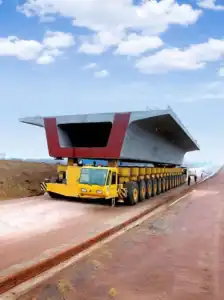
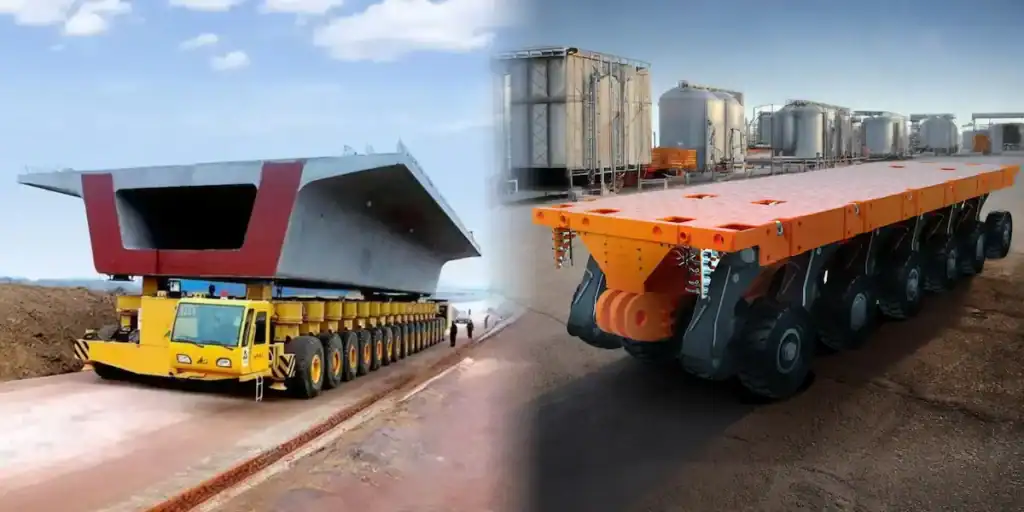
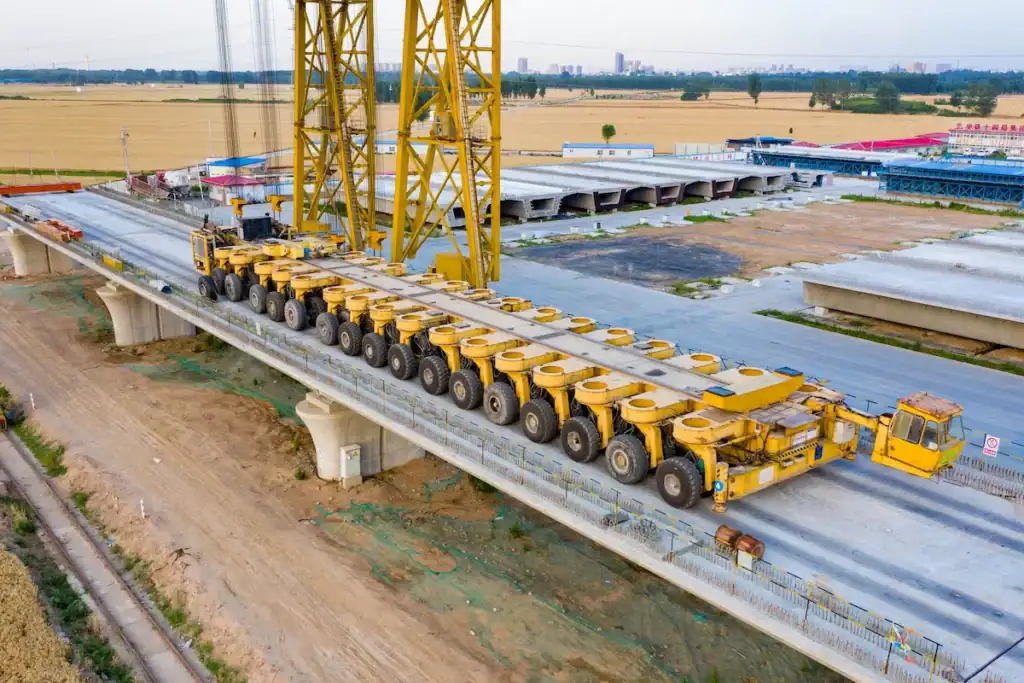
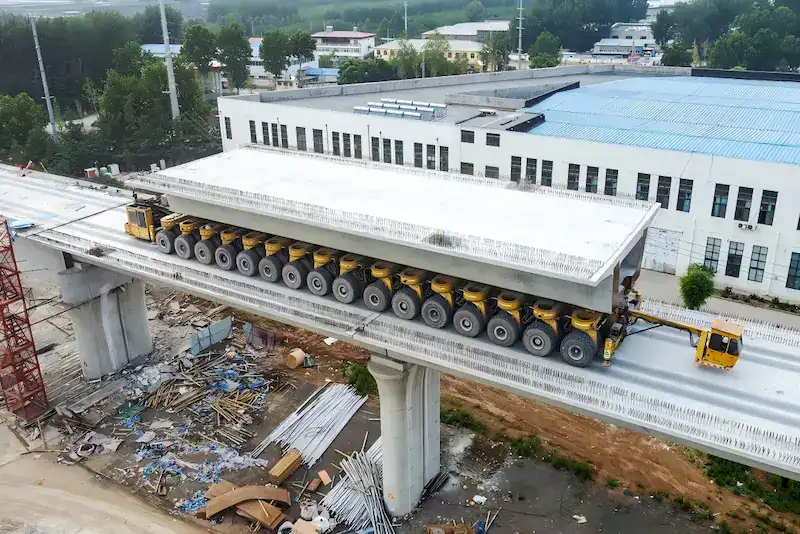
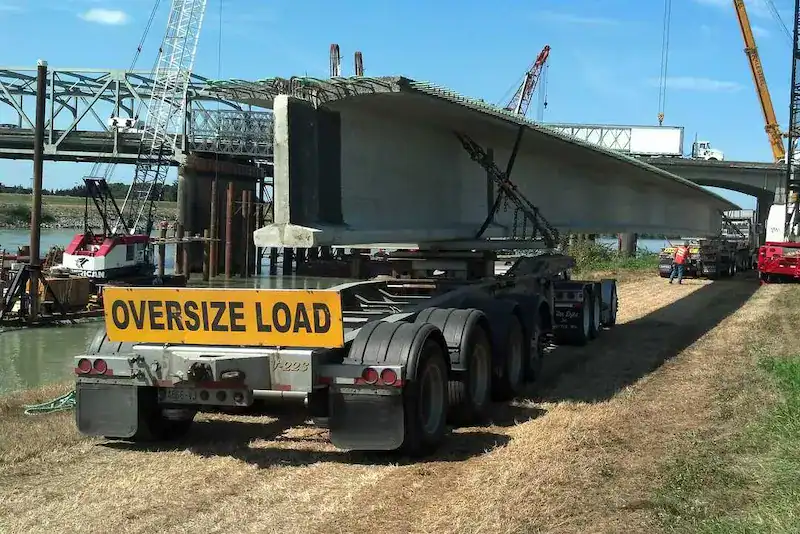
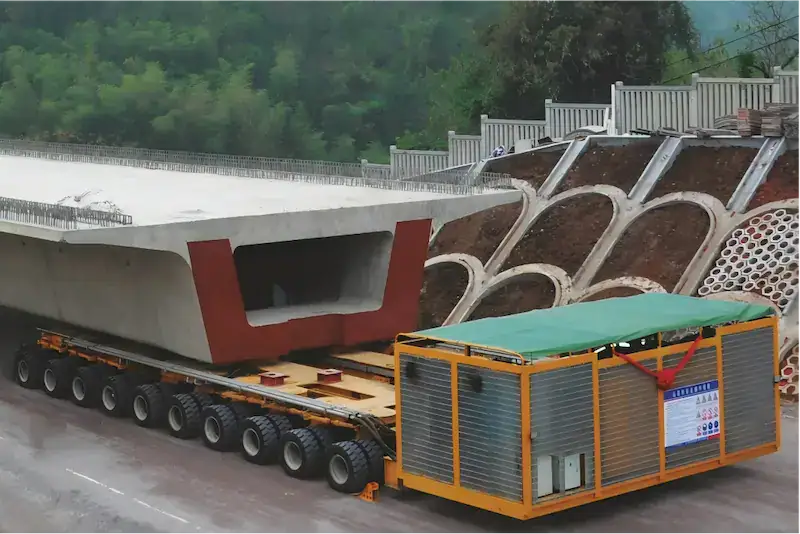
In bridge construction, beam transporters handle the first-mile to last-mile transport of precast girders. Simply put, a beam transporter is a heavy-duty special vehicle. It safely moves ultra-long and overweight precast components between the yard and site. During actual construction, beam transporters undertake two core tasks:
- Long-distance girder transfer: Move precast concrete box girders, T-beams, and bridge segments securely to erection sites.
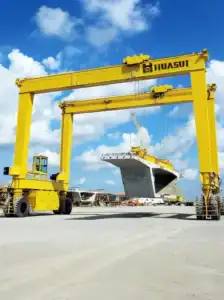
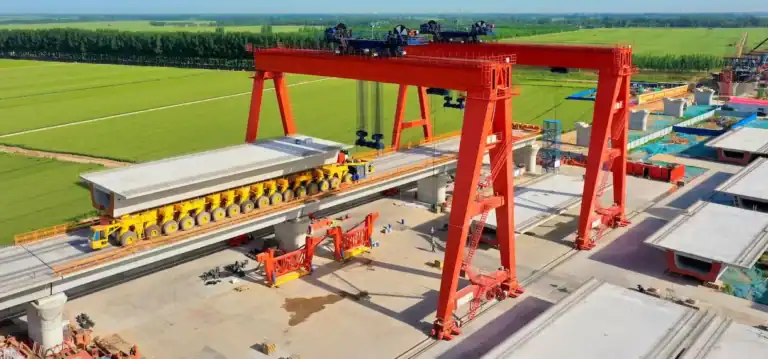
- Feeding girders to erection equipment: This key step distinguishes transporters from flatbed trucks. Beam transporters precisely enter beneath the köprü fırlatma vinci, kiriş kaldırma portal vinci, or cable crane to feed girders.
Main Structural Components of Beam Transporters
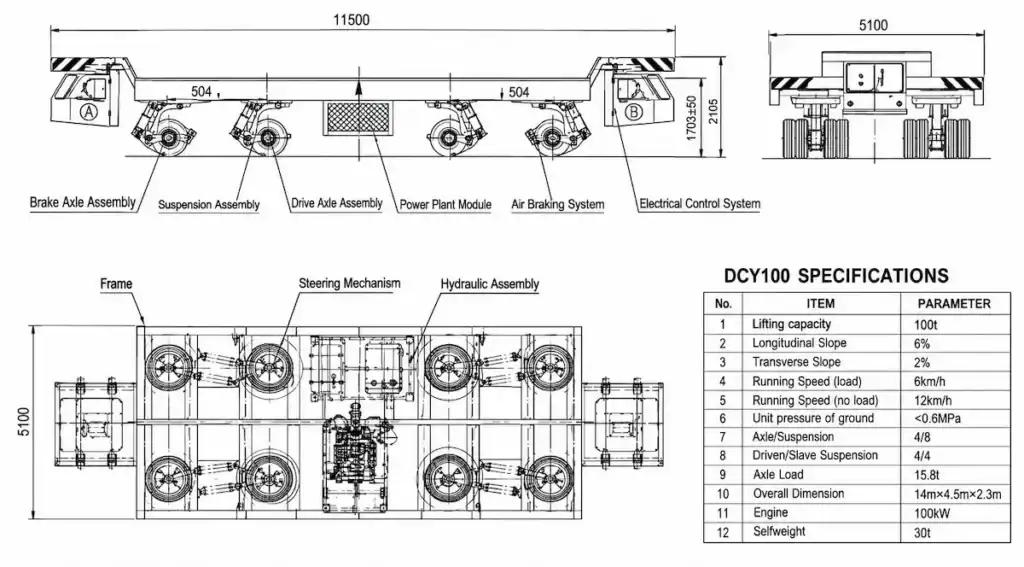
To maintain stability while carrying hundreds of tons, transporters use these core systems:
- Load-bearing frame: Uses high-strength welded box trusses or rigid longitudinal beams for strong anti-bending performance.
- Support devices: Features dedicated saddles and anti-overturning brackets to lock the girder and prevent tipping.
- Hydraulic system: Controls suspension lifting, leveling, and saddle fine-tuning to keep the vehicle level on uneven roads.
- Drive system: Powered by a diesel engine driving hydraulic motors for smooth starting and heavy climbing.
- Steering system: Uses multi-axle hydraulic or electronic steering to greatly reduce the turning radius on narrow curves.
- Braking system: Includes service, parking, and emergency brakes with hydraulic slowing to prevent runaway on slopes.
- Electrical control system: Features PLC control and wireless remotes for operators to monitor speed and axle load.
Typical Application Scenarios of Beam Transporters
| Uygulama Senaryosu | Transported Component Type | Construction Environment & Requirements |
| Expressway | Precast T-beams, box girders, small box girders | Temporary roads with steep slopes and sharp curves; requires good climbing and leveling. |
| Yüksek hızlı demiryolu | 32m/24m standard heavy box girders (up to 800-900 tons) | Extremely heavy loads requiring high stability; must coordinate with 900t erection machines or beam lifting gantry cranes. |
| Cross-sea/river bridge | Long-span precast steel box girders, concrete segmental girders | Involves trestles and barge piers; requires high corrosion resistance and precise micro-movements. |
| Urban viaduct | Steel-concrete composite beams, precast box girders, curved beams | Tight spaces and small turning radii; beam transporters need high load capacity and flexible steering. |
| Precast yard interior | Various newly cast beam bodies | Frequent short-distance moves and storage transfers; equipment must adapt to frequent stops and beam lifting gantry cranes. |
What Is a Self-Propelled Modular Transporter (SPMT)?
How SPMTs Work
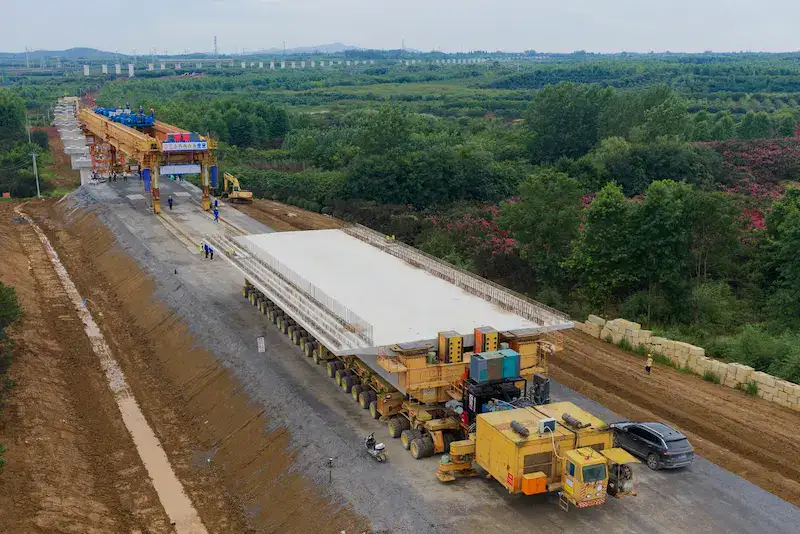
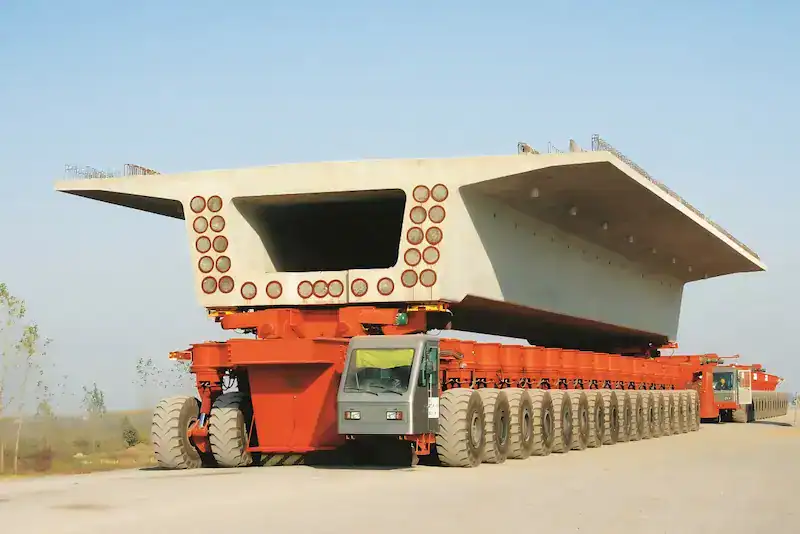
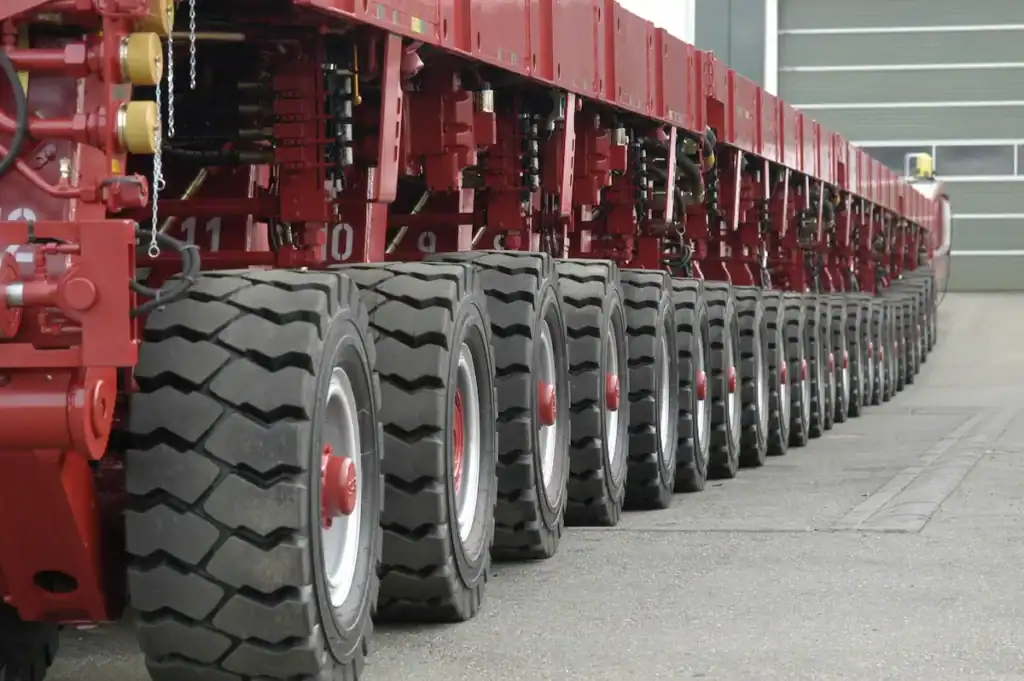
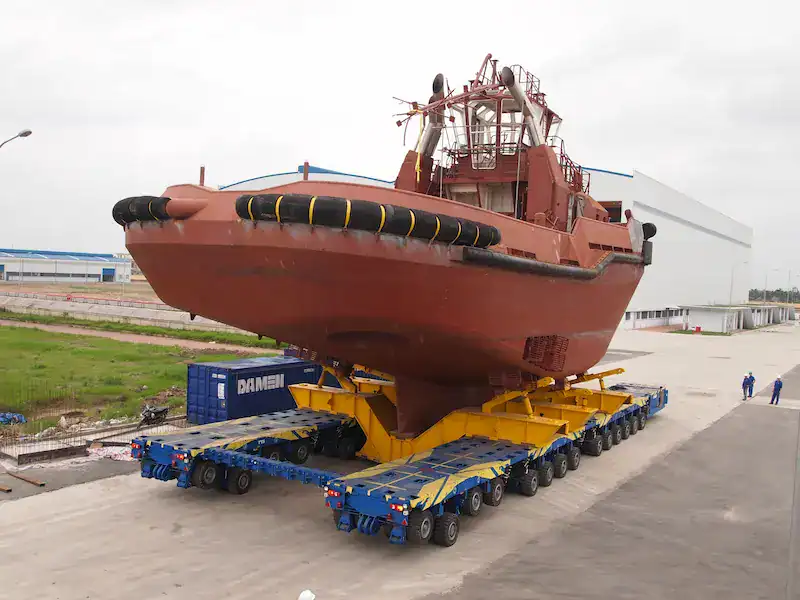
Self-propelled modular transporters are known as transformers in heavy transport. Their core design principle is modular assembly. An SPMT has no fixed front or cab. It consists of multiple independent hydraulic axle modules like 4-axle or 6-axle units. Each axle unit integrates hydraulic suspension, drive motors, and steering mechanisms. To move cargo from dozens to tens of thousands of tons, engineers combine modules lengthwise or crosswise. A central control system links all modules into one ultra-long or ultra-wide transporter.
Core Structure and Technical Features of SPMTs
- Modular assembly platform: High-strength steel modules connect via bolts or quick pins to build custom transport platforms.
- Hydraulic suspension and high-capacity axles: Independent hydraulic cylinders automatically balance axle loads and enable vehicle lifting to load cargo.
- Multi-directional steering system: Wheels rotate 360 degrees or plus-minus 100 degrees for Ackermann, crab, transverse, and carousel steering.
- Power pack unit: Independent diesel power packs provide strong hydraulic pressure for driving, steering, and lifting systems.
- Microcomputer synchronous control system: CAN bus networks connect dozens of axle units and power packs for millisecond response times.
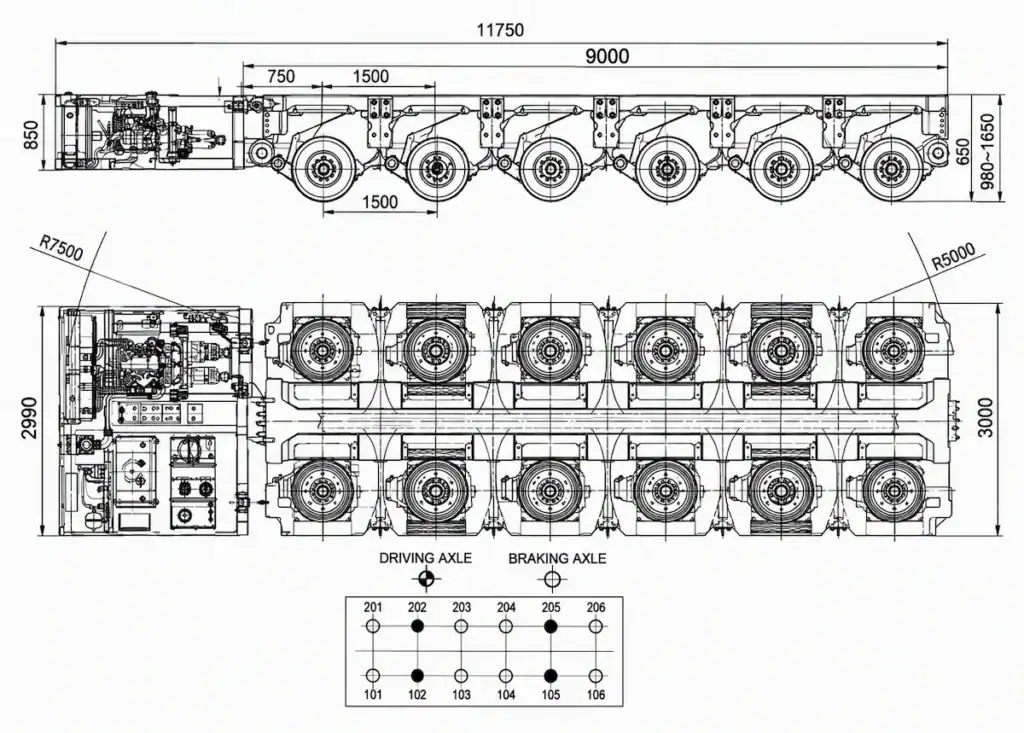
Main Application Fields of SPMTs
| Application Field | Typical Transported Cargo | On-Site Challenges & SPMT Advantages |
| Petrochemical & energy engineering | Hydroprocessing reactors, fractionators, large storage tanks | Thousands of tons in narrow spaces; crab and transverse modes allow precise positioning among pipes. |
| Offshore engineering & shipbuilding | Hull modules, offshore drilling platform sections, jackets | Frequent transfers between docks; hydraulic lifting enables direct roll-on/roll-off operations onto barges. |
| Wind power & new energy | Offshore wind substations, heavy wind turbine foundations | Huge size and high center of gravity; wide platforms use hydraulic suspension to prevent tipping. |
| Bridge construction & full replacement | Steel arch bridges, old bridge sections, elevated bridge decks | Accelerated bridge construction; SPMTs lift thousands of tons to restore traffic within hours. |
| Heavy industry & aerospace | Tunnel boring machines, transformers, rocket launch tower structures | Irregular shapes and offset centers of gravity; flexible axle layouts ensure perfectly balanced loads. |
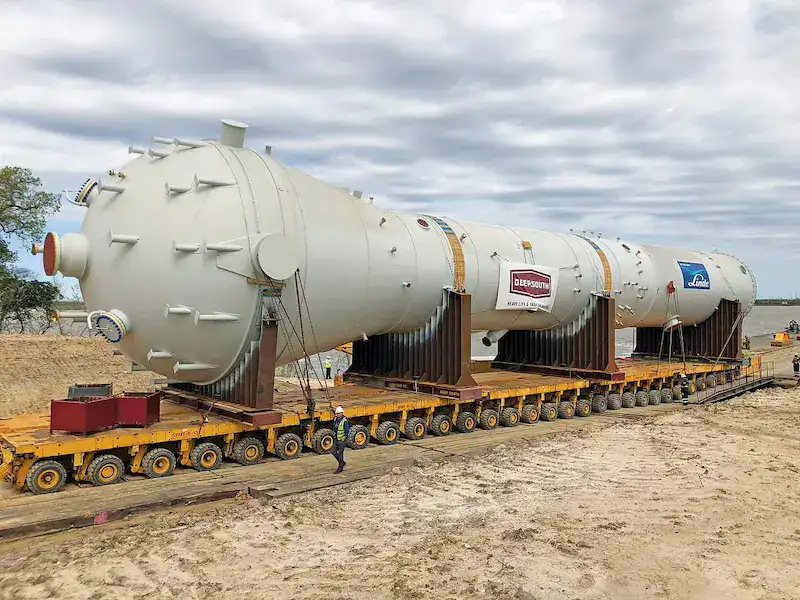

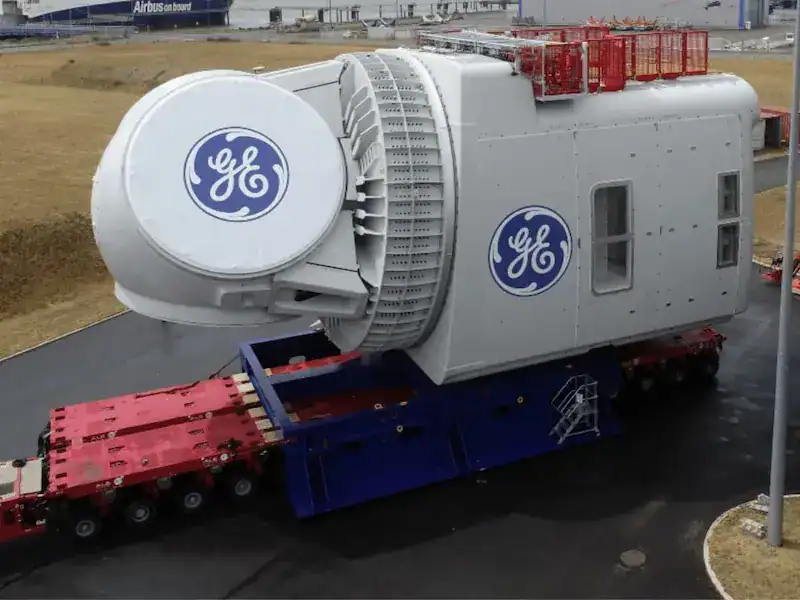
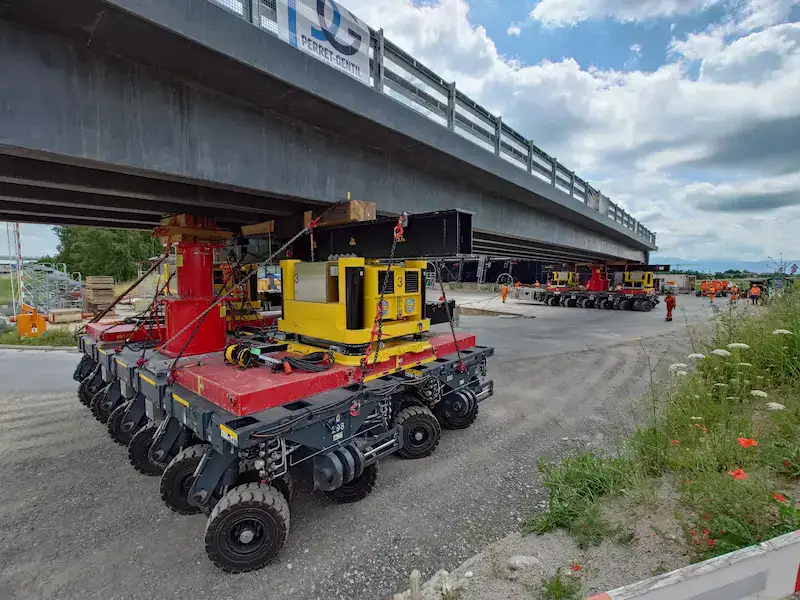
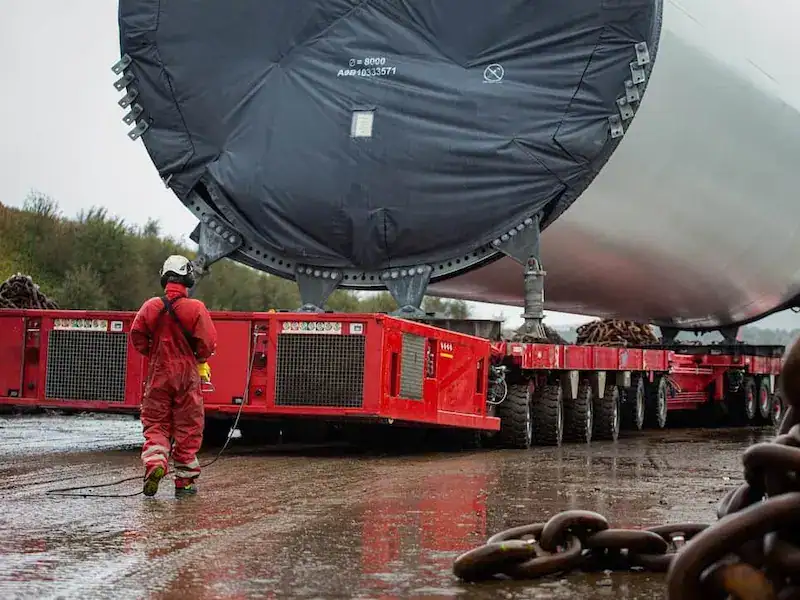
Structural and Functional Differences: Beam Transporter vs. SPMT
Many newcomers to heavy transport or bridge engineering are often confused by the similar appearances of a beam transporter vs. SPMT. Both feature numerous tires, heavy hydraulic cylinders, and transport hundreds of tons on site. However, looking closely at their chassis, their design logic, handling, and application scenarios are completely different. To help you clarify your thinking during equipment selection, we provide an in-depth breakdown across structural design and functional applications.
Structural Design Differences: Beam Transporter vs. SPMT
In manufacturing, the research and development focuses of these two types of equipment diverge from the beginning. Simply put, a beam transporter is a customized machine built around the girder. Meanwhile, an SPMT is a set of heavy-duty building blocks that can be combined infinitely.
The structural differences between a beam transporter vs. SPMT can be analyzed directly through the following table:
| Karşılaştırma Boyutu | Işın Taşıyıcı | SPMT |
| Design positioning | Built specifically for long-distance bridge girder transfer and feeding. | Universal modular transport for heavy and oversized cargo. |
| Vehicle structure | Uses specialized frames, custom girder support structures, or fixed long longitudinal beams. | Uses standardized modular axle units combined like building blocks. |
| Load configuration | Customized based on specific girder dimensions, weights, and erection methods. | Flexibly adapts loads by adding modules and adjusting longitudinal or transverse layouts. |
| Steering system | Uses hydraulic linkage or multi-axle mechanical steering for regular heavy-duty turns. | Features all-round, multi-directional steering with electro-hydraulic synchronous control. |
| Support method | Equipped with dedicated girder supports, saddles, or adjustable anti-overturning devices. | Relies on large flat transport platforms with custom wooden pads and pedestals. |
| Key design focus | Ensures girder stability on uneven roads and process connection efficiency. | Focuses on free modular assembly, extreme load distribution, and narrow-site mobility. |
Field Engineering Notes: The above represent typical design characteristics of a beam transporter vs. SPMT, but they are not strictly opposed in actual engineering. Today, some high-end beam transporters integrate hydraulic multi-axle lines and modular designs to overcome curved or wide bridge construction challenges.
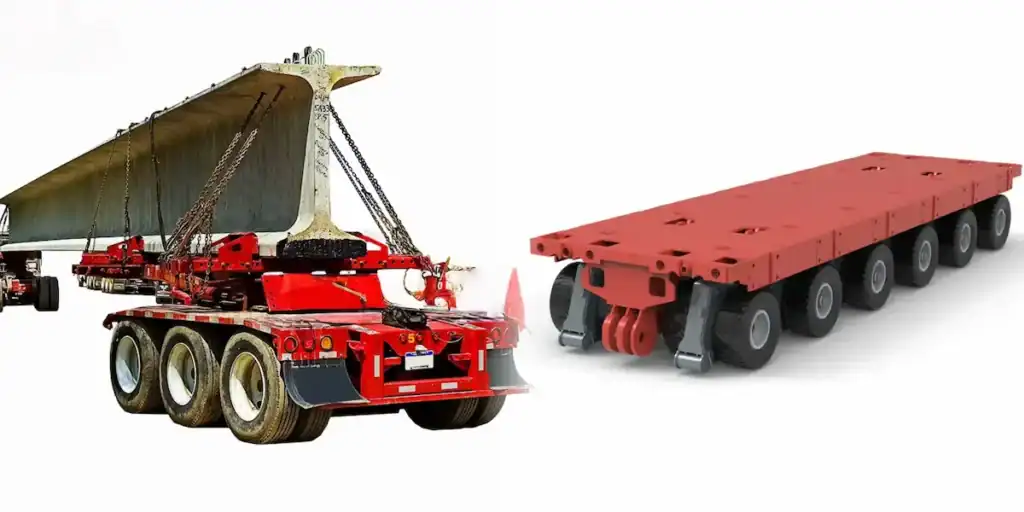
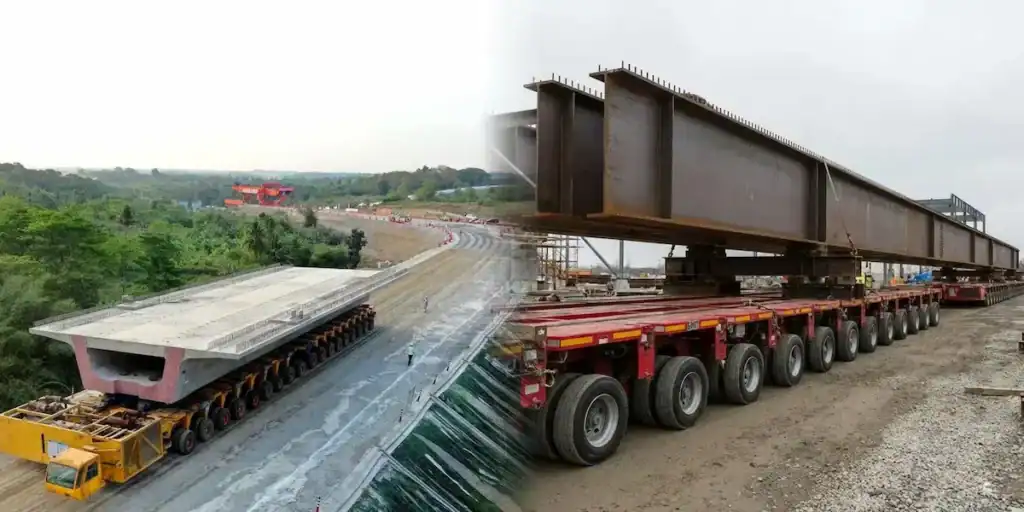
Functional and Application Scenario Comparison: Beam Transporter vs. SPMT
When placing a beam transporter vs. SPMT on actual construction sites, their characteristics differ completely. Addressing key concerns like transport objects, route steering, load distribution, and bridge applicability, we can compare them clearly using the following table:
| Core Comparison Dimension | Işın Taşıyıcı | SPMT |
| Transport object | High specificity. Dedicated to precast bridge components like box girders, T-beams, and segments. | High versatility. Universal heavy mover for chemical towers, ship modules, and shield machines. |
| Route & steering | Adapts to temporary roads with steep slopes; steering favors standard large radii with crab mode support. | Excels in narrow spaces with 360-degree steering, transverse, diagonal, and carousel moves. |
| Load distribution | Directional matching. Load capacity is tailored to specific yards with fixed frame load points. | Dynamic load balancing. Hydraulic suspension automatically adjusts tire loads to protect roads. |
| Bridge applicability | Great partner for standard highway and railway box girder erection with high efficiency. | First choice for accelerated bridge construction, full span steel box girder roll-on, and wide beams. |
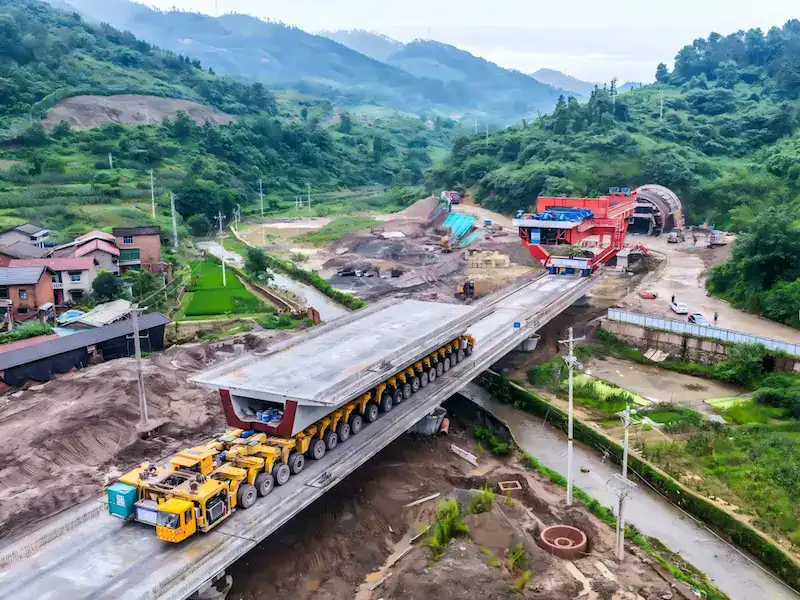
How to Choose Between a Beam Transporter vs. SPMT?
Making the wrong decision when purchasing or renting a beam transporter vs. SPMT wastes money and delays project schedules. Facing complex engineering needs, we recommend evaluating these six dimensions:
- Cargo parameters and center of gravity: For standard concrete box girders with fixed aspect ratios, a beam transporter offers exceptional cost-effectiveness. For ultra-wide, ultra-high, or irregular cargo with severe center-of-gravity offsets, rely on SPMT’s flexible axle layouts to balance loads.
- Route geometry and spatial constraints: Beam transporters suit projects with large turning radii, long climbs, and standard temporary roads. For narrow plants requiring carousel turns, 90-degree lateral moves, or tight headroom, SPMT’s multi-directional steering and height adjustment are irreplaceable.
- Ground bearing capacity and allowable axle load: Standard beam transporters have higher single-axle loads, requiring higher road quality. SPMTs connect hydraulic lines across dozens or hundreds of axles to minimize ground pressure, ideal for soft ground, dock trestles, or restricted bridge decks.
- Module splicing and synchronous control needs: SPMTs support wireless electro-hydraulic synchronous linkage for splicing transport of ultra-large items without physical connections. Regular beam transporter lengths and axle configurations remain mostly fixed, offering limited expansion.
- On-site lifting equipment coordination: When feeding girders to a bridge launching gantry or beam lifting gantry crane, beam transporters deliver extremely high efficiency due to dedicated frame designs. SPMTs function better as independent transport platforms.
- Total investment and lifecycle cost: Beam transporters have lower procurement costs and quick payback periods. While SPMTs involve higher initial investments, their strong versatility allows seamless transitions to petrochemical and offshore engineering after project completion.
Product Advantages and Customized Solutions of HSCRANE Beam Transporters
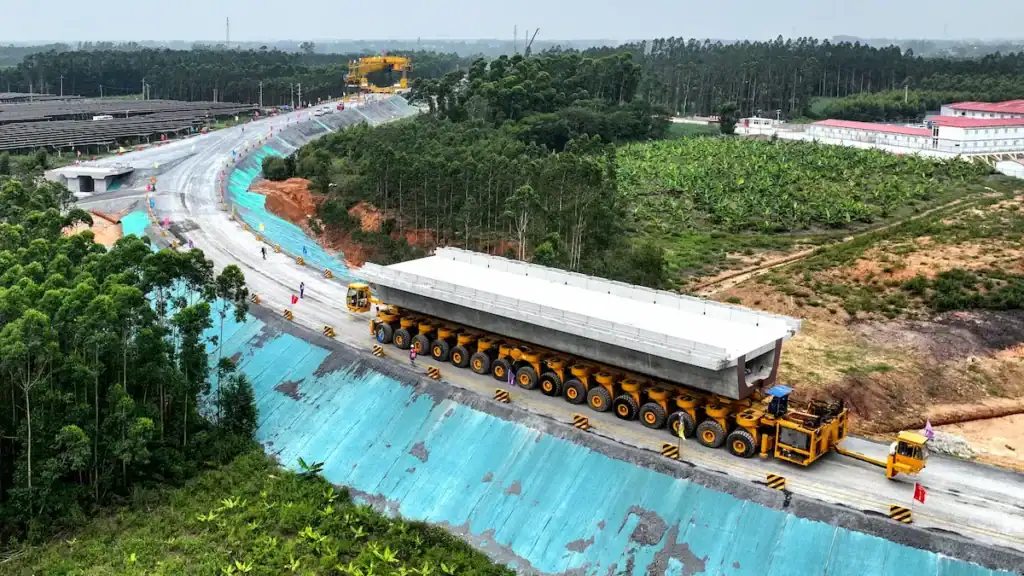
As a heavy engineering equipment manufacturer, HSCRANE rejects standard one-size-fits-all applications, tailoring efficient and safe transport solutions based on complex site environments.
- Designed following strict international standards: R&D and manufacturing strictly enforce ISO 9001:2026 quality management systems. Structural fatigue and stiffness calculations execute FEM 1.001 (1998 3rd Edition) Chapter 3 stress verification rules. Electrical and hydraulic safety protection fully complies with EN 13000:2010+A1:2014 mobile crane safety indicators, ensuring stable operation under extreme heavy loads.
- Condition-based tooling customization: Simulates frame stiffness according to bridge span, curvature radius, and road slope. Customizes dedicated hydraulic saddles, anti-overturning supports, and leveling systems to perfectly meet special transport needs for precast box girders, T-beams, small box girders, and segmental beams.
- Diverse load and travel configurations: Provides load specifications from 100t to over 1000t. Supports rubber-tyred, rail, and crawler travel mechanisms, delivering matching power output on mountain viaduct roads or cross-sea trestles.
- Smart hydraulic leveling and multi-axle steering: Equips high-precision hydraulic suspension and electronic multi-axle linkage steering. Automatically compensates for body tilt from uneven roads, effectively reducing internal torsional stress during girder transport to ensure turning and climbing safety.
- Seamless integration of transport and erection: Control interfaces highly match HSCRANE self-developed beam lifting gantry cranes and bridge launching gantries. Supports communication protocol interconnection to achieve micro-movement girder feeding and precise alignment, significantly shortening single-span girder erection cycles.
- Full-process technical support and plan evaluation: HSCRANE technical teams follow up throughout the process, from early site road surveys, axle load calculations, and turning trajectory simulations, to mid-stage assembly and late-stage operator training, ensuring safe contract fulfillment.
Classic Cases of HSCRANE Bridge Construction Equipment
Case 1: Yueqing Bay Cross-Sea Bridge Project (China)
Customer Information:
- Customer name: CCCC First Highway Engineering Group Co., Ltd.
- Project type and country: Cross-sea highway bridge project (China)
- Equipment applied and quantity: 4 units of HSCRANE 200t special water beam transporters
Engineering Background: As a key eastern coastal channel project, the Yueqing Bay Cross-Sea Bridge spans about 10.1 kilometers. It represents one of China’s largest precast segmental bridge construction benchmark projects, requiring high-intensity offshore erection of 4,200 standard and irregular segmental girders.
Transport Challenges: The site was heavily affected by ocean tides, narrow sea trestles, and strong variable winds. With individual segmental girders weighing up to 180 tons and assembly precision required at the millimeter level, traditional transport equipment suffered from excessive chassis stress and alignment errors under frequent heavy round trips in high-salt, high-humidity marine environments.
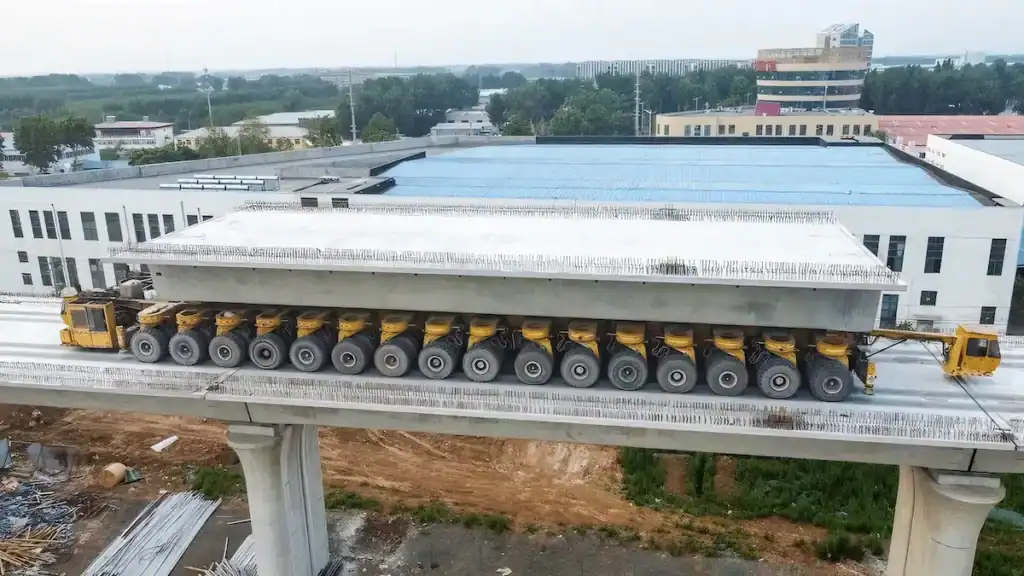
Equipment Solution: HSCRANE delivered 4 customized 200t special heavy-duty beam transporters for harsh marine conditions. Vehicles used special anti-corrosion coatings and sealed structures. The chassis featured multi-axle independent hydraulic suspension and all-wheel steering. It deeply integrated micro-movement docking control interfaces with wireless communication to site beam lifting gantry cranes, achieving centimeter-level precise parking on narrow bridge decks.
Application Results: During two years of high-intensity offshore operations, the transporters set a record of zero failures and zero delays, safely transferring 4,200 heavy segmental girders. Transport and girder-feeding efficiency per span increased by 35% compared to traditional plans, ensuring millimeter-level high-precision bridge closure.
Case 2: Malaysia Penang Second Bridge Project
Customer Information:
- Customer name: Malaysian benchmark joint engineering EPC contractor / strategic partner
- Project type and country: International large cross-sea transportation hub project (Malaysia)
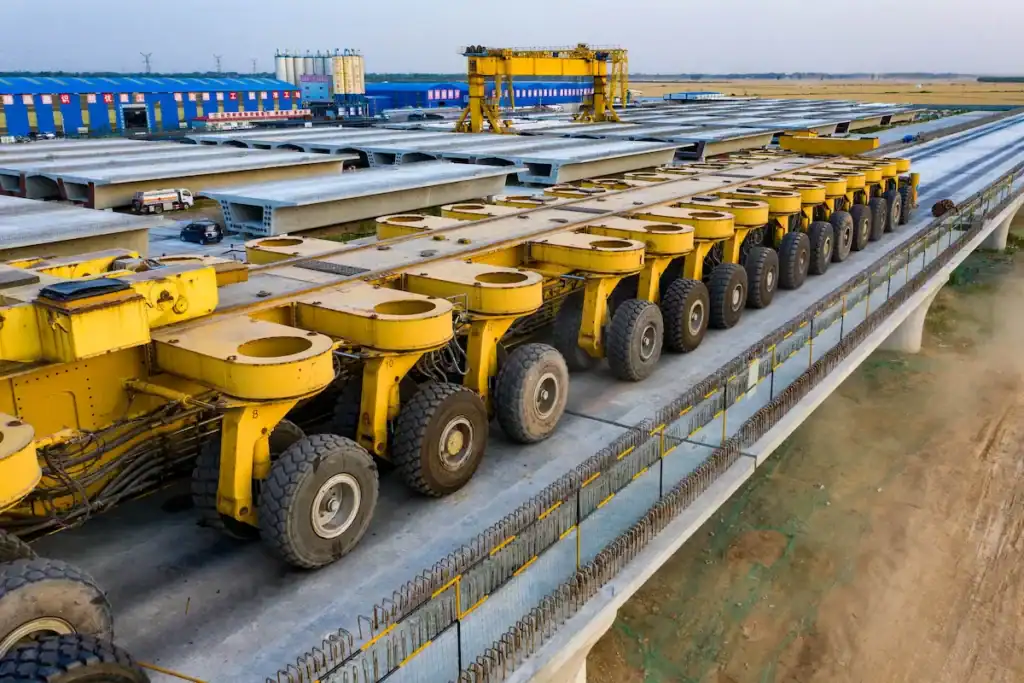
- Equipment applied and quantity: 6 units of HSCRANE 450t heavy-duty beam transporters
Engineering Background: The Sultan Abdul Halim Muadzam Shah Bridge spans 24 kilometers (with 16.9 kilometers over sea). It is Southeast Asia’s longest cross-sea bridge and a landmark strategic cooperation project between China and Malaysia.
Transport Challenges: The project featured a long route and tight schedule, requiring high-frequency transport of hundreds of ultra-large box girders and approach bridge components weighing hundreds of tons. The local tropical rainforest climate brought constant high temperature, high humidity, and heavy rain, posing severe tests for engine heat dissipation, hydraulic thermal balance, and cross-border maintenance.
Equipment Solution: HSCRANE collaborated with its overseas department to tailor a heavy transport and positioning plan, deploying 6 units of 450t heavy-duty beam transporters. Equipment used multi-axle parallel modular designs and long-stroke hydraulic balancing suspension. This automatically adapted to minor deck deformations caused by temperature changes, ensuring absolute stability during heavy transport.
Application Results: Over years of high-intensity construction, the equipment demonstrated exceptional adaptability and reliability in humid tropical marine environments. It successfully assisted engineering teams in completing safe cross-sea transport of heavy bridge components. Load and micro-movement indicators exceeded acceptance standards of overseas owners and EPC contractors, earning high acclaim.
Çözüm
In summary, a beam transporter vs. SPMT occupy distinct roles in heavy transport. Their core difference comes down to dedicated efficiency versus universal flexibility. A beam transporter is built for precast bridge components, making it irreplaceable for standard yard transfers and feeding a bridge launching gantry. Meanwhile, SPMT excels in modular assembly and all-round steering, making it ideal for oversized cargo, tight spaces, and bridge replacements. Modern heavy equipment boundaries are merging, with high-end beam transporters adopting modular concepts. Project teams must evaluate cargo characteristics, road conditions, and total costs carefully. Choosing the right equipment reduces construction risks and secures project profits.
Unsure whether to choose a beam transporter vs. SPMT?
Contact the HSCRANE expert team for free site evaluations, axle load calculations, and customized equipment quotes. Click below to speak directly with our engineers:
[Click to submit your project parameters or contact HSCRANE engineers]
Further Reading:
Choosing equipment is only the first step. How do you ensure safe transport without tipping? Whether you choose a beam transporter vs. SPMT, beam weight variations, road slopes, and centrifugal forces affect center of gravity and axle load distribution. Slight mistakes risk off-center loads or tipping. Understanding load calculation formulas and safety factors is crucial. We recommend reading:
Okumak için tıklayın: Köprü Kirişi Taşıyıcı Yük Hesaplaması Açıklaması: Köprü Kirişlerinin Güvenli Taşınmasını Nasıl Sağlarsınız?
SSS
Q1: Can a beam transporter vs. SPMT completely replace each other in construction?
A: No. A beam transporter focuses on feeding bridge launching gantries with dedicated saddles. An SPMT is a platform tool better suited for overall transfers without launching gantries.
Q2: When must an SPMT be chosen over a regular beam transporter in bridge projects?
A: SPMT is essential for accelerated bridge construction, full-span steel box girder roll-on, ultra-wide composite beams, or extreme tight spaces requiring carousel turns and lateral moves.
Q3: What specific requirements do beam transporters have for temporary access roads and bearing capacity?
A: Standard beam transporters have concentrated single-axle loads requiring proper road flatness and compaction. Subgrade bearing capacity must be calculated before construction, adding steel plates if necessary.
Q4: Can HSCRANE beam transporters be customized for non-standard bridge conditions?
A: Yes. HSCRANE customizes frame stiffness, hydraulic suspension stroke, and smart control systems based on actual bridge span, beam types, maximum road slope, and turning radius.
Q5: How should companies balance initial costs and long-term needs when buying or renting equipment?
A: Purchasing a dedicated beam transporter is cost-effective for long-term standardized highway or railway bridges. For multi-field heavy transport including wind power and offshore projects, SPMTs offer better versatility.
Bu belge yalnızca referans amaçlıdır. Belirli işlemler, yerel yasa ve yönetmeliklere ve ekipman kılavuzlarına kesinlikle uygun olmalıdır.

Köprü Projeniz İçin Uzman Tavsiyesi Alın
Mühendislik ekibimiz köprü inşaat ekipmanları konusunda onlarca yıllık deneyime sahiptir. Doğru çözümü bulmanıza yardımcı olalım.