 EN_US
 Іспанська
 Русский
 Арабська
 Португальська мова для Бразилії
 Французька
 Індонезійська
 Турецька
 Тьєнг В'єт
 Малайська мова
 Українська




 Технічна аналітика
Bridge Launching Gantry Utilization: ROI & Cost Control
Огляд
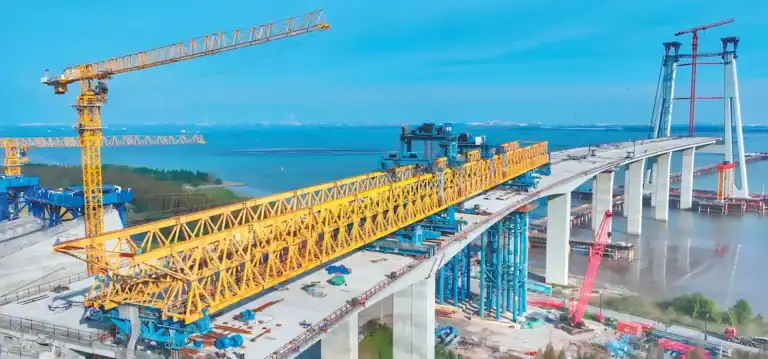
In large bridge construction, bridge launching gantry utilization directly determines capital return. As a heavy asset, козловий спусковий міст millions-dollar procurement cost makes it a major financial burden. However, whether it runs fully or sits idle determines profitability gaps.
Long-term idleness inflates depreciation and quietly eats cash flow. This article deeply analyzes how bridge launching gantry utilization affects investment payback periods. It explores maximizing potential through refined management across three dimensions. These are equipment selection, construction organization, and daily maintenance. It helps engineering teams truly reduce costs and increase efficiency.
Planning a bridge construction project?
HSBRIDGE offers suitable bridge launching gantry configurations based on bridge span, weight, and conditions. Contact us immediately to learn about equipment solutions for your project.
[Контакти HSBRIDGE professional team immediately]
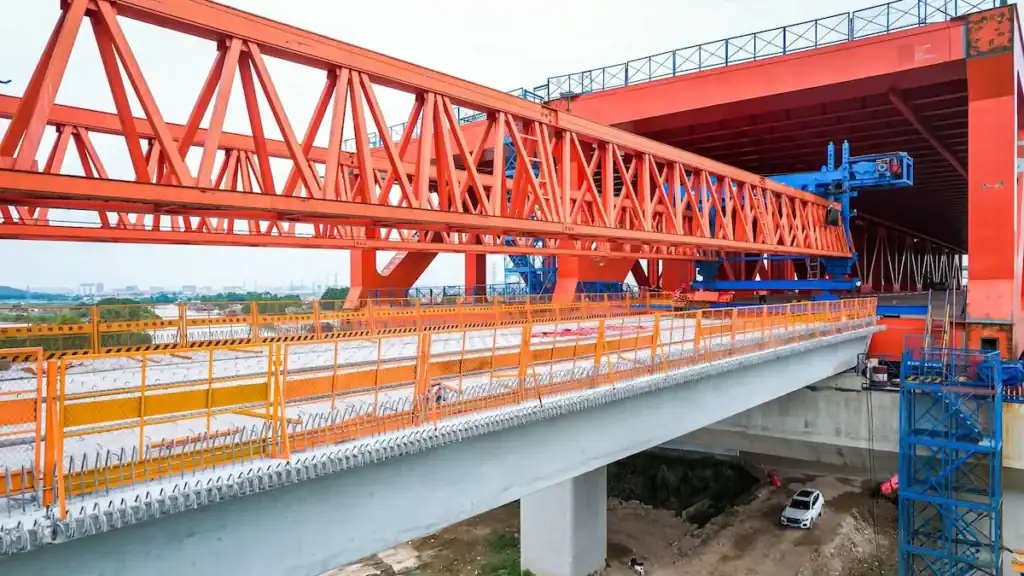
What is bridge launching gantry обладнання utilization? How to calculate it?
On bridge construction sites, whether equipment is idle is a top concern for managers. To quantify this concept, we must break down the term utilization thoroughly. It is never simply about counting how many hours the machine roars daily.
Basic concepts of bridge launching gantry equipment utilization
In practical engineering, evaluating bridge launching gantry utilization involves three core time dimensions:
- Actual working time: The effective duration when the gantry is truly working, such as lifting or positioning.
- Planned available time: The total scheduled work time based on contract schedule and construction design.
- Equipment idle time: The time the machine sits idle due to delayed beams, uninspected substructures, or stoppages.
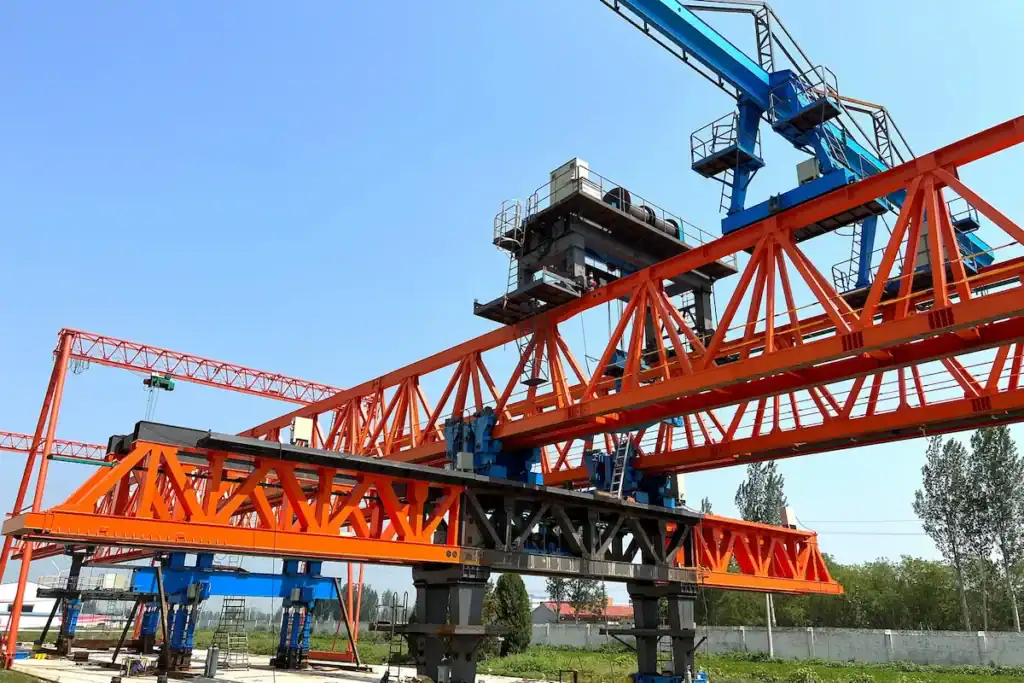
Many construction teams fall into a common misunderstanding: They think running the machine 10 hours a day means high utilization. In reality, bridge launching gantry utilization depends on more than daily runtime. It is constrained by project schedules, total girder tasks, transfer frequency, and maintenance windows.
For example, a project works intensively every day. However, short spans and frequent transfers consume massive time in dismantling and transporting. This causes the overall long-term utilization to remain at a low level.
Calculation methods of обладнання utilization
To objectively evaluate bridge launching gantry utilization, a scientific formula is foundational. The most commonly used basic calculation formula is:
Equipment Utilization Rate = (Actual Working Time ÷ Planned Available Time) × 100%
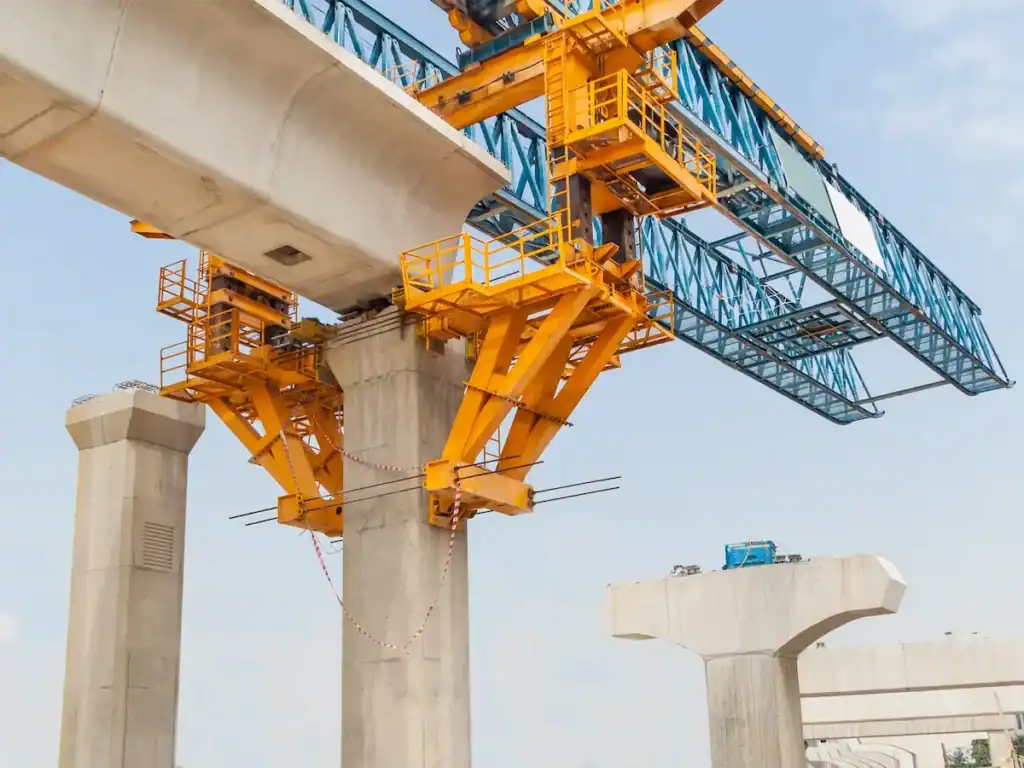
However, this formula alone is far from enough in actual management. Site managers usually cross-verify the true operating status from multiple dimensions. To make data more accurate, we must combine several daily records for comprehensive evaluation:
- Equipment operation records: Check driver handover logs and PLC runtime hours, excluding invalid idling.
- Girder erection quantity (daily/weekly/monthly): Compare planned and actual counts to verify time utilization gold content.
- Construction logs: Check for passive stoppages caused by prior work issues like truck failures or low strength.
- Downtime and failure records: Accurately count lost time from unplanned stops, reflecting equipment reliability.
Difference between bridge launching gantry utilization and construction efficiency
In many people’s intuition, high bridge launching gantry utilization equals high construction efficiency. But site veterans know these two often conflict with each other. High utilization does not mean high output. Clarifying their differences is key to avoiding hidden project losses.
| Вимір порівняння | Equipment Utilization | Ефективність будівництва |
| Основний фокус | How long the equipment moves, i.e., occupied time resource proportion. | How much work the equipment does, i.e., output per unit time. |
| Determinants | Construction rhythm, transfer frequency, prior process connection, and maintenance downtime. | Single girder erection time, team proficiency, failure rate, and non-productive idling. |
| Typical Scene | Powered 10 hours daily, but idles 5 hours waiting for delayed trucks. Utilization looks normal. | Sluggish crew operation or slow equipment speed leads to erecting only 2 girders daily. |
| Project Impact | Too low causes asset waste; blind pursuit of high levels may cause excessive wear. | Directly determines milestone schedules and labor cost expenditures for the bridge project. |
In short, utilization solves whether equipment is fully mobilized. Efficiency solves whether equipment works efficiently and smoothly. Only when both indicators remain high can project investment returns meet expectations.
How does обладнання utilization affect engineering project investment returns?
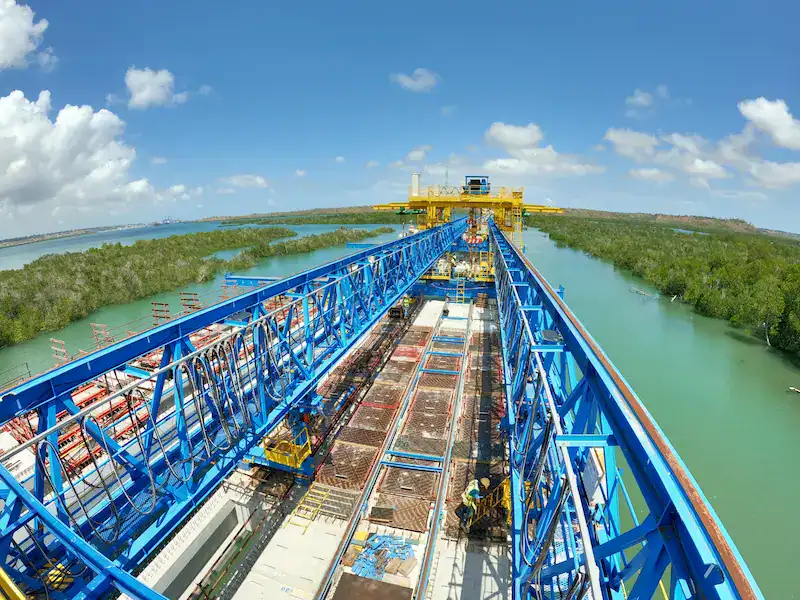
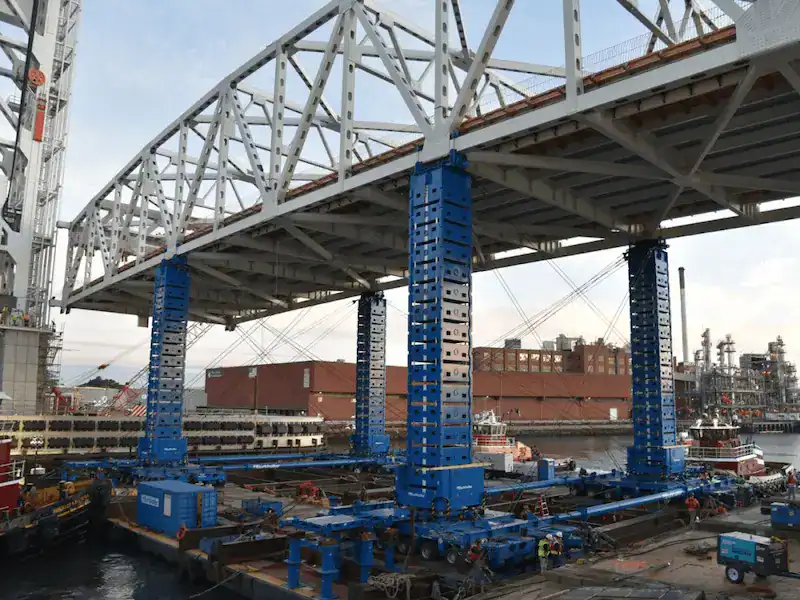
On project financial books, a козловий спусковий міст is never just ordinary machinery. It is the decisive factor for the entire project profit margin. Its bridge launching gantry utilization directly tears open project profit and loss across four dimensions:
- Diluting unit equipment investment costs: Depreciation and capital costs occur daily for heavy assets worth millions. Higher bridge launching gantry utilization spreads these fixed costs across more girders. Consequently, the allocated equipment cost per girder drops significantly.
- Shortening investment payback periods: Cash flow bleeds whenever the machine sits idle. Boosting bridge launching gantry utilization shortens the total construction schedule. This enables early project completion, quick fund recovery, and avoids default risks.
- Reducing idle labor and auxiliary costs: Gantry shutdowns trigger a chain reaction. Beam carriers stall, and workers sit idle while still collecting wages. Efficient bridge launching gantry utilization seamlessly connects the construction line and saves hidden labor fees.
- Extending asset residual value: Heavy machinery fears idleness more than heavy use. Long-term idleness causes hydraulic oil degradation and seal aging. Scientific, high-load operation with synchronized maintenance keeps the equipment in top condition. This ultimately boosts residual value for resale or cross-project reuse.
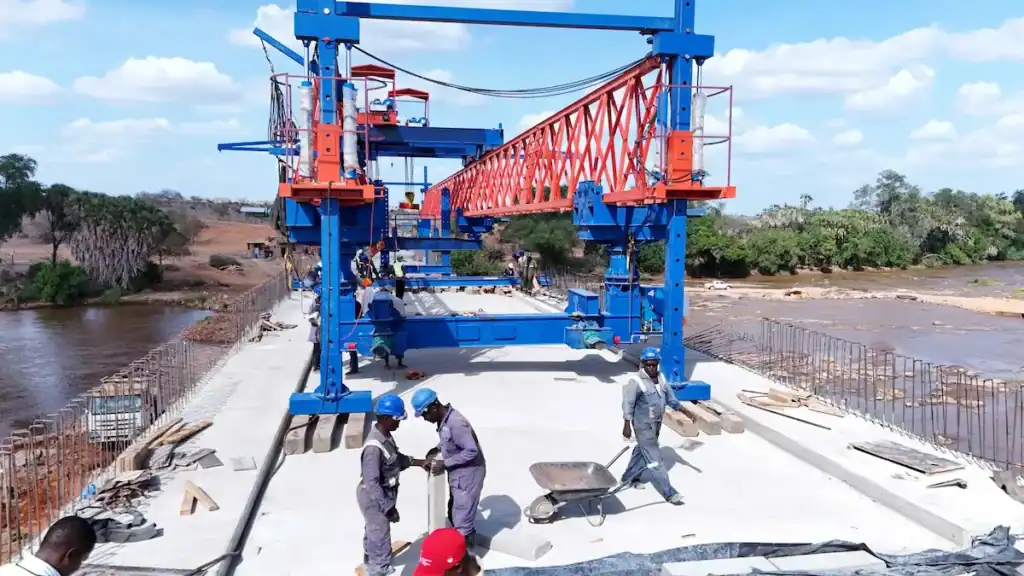
What factors reduce bridge launching gantry utilization and increase project costs?
Ideally, we hope equipment runs continuously. Real job sites face various stumbling blocks reducing bridge launching gantry utilization. Here are five common hidden losses in engineering:
| Influencing Factor | Typical Site Manifestation | Direct Impact on Project Cost |
| Construction plan mismatch | Substructure acceptance delays or beam carrier scheduling lags cause gantry idling. | Generates useless equipment idle depreciation and ineffective labor shift costs. |
| Inappropriate equipment selection | Blindly choosing wrong models causes frequent jamming on special spans or curves. | Reduces construction continuity and forces secondary modifications or frequent dismantling. |
| Untimely maintenance failures | Neglecting maintenance turns minor oil leaks or aging components into major repairs. | Causes unplanned shutdowns, expensive repair parts, and disrupted schedule milestones. |
| Long transfer and assembly time | Cross-line transfers require lengthy dismantling and transport processes without modular solutions. | Creates massive non-productive stagnation periods and drops monthly utilization rates. |
| Bad weather and complex environment | Strong winds, heavy rain, or geological disasters force heavy machinery to stop. | Causes rigid schedule delays while fixed management and lease fees accumulate. |
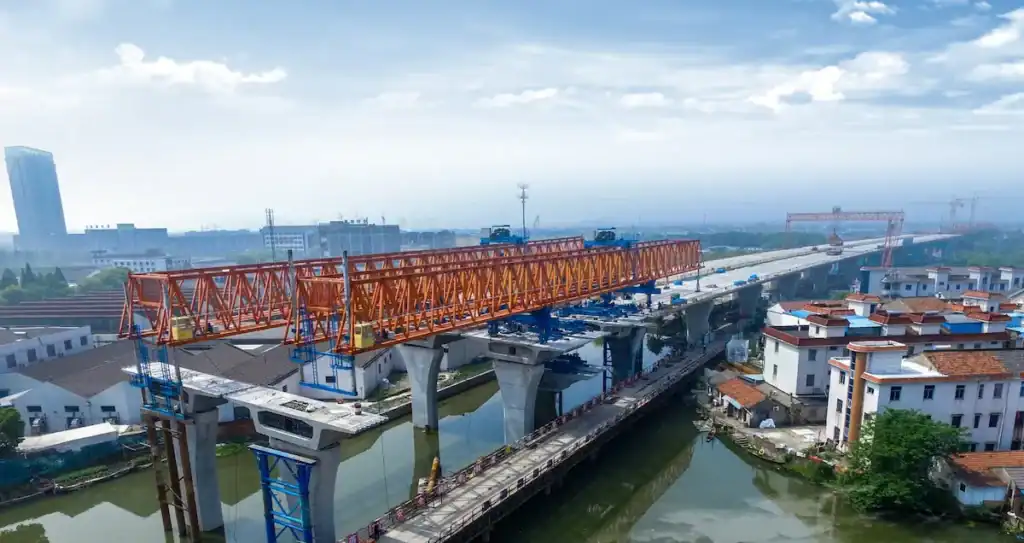
How to improve bridge launching gantry utilization and control project investment costs?
- Tailored model selection: Precisely match bridge span, max gradient, and minimum radius during preparation. Avoid blindly pursuing all-purpose models or settling for cheap alternatives. Seamless fit prevents invalid shutdowns caused by frequent jamming at the source.
- Optimized construction rhythm: Break substructure barriers and tightly link beam logistics workflows. Reduce waiting times for the gantry at bridge heads. Ensure seamless multi-process connection to keep machines running efficiently.
- Preventive maintenance mechanism: Shift from passive repairs to routine daily inspections. Inspect hydraulic systems, electrical components, and wire ropes during off-hours. Minimize unplanned downtime risks with minimal maintenance investment for high utilization.
- Long-term transfer planning: Plan transfer paths in advance for multi-bridge railway projects. Adopt modular gantries with quick disassembly capabilities to compress transfer cycles. Spread heavy purchase costs across multiple projects through cross-project reuse.
- Digital tracking mechanisms: Replace rough paper ledgers with IoT sensors. Real-time tracking of actual work hours and failure rates. Use authentic data to force rectification of on-site management loopholes.
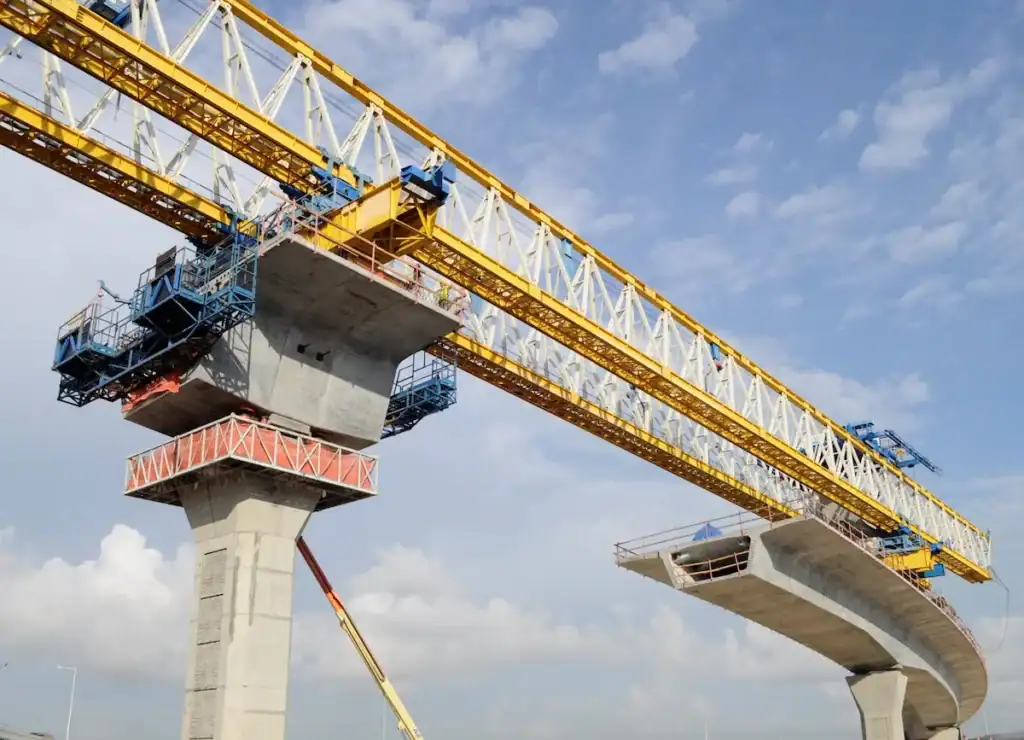
HSBRIDGE bridge launching gantry utilization advantages: Helping improve investment returns
- Multi-dimensional configuration matrix: HSBRIDGE strictly performs system classification per ISO 4301-1:2016 (Clause 4 and Clause 5). Offering series from heavy dual-truss to segmental assembly, it matches steep mountain slopes and sea-crossing bridges. This eliminates oversized choices or equipment incompatibility at the source.
- Modular reassembly design: Drawing concepts from FEM 1.001:1998 (Clause 2.1), HSCRANE adopts high-strength lightweight main girders and modular pin-bolt structures. Transferring across lines or moving long distances improves disassembly efficiency over traditional models, compressing non-productive downtime.
- Flexible luffing and multi-directional adaptability: Handling small-radius curves and steep slopes complies with EN 15011:2020 (Clause 5.2). Built-in flexible outriggers and micro-adjustment cylinders ensure high operational continuity and flexibility under non-standard conditions.
- Ultra-high reliability and closed-loop maintenance: Relying on stable electro-hydraulic controls, equipment meets rigorous fatigue tests with 24/7 remote diagnosis and fast spare parts response. It delivers design operating hours, minimizes downtime losses, and exceeds asset investment return expectations.
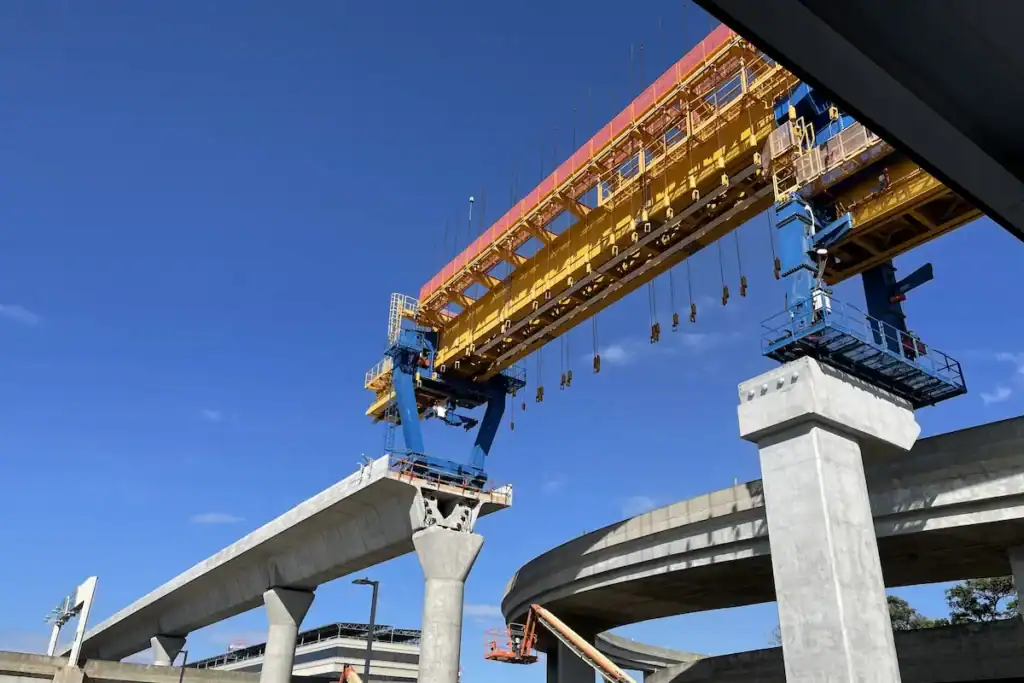
HSBRIDGE bridge launching gantry classic project cases: How does equipment adaptability affect construction efficiency?
No matter how good theoretical parameters look, on-site girder erection data speaks louder. Whether equipment selection is scientific and modular design is solid directly reflects in construction efficiency and bridge launching gantry utilization. The following real engineering cases of HSBRIDGE in overseas infrastructure construction illustrate how equipment adaptability creates substantial economic benefits for customers.
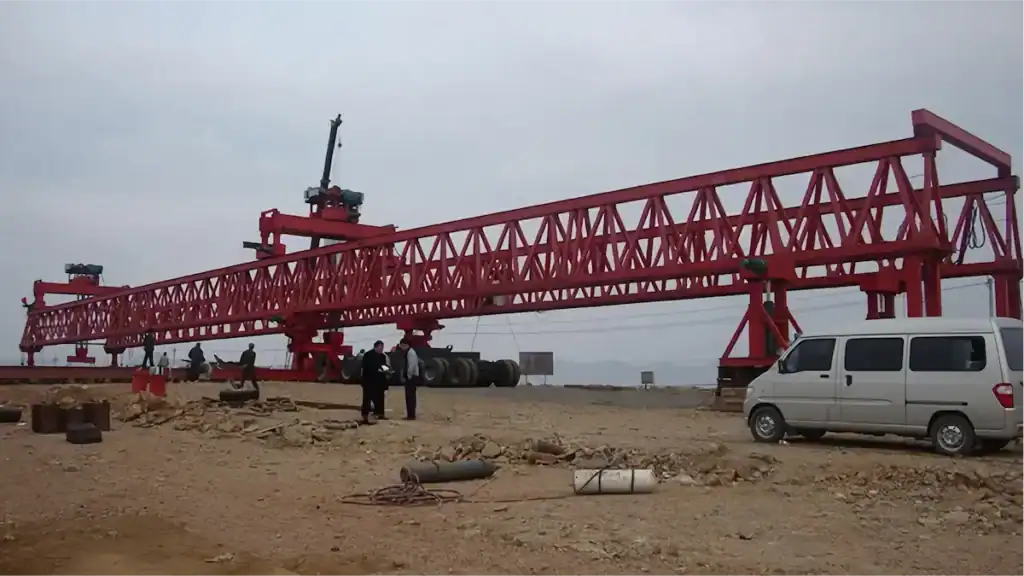
Pakistan 220-ton bridge launching gantry project: Equipment adaptability under complex terrain
- Customer/Project Name: Pakistan Infrastructure and Transportation Ministry & Chinese Consortium General Contracting Project (China-Pakistan Economic Corridor Partner)
- Project Type: Mountain highway bridge project across deep valleys and steep slopes
- Equipment Configuration: HSBRIDGE 50M/220T honeycomb dual-truss bridge launching gantry (1 unit/set)
- Project Pain Points & Challenges: Located in northern mountain areas of Pakistan, maximum longitudinal slope reached 4.5% with multiple small-radius curved bridges (minimum radius below 600m). Traditional gantries required frequent leveling or temporary steel rail installation during span-crossing and side-shifting. Most time was spent on non-productive adjustments, resulting in estimated bridge launching gantry utilization under 45%.
- HSBRIDGE Solution: Tailored a 50m span, 220-ton gantry for this project. Equipped with self-developed multi-dimensional adaptive hydraulic legs and intelligent auto-leveling systems, combined with EN 15011 verified structural stiffness, it achieved direct span-crossing with “zero track laying.”
- Quantified Returns & Efficiency Breakthroughs:
- Disassembly, assembly, and leveling time reduced by 60%: Preparation time before single-span erection dropped from traditional 14 hours to 5.5 hours.
- Bridge launching gantry utilization increased to 78%: Average daily erection increased from 1.5 to 3 girders, completing all 128 T-girders 42 days ahead of schedule.
- Directly saved equipment downtime and idle labor costs by approximately $180,000.
Southeast Asia dual-carriageway highway bridge project: Modular gantry achieving reuse
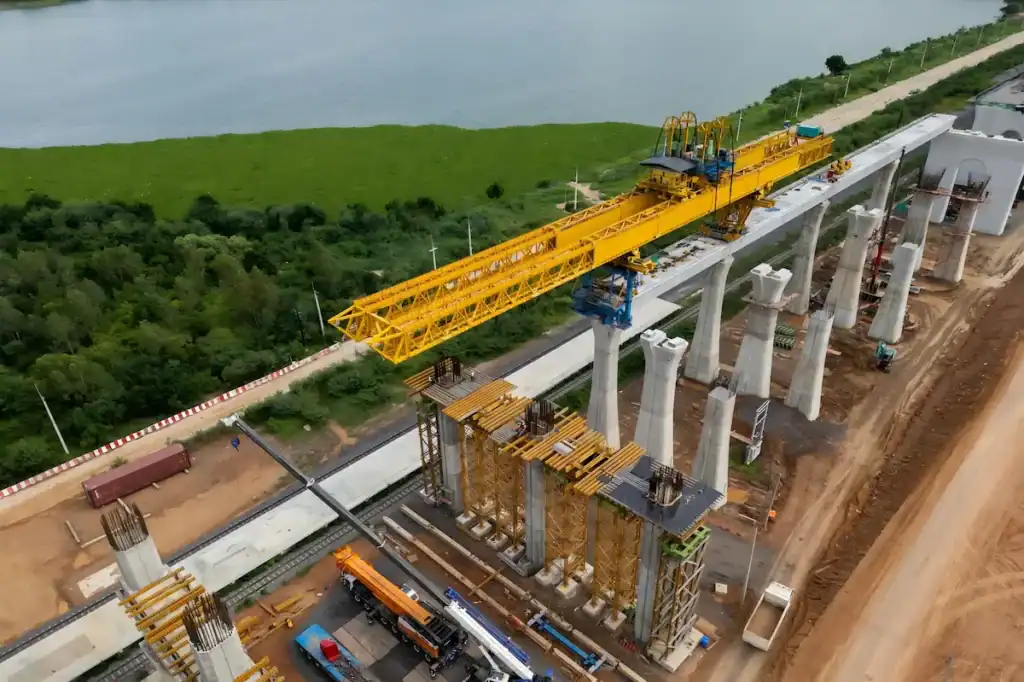
- Customer/Project Name: Southeast Asia Highway Infrastructure Project (Major Bridge General Contractor)
- Project Type: 80-kilometer dual-carriageway highway continuous girder and precast box girder project
- Equipment Configuration: HSBRIDGE 40M/160T modular assembled bridge launching gantry (2 units/set)
- Project Pain Points & Challenges: Covering 12 bridges scattered across an 80km section, crossing existing open traffic roads and high-voltage corridors. Weeks of cutting, dismantling, and re-welding for every bridge transfer would cause long idle transportation time and irreversible fatigue damage to steel structures from frequent dismantling.
- HSBRIDGE Solution: Adopted lightweight modular gantries designed based on FEM 1.001 standards. Main girders connect with high-strength bolts and precision pins. All mechanisms are divided into standardized units, keeping single transport width strictly within standard flatbed truck limits.
- Quantified Returns & Efficiency Breakthroughs:
- Transfer time compressed by 65%: Entire machine disassembly, highway transport, and reassembly across bridge sections dropped from traditional 18 days to 6 days.
- Equipment reuse rate reached 100%: After completing Phase 1 40-meter box girder erection, changing local pin modules and trolley clamps allowed direct transition to Phase 2 30-meter T-girder erection without procuring new equipment.
- Equipment acquisition cost diluted by 40%: Two units continuously erected 340 box girders in 3 months without failures. Residual value retention rate was nearly 25% higher than similar non-modular models.
Висновок
In the end, heavy machinery on job sites is never just cold steel. It is the core gear determining project cash flow health. From precise selection and construction rhythm synchronization to preventive maintenance, every link directly affects bridge launching gantry utilization levels. Blindly pursuing low-cost procurement or rough rushing often swallows slim profits through frequent downtime and inefficient transfers. Truly expert project managers understand capturing equipment utilization as a core KPI. Using efficient modular equipment against complex conditions and tight construction organization to compress every minute of idling turns equipment investment into steady cash flow amidst fierce competition.
Struggling with project equipment selection, transfers, or cost control?
HSBRIDGE senior engineering team provides professional support anytime. Regardless of complex conditions, we help reduce costs and increase efficiency from the source.
[Submit project parameters to receive exclusive configurations and quotation plans]
Selecting wrong parameters makes high bridge launching gantry utilization futile?
Ensuring efficient operation starts with precisely matching tonnage and site conditions. To learn scientific selection based on girder weight and span to avoid downtime alteration costs, read:
[Deep Dive: “Bridge Launching Gantry Capacity: Precast Girder Weight & Key Parameters“]
Bridge Launching Gantry Utilization FAQ
Q1: What is a reasonable bridge launching gantry utilization level? Is higher always better?
В: Generally, healthy bridge launching gantry utilization ranges between 65% and 75%. Blindly pursuing over 90% is unrealistic, as continuous maximum load accelerates mechanical wear and fatigue risks. Sudden failures cause severe schedule paralysis.
Q2: How to break site deadlocks when beam carrier scheduling lags behind gantry operations?
В: This common pain point requires synchronizing beam transport channels with front-end gantry pace. Implement refined transport management, plan passing platforms, and dynamically balance precast yard output with gantry erection speeds to prevent bridgehead idling.
Q3: Which is better for utilization and ROI: purchasing new or second-hand equipment?
В: It depends on contract duration and terrain complexity. Tight schedules and rugged terrain favor new modular equipment due to lower failure rates and guaranteed bridge launching gantry utilization. Flat short-term projects make quality second-hand gantries cost-effective.
Q4: How much does modular design improve transfer efficiency?
В: Tremendously. Traditional gantries require cutting, re-welding, and tedious bolting, taking 1 to 2 weeks. Modular designs with standardized pins compress transfer time by over 60%, transforming non-productive downtime into valuable production periods directly.
Q5: How to minimize weather impacts on bridge launching gantry utilization during heavy rain or winds?
В: Weather is unavoidable, but management can be proactive. Evaluate climate during selection to choose high wind-resistant models. Transform weather downtime into preventive maintenance windows to inspect hydraulic and electrical systems for continuous operation later.
Цей документ надано лише для довідки. Конкретні операції повинні суворо відповідати місцевим законам і нормам, а також інструкціям з експлуатації обладнання.

Отримайте експертну пораду щодо вашого проєкту мосту
Наша інженерна команда має багаторічний досвід роботи з обладнанням для будівництва мостів. Дозвольте нам допомогти вам знайти правильне рішення.