 EN_US
EN_US  Español
  Русский
  العربية
  Português do Brasil
  Français
  Bahasa Indonesia
  Türkçe
  Tiếng Việt
  Bahasa Melayu
  Українська

 Technical Insight
Technical Insight
Bridge Launching Gantry Buying Guide: 10 Costly Mistakes to Avoid
Overview
Procuring a bridge launching gantry is one of the highest-stakes decisions in any infrastructure project. A slight miscalculation in capacity, span, or structural rigidity doesn’t just cause equipment downtime—it can halt your entire construction schedule, incur massive daily penalty fees, and pose severe safety risks.
Navigating complex spec sheets and seemingly cheap quotes can be a minefield. Based on decades of on-site engineering experience, we’ve compiled the 10 critical questions every project manager and procurement officer must ask. This guide cuts through the marketing noise to help you avoid hidden costs, select the exact right equipment, and ensure your bridge project stays on track and under budget.
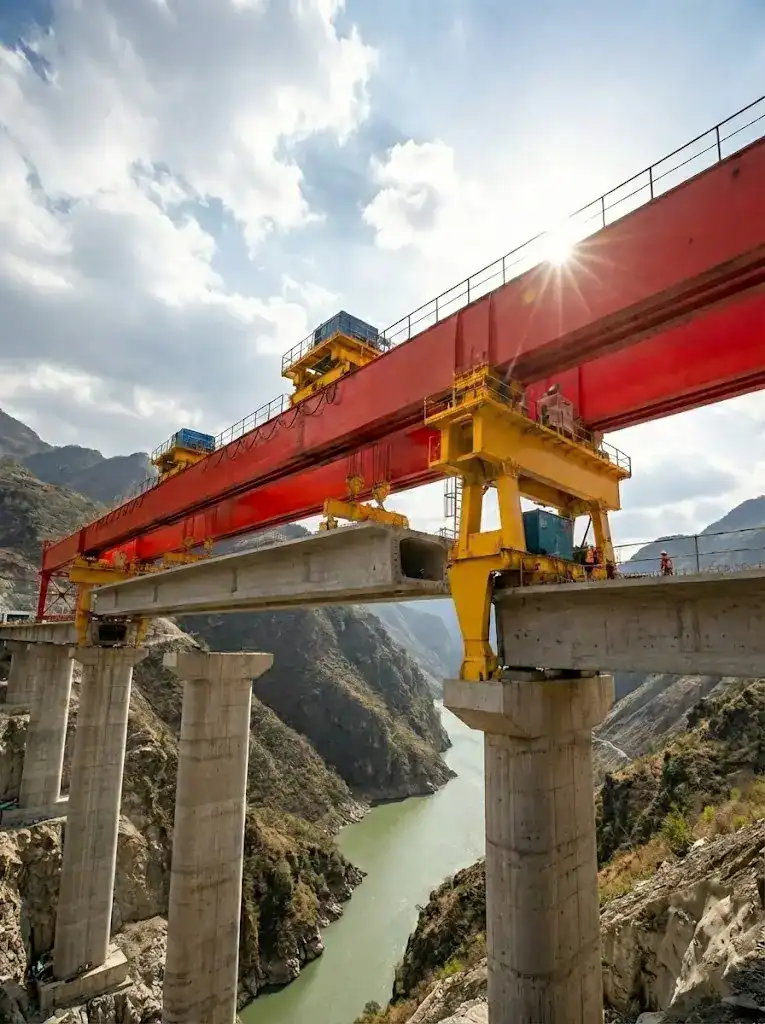
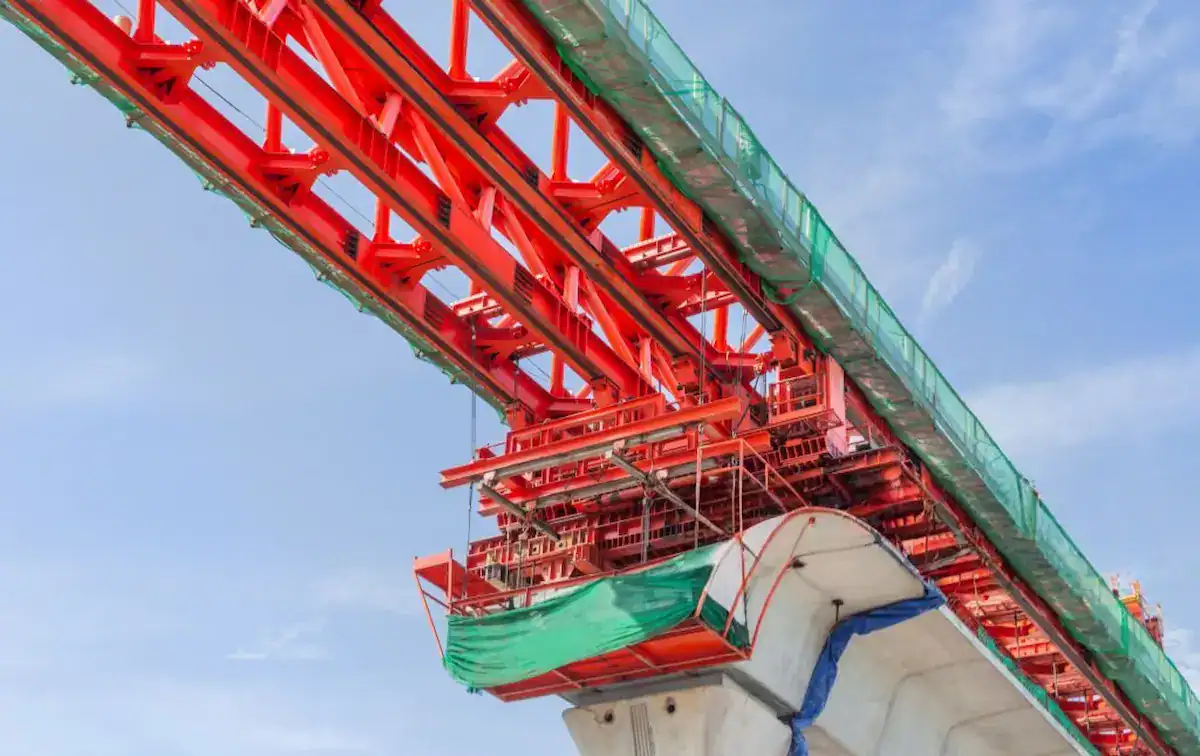
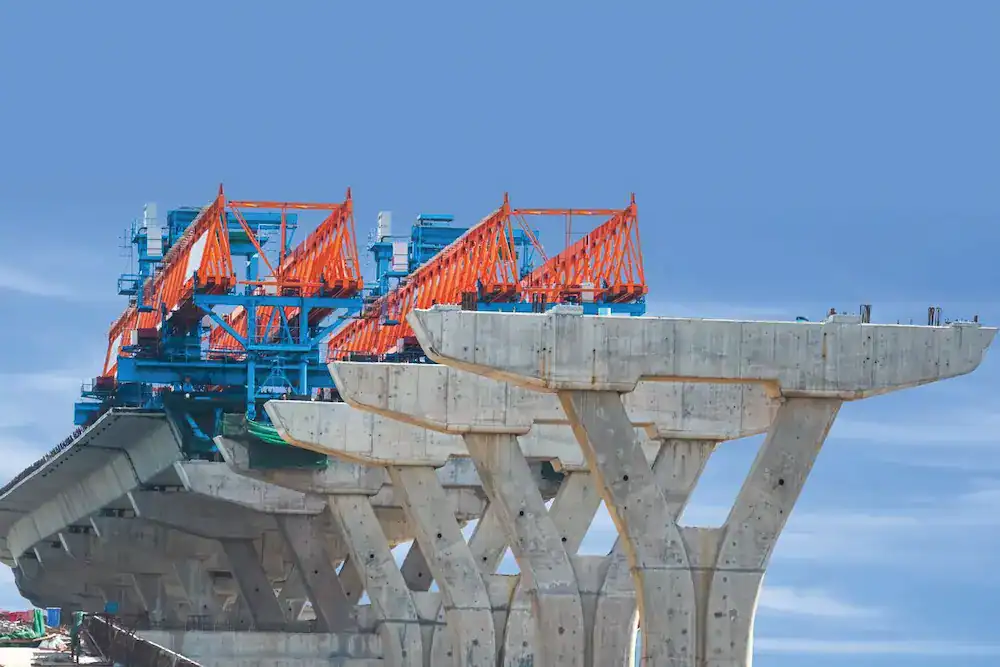
A bridge launching gantry handles beam lifting, transport, and precise installation. It is vital for bridge construction. Improper selection leads to insufficient capacity, instability, and poor structural fit. This increases failure rates, downtime, construction costs, and project delays. Inadequate safety systems increase risks of overturning and lifting accidents. This compromises project quality and site safety management.
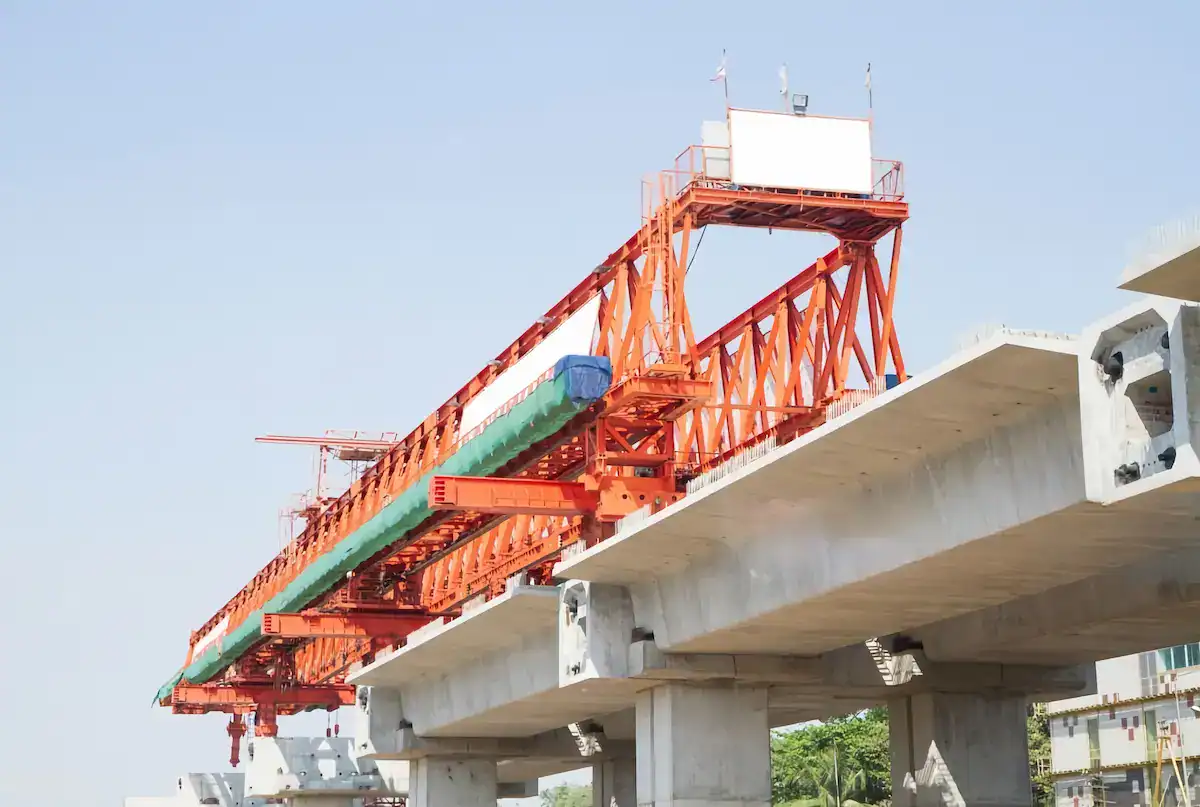
10 Core Issues for Purchasing a Bridge Launching Gantry
Deviations in technical parameters can cause project delays or safety risks. The following 10 issues must be assessed during the decision phase.
Is the Engineering Type Matched?
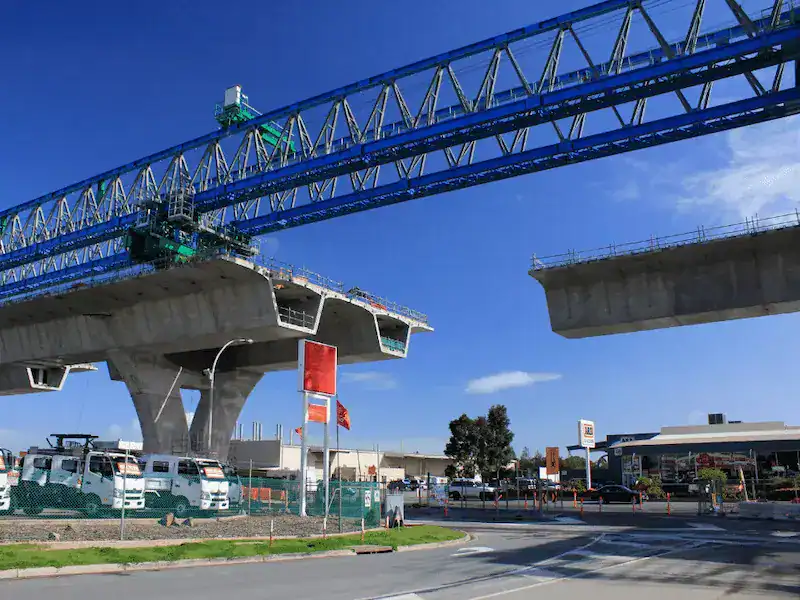
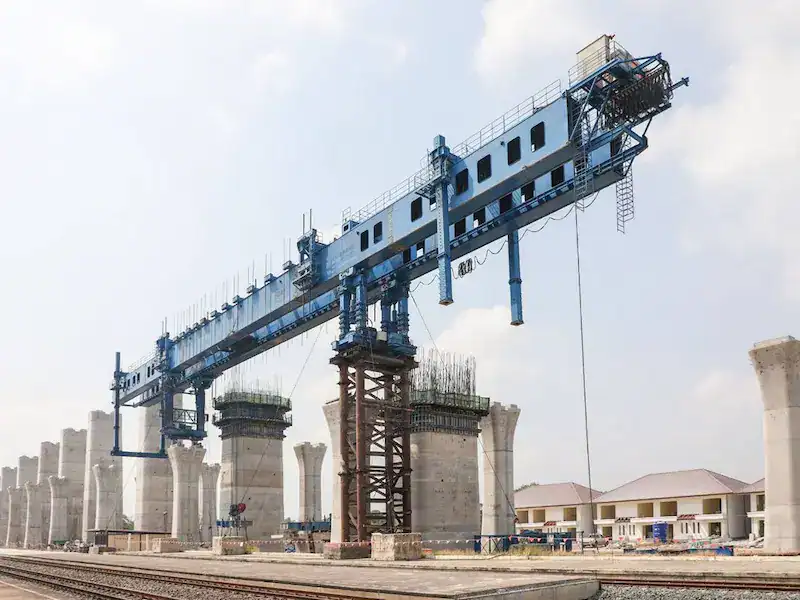
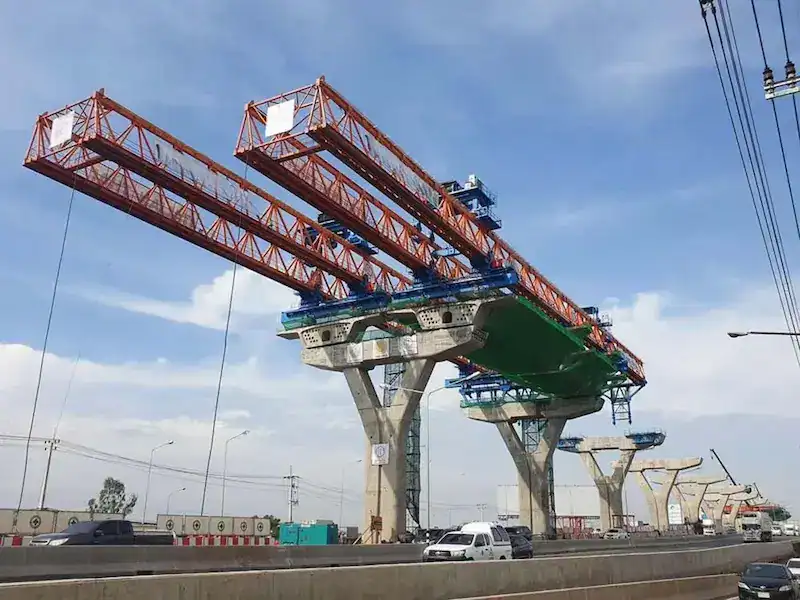
Different bridge types have unique environments and structural features. Assess the construction site first. Ensure the main girder and leg configuration meet operational requirements.
Bridge Type | Operational Challenges | Selection Suggestion |
Highway | Varied beam specs, frequent span changes | Use versatile models with wide span adjustment |
High-Speed Rail | Heavy loads, extreme landing precision | Prioritize heavy-duty models with precise sync systems |
Municipal Bridge | Limited space, curves, and gradients | Choose compact models capable of small-radius passage |
Pitfall Warning: Verify equipment weight against pier cap beam capacity. Overweight equipment can exceed foundation bearing capacity. This requires costly reinforcement and increases hidden construction expenses.
How to Determine Lifting Capacity and Span?
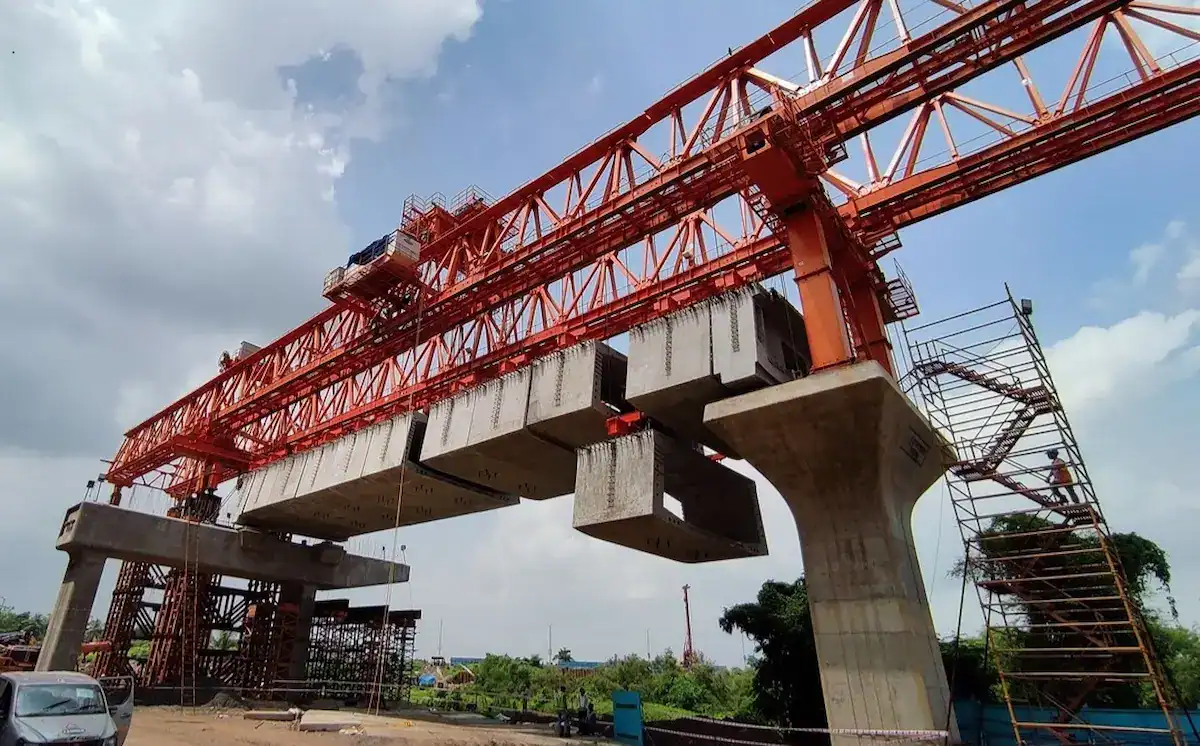
This defines the load-bearing capacity. Do not only consider design beam weight. You must include impact factors, dynamic loads, and stresses from gradients.
- Max Load Calculation:Include rigging weight. Reserve 10%-15% safety redundancy.
- Span Adaptability:Confirm the rated span matches the actual bridge span. Check deflection control at maximum span.
Pitfall Warning: Don’t just check the nameplate rating. Include rigging weight in the lifting load. Ignoring rigging weight causes frequent overload trips, forcing work stoppages.
How to Choose the Bridge Launching Gantry Structure?
Compare operational efficiency based on your construction method.
Structure Type | Advantages | Limitations |
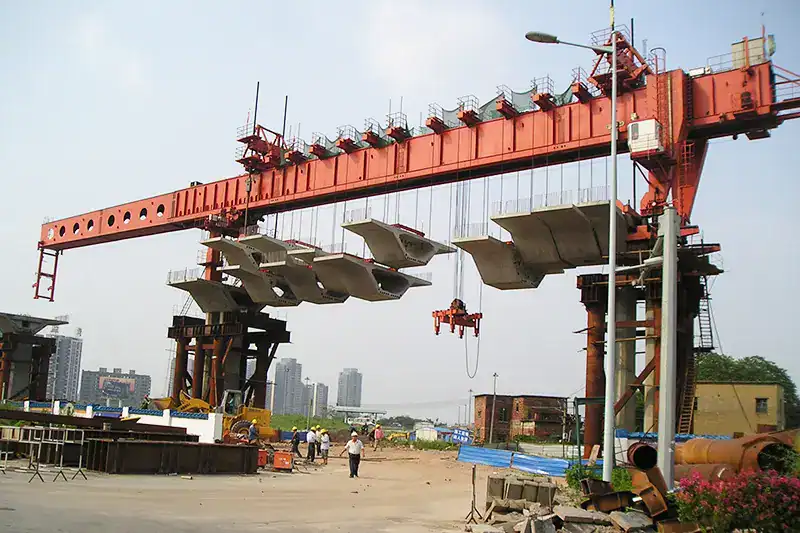
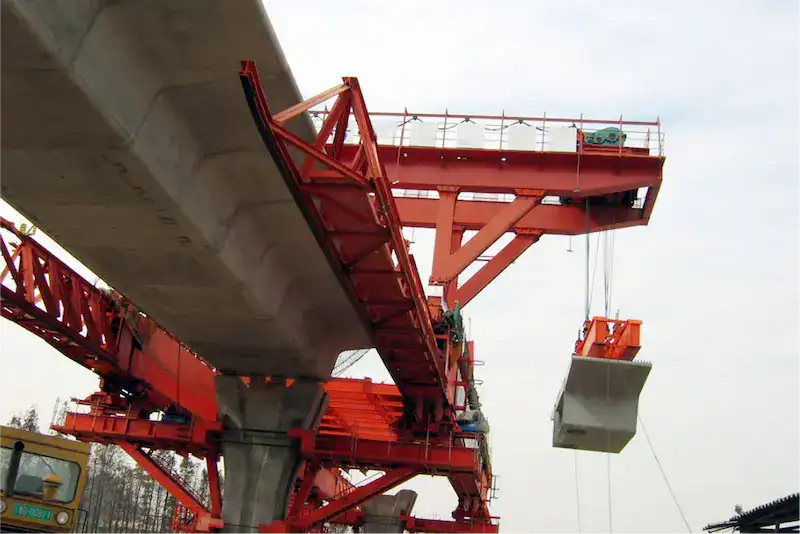
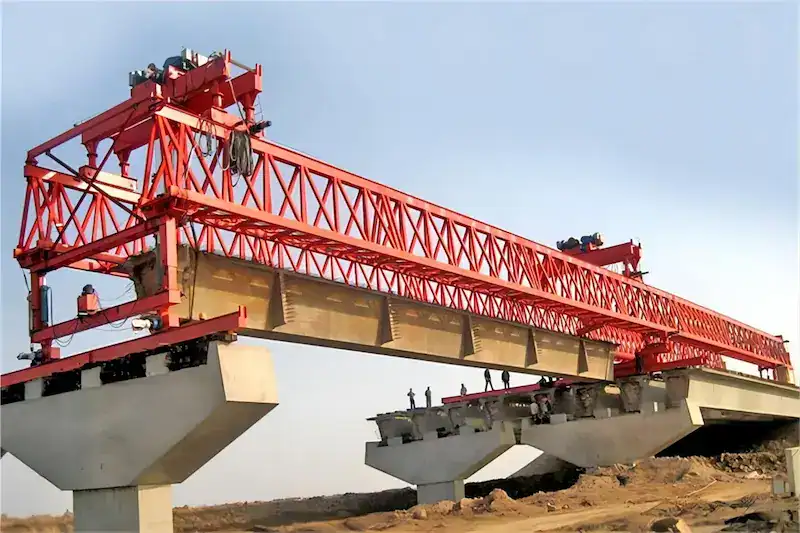
Single Guide Beam | Light, simple, easy assembly | Low torsional stiffness, weak lateral resistance |
Double Guide Beam | High stiffness, stable, good for heavy loads | High self-weight, requires many trucks for transport |
Walking Type | Flexible longitudinal/lateral travel | Complex hydraulics, high maintenance |
Rail-mounted | Fixed path, good for long continuous work | High track costs, poor site adaptability |
Pitfall Warning: Factor in construction footprint, not just equipment size. Some structures are too wide for narrow urban roads. This interferes with traffic and leads to fines.
Does the equipment meet safety standards?
Safety is non-negotiable. Check these redundant systems:
- Anti-overturning:Multi-level mechanical locks and real-time tilt monitoring.
- Overload Protection:High-precision load cells, power-off alarms, and auto-limit cut-offs.
- Emergency Braking:Dual brakes for lifting and travel to ensure instant locking during power loss.
Pitfall Warning: Verify compliance credentials. Manufacturers must hold a “Special Equipment Manufacturing License” and type-test reports. Equipment without compliance records will fail major project site inspections, potentially causing contract breach.
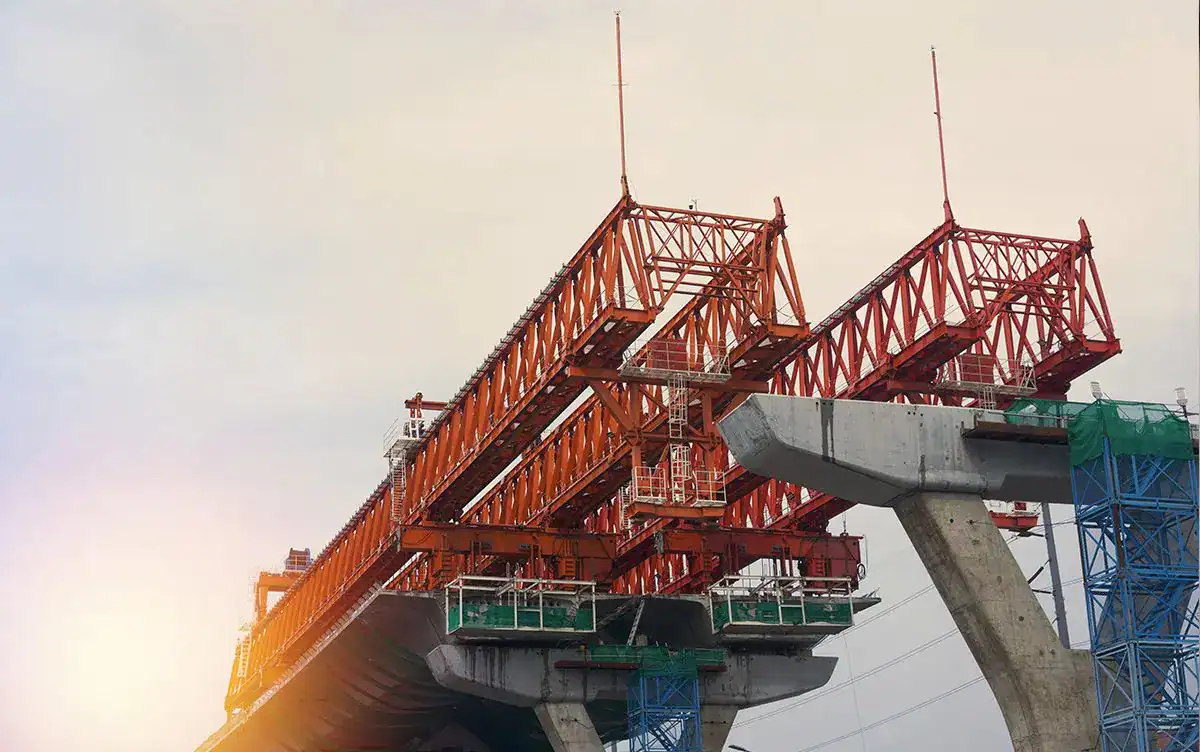
What is the level of automation and intelligence?
Modern construction requires less reliance on operator experience. Focus on:
- PLC Control:Digital linkage to ensure level synchronization for legs and multi-point lifting.
- Automatic Alignment:Laser or visual guidance systems to shorten beam landing time.
- Remote Monitoring:Data transmission for real-time stress monitoring at critical points.
Pitfall Warning: Beware of “excessive intelligence.” Construction sites are harsh. Choose mature, simple PLC systems. Avoid overly complex systems with excessive sensors. These are impossible to repair on remote sites, causing long-term downtime.
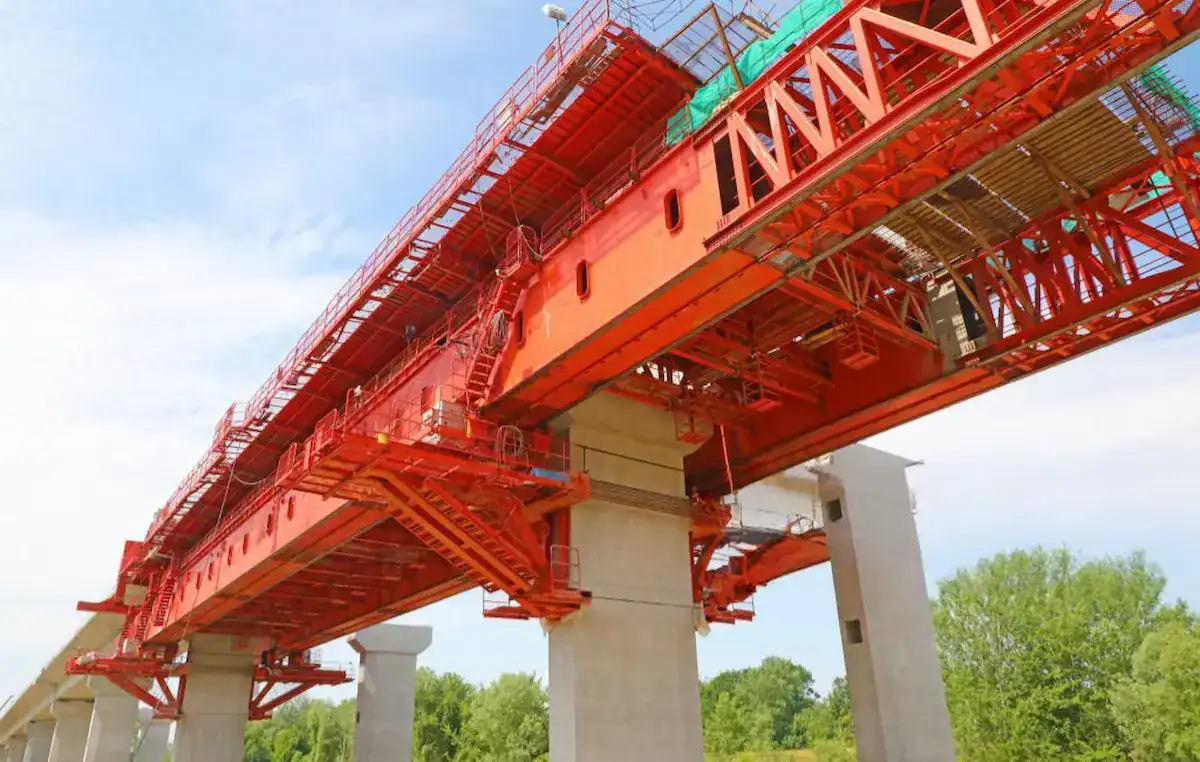
Is Transport and Installation Convenient?
A bridge launching gantry is a large, immobile asset. Transition efficiency directly impacts your project budget.
- Modular Design:Ensure components (girders, legs) meet road width and height limits.
- Quick-connect Interfaces:Use pin or flange connections for fast on-site assembly. Minimize on-site welding.
Pitfall Warning: Modular designs must meet standards. Request detailed “transport dismantling drawings” from the manufacturer. This prevents entry failure due to oversized dimensions, avoiding secondary cutting.
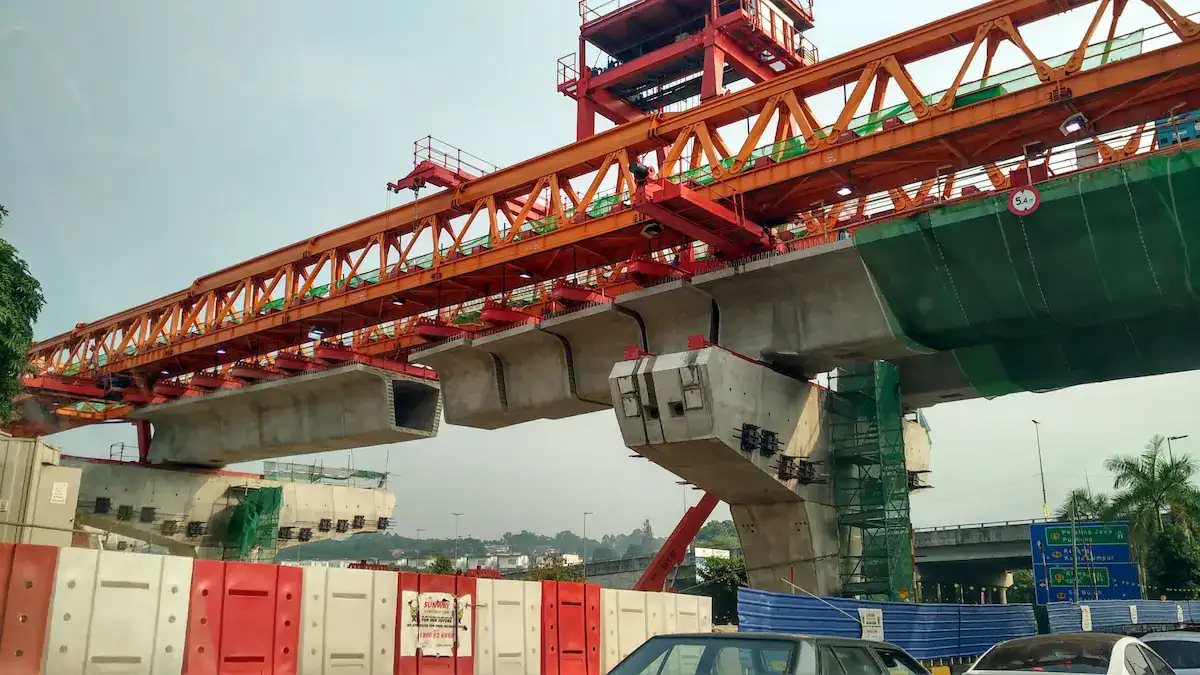
How is Construction Environment Adaptability?
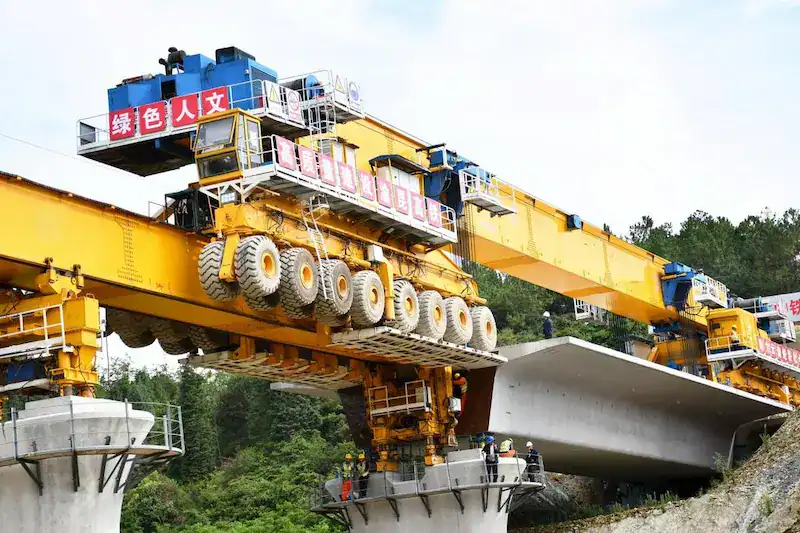
- Operational Matching:For mountains, check stability on slopes (>4%) and curved bridges.
- Environment Tolerance:Assess IP protection ratings for electrical systems in extreme heat, humidity, or salt spray.
Pitfall Warning: Power sources need backups. Confirm “dual-power” (electric/diesel) modes for remote sites. Using only electric drives without stable power incurs high generator rental and fuel costs.
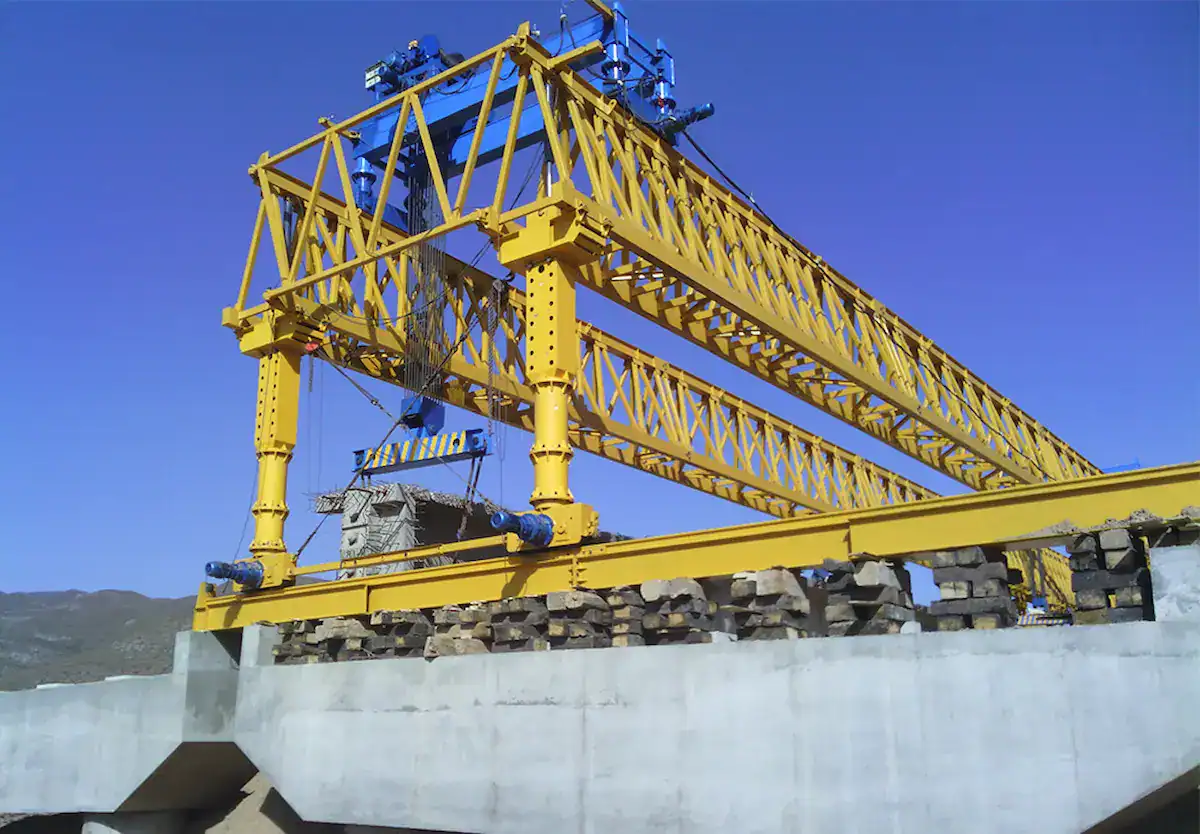
What about equipment lifespan and maintenance costs?
Focus on component selection and replacement cycles:
- Metal Structure:Verify anti-corrosion processes to prevent structural rust in harsh environments.
- Wear Parts:Are hydraulic seals, wire ropes, and pulleys standard sizes for cost-effective procurement?
Pitfall Warning: Avoid proprietary parts. Ask if seals, pulleys, and ropes are standard off-the-shelf models. Custom non-standard parts have weeks-long lead times. Downtime fines far exceed the initial price difference.
Are the manufacturer’s credentials and experience reliable?
The manufacturer is a technical partner, not just a supplier.
- Case Studies:Review past projects with similar conditions. Check failure rates in complex terrains.
- After-sales Support:Clarify service radius and spare parts inventory.
Pitfall Warning: Distinguish manufacturers from traders. Inspect factories via video or in-person visits. Traders often lack technicians. Phone support cannot resolve complex equipment failures.
[Contact HSCRANE for the best technical solution]
Is the price reasonable? Are there hidden costs?
Do not look at contract price alone. Calculate TCO (Total Cost of Ownership) including:
- Shipping:Special vehicles or road modifications required.
- Assembly/Disassembly:High labor and time costs.
- Downtime Losses:Daily fines and rental losses for project delays.
Pitfall Warning: Prioritize TCO. Sum up assembly, transport, maintenance, and delay fines. Buying low-end equipment costs more in maintenance and fines after three months than buying high-end units.
HSCRANE Bridge Launching Gantry: Product Advantages
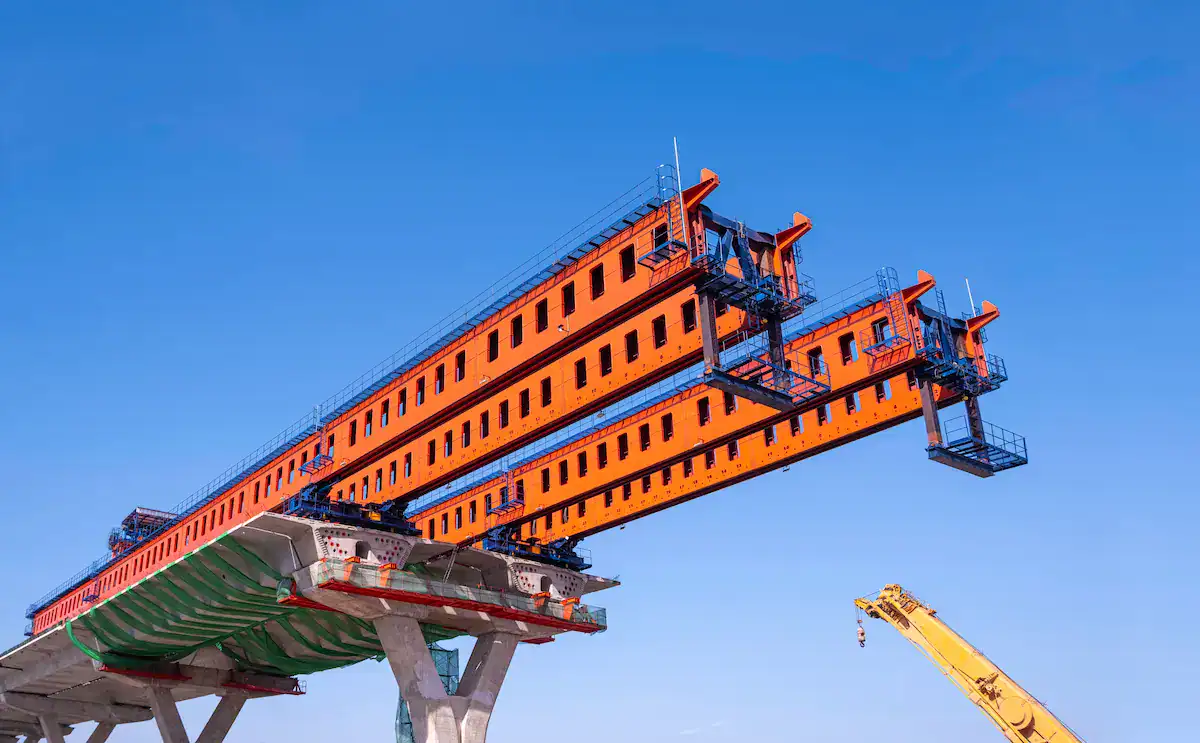
The HSCRANE bridge launching gantry series focuses on “operational adaptability” and “lifecycle stability.” Our design logic combines standardization with customization to solve real-world construction challenges.
- Extensive Project Experience:We offer proven, data-backed solutions for high-speed rail, sea-crossing bridges, and complex mountainous terrain. Our expertise in beam lifting and transition schemes significantly reduces on-site trial-and-error risks.
- Customized Design Capability:We provide non-standard structural customization for variable spans, small-radius curves, and steep gradients. Parameters are deeply adapted to project blueprints, ensuring precise fit between the gantry, piers, and landing accuracy requirements.
- High Safety Standards:All equipment complies with ISO/FEM/EN Systems include high-sensitivity anti-overturning locks, real-time overload monitoring, and dual-mechanical brakes on lifting and travel mechanisms, ensuring the beam locks instantly during power failure or anomalies.
- Intelligent Control Systems:Integrated industrial PLC linkage achieves digital synchronization for longitudinal movement, cross-travel, and landing. Built-in automatic alignment reduces reliance on operator experience and drastically shortens cycle times per span.
- Modular Structural Design:Main girders, legs, and travel mechanisms utilize modular disassembly to meet road transport width and height limits. Standardized pin-shaft and high-strength bolt interfaces enable rapid on-site assembly, eliminating the need for complex welding and minimizing logistics and labor costs.
- Comprehensive After-Sales Service:We provide a “on-site technical support + remote expert diagnosis” model. Our localized spare parts centers ensure key wear parts are standardized and stocked, with a commitment to 24-hour response to minimize equipment downtime and maximize construction attendance rates.
Summary: Bridge Launching Gantry Selection Advice
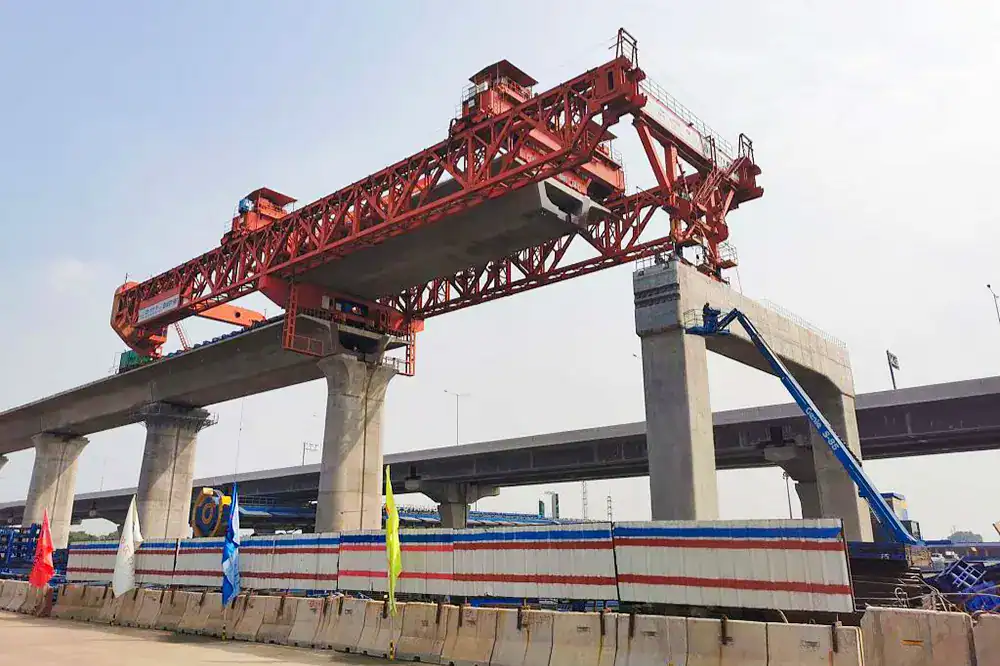
Bridge launching gantry selection is a core decision in bridge engineering. A scientific approach ensures efficiency, cost control, and safety. Follow this decision logic:
- Technical requirements over generic solutions:Base parameters on blueprints—beam specs, terrain, and erection methods. Avoid generic specs. Ensure capacity, span, and structure match actual conditions perfectly. Avoid resource waste from “overkill” or “underpowered” equipment.
- TCO over initial price:Do not focus solely on quotes. Real costs include transport, labor, maintenance, and downtime fines. Quality equipment with high initial costs often lowers amortized expenses via extreme reliability.
- Select capable suppliers:Judge vendors by successful deliveries in similar conditions, not fame. Professional vendors provide customization, site guidance, and spare parts. Real after-sales support means rapid remote diagnosis or on-site engineer assistance.
- Safety is non-negotiable:Never sacrifice safety for price. This gambles with project risk. Ensure anti-overturning systems, overload protection, and emergency brakes meet mandatory standards. Quality is the baseline for zero-accident sites.
In summary, excellent selection balances technical feasibility, economic rationality, and safety. Prioritize long-term yields over short-term price competition.
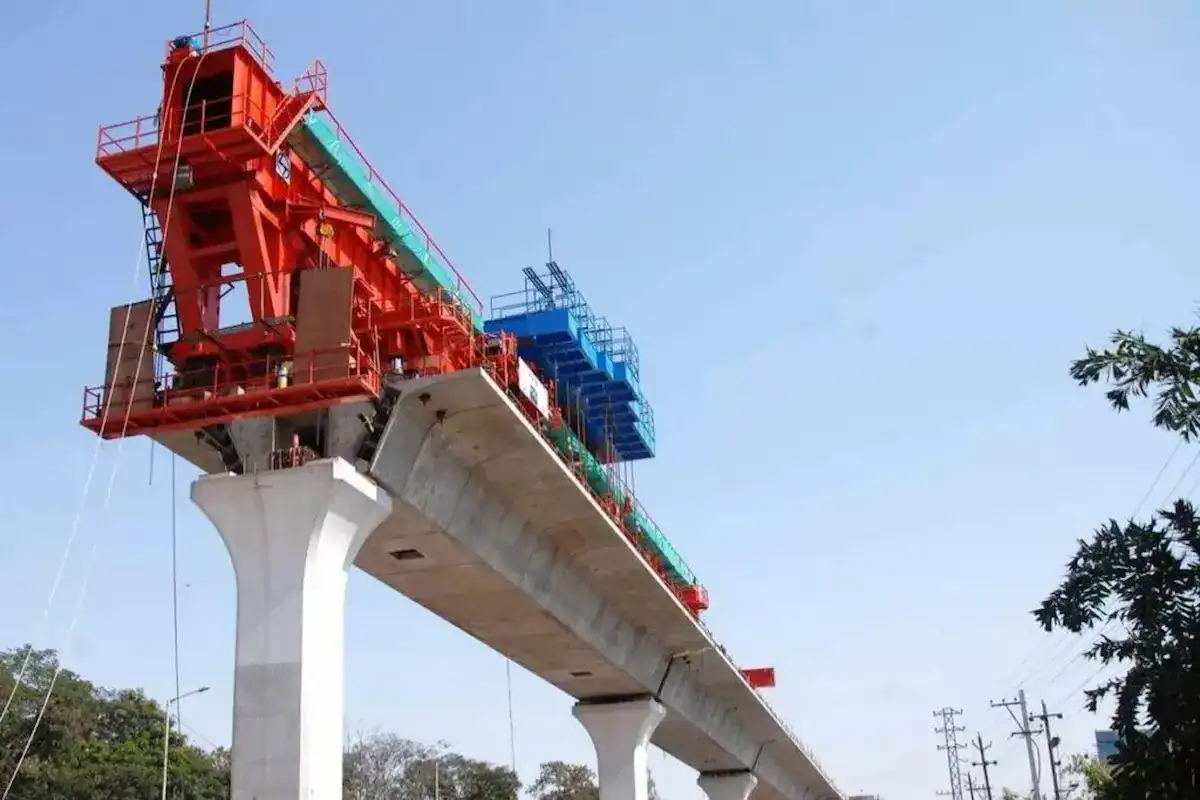
The selection of a bridge launching gantry determines project schedules, quality, and final costs. In large infrastructure projects, parameter deviations can stall progress. Scientific selection requires engineering analysis of terrain, beam specs, and methods, not just price or parameter stacking.
The core logic for avoiding pitfalls: accurately match needs from the design phase and evaluate using Total Cost of Ownership (TCO). Only stable, safe equipment with reasonable configurations ensures continuous, efficient operations in complex conditions.
Consultation and Technical Support: Contact HSCRANE
Whether facing harsh terrain or lifting challenges, HSCRANE’s engineering team provides in-depth support. We help you avoid hidden costs and risks through precise technical selection and custom services.
- Project Assessment:Submit designs and requirements for equipment compatibility analysis.
- Customized Selection:We offer non-standard solutions for special spans or complex gradients.
- Lifecycle Consulting:Request detailed configurations and full-process cost analysis suggestions.
[Contact HSCRANE to get your specialized technical solution]
Construction Advancement: How to Double Efficiency?
Equipment parameters set the ceiling; refined construction processes determine actual delivery progress. From coordination to process sequencing, HSCRANE shares experience to help shorten schedules and reduce TCO.
[View Topic: From Principle to Practice: How Bridge Launching Gantry Improves Bridge Construction Efficiency]
FAQ
Q1: Should I choose a larger tonnage or span for "peace of mind"?
A1: No. Oversizing increases dead weight, transport/foundation costs, and reduces agility. Recommendation: Base specs on actual max load/span plus a 10-15% safety margin.
Q2: What are the strict requirements for mountainous or curved bridge construction?
A2: Complex terrain requires:
- Slope Adaptability:Reliable braking/locking for gradients (>4%) to prevent sliding.
- Curve Capability:Precision cross-travel for millimeter-level landing accuracy.
Q3: How do I evaluate transition and installation efficiency?
A3: Assess:
- Modularity:Ensure components meet road transport limits.
- Interfaces:Use pin/flange connections to minimize on-site welding. Mature designs assemble in 7-10 days.
Q4: Where do maintenance costs primarily accumulate?
A4: Costs center on:
- Wear Parts:Use standardized seals/ropes/pulleys to avoid long lead times.
- Structure:High-grade anti-corrosion minimizes long-term refinishing costs.
Q5: What are the core safety configurations of HSCRANE bridge launching gantries?
A5: HSCRANE units feature:
- Mechanical Limits:Prevents over-travel.
- Electronic Protection:Real-time load monitoring/shutoff.
- Anti-Overturning:Mechanical locks for wind stability.
- Emergency Backup:Dual-motor redundancy.
This document is for reference only. Specific operations must strictly comply with local laws and regulations and equipment manuals.

Get Expert Advice for Your Bridge Project
Our engineering team brings decades of experience in bridge construction equipment. Let us help you find the right solution.

 Scan to chat