 EN_US
EN_US  Español
  Русский
  العربية
  Português do Brasil
  Français
  Bahasa Indonesia
  Türkçe
  Tiếng Việt
  Bahasa Melayu
  Українська

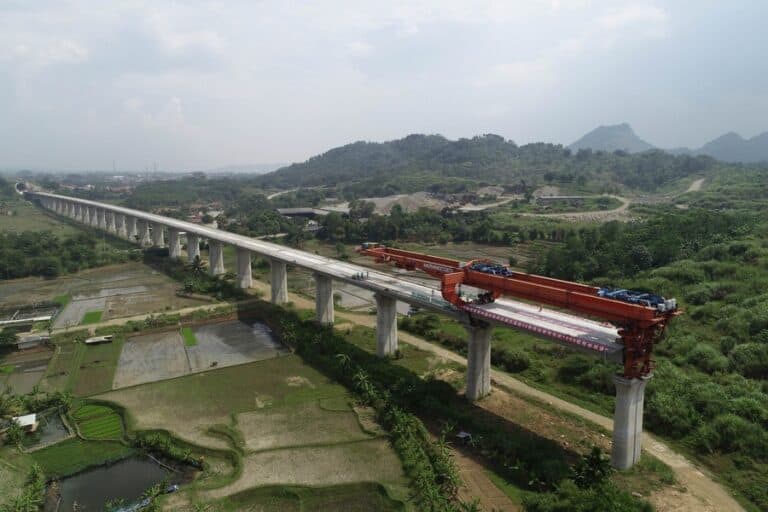
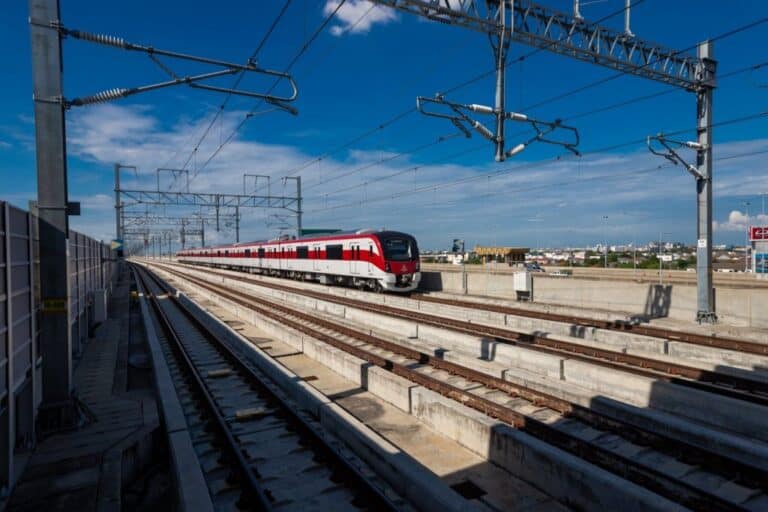
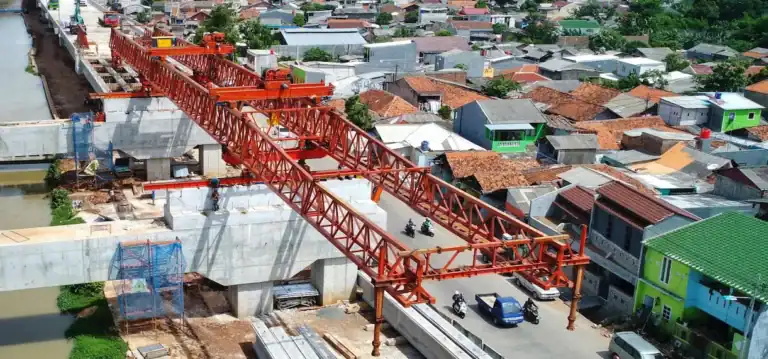 Technical Insight
Technical Insight
Bridge Equipment Certification Guide: A Complete Guide to CE, ISO and FEM Standards
Overview
When exporting bridge equipment like the bridge launching gantry, beam lifting lantry crane, and beam transporter, buyers get confused. What is the difference between CE, ISO, and FEM? Which one is most important for bridge equipment? They have different roles and cannot replace each other. Simply put, CE certification is a safety visa for equipment to enter Europe. ISO is the basic skill measuring the factory manufacturing and quality system. FEM is the design skeleton deciding if cranes can handle heavy work.
This guide avoids stiff academic rules. It starts from actual pain points in construction to clarify differences and uses of these standards. You might want to buy compliant heavy equipment or avoid traps in global projects. After reading this, you can accurately choose compliant and durable equipment based on working conditions.
What is bridge equipment certification? Why is it important?
Clients in overseas projects know that making good machines is not enough. Exporting heavy equipment also needs many identity proofs. Bridge equipment certification is an evaluation by a third party. It checks design, manufacturing, and safety to prove the equipment meets strict market rules.
What does bridge equipment mainly include?
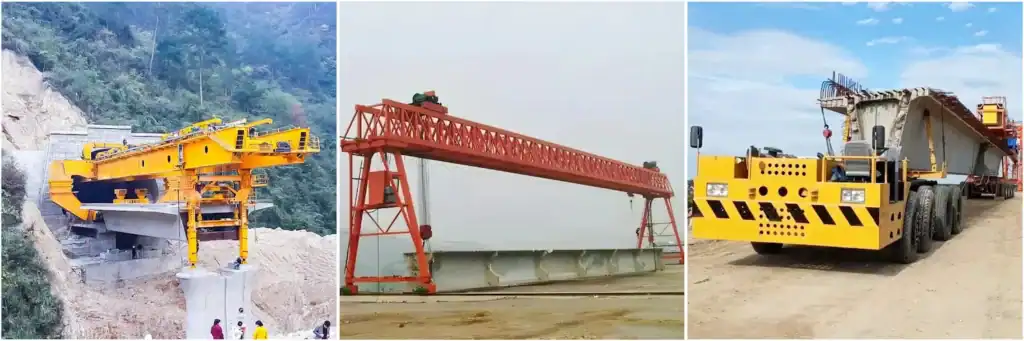
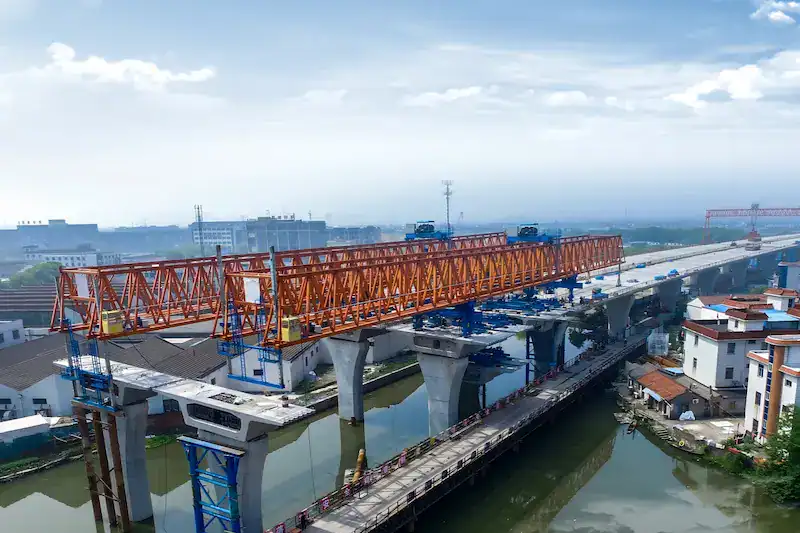
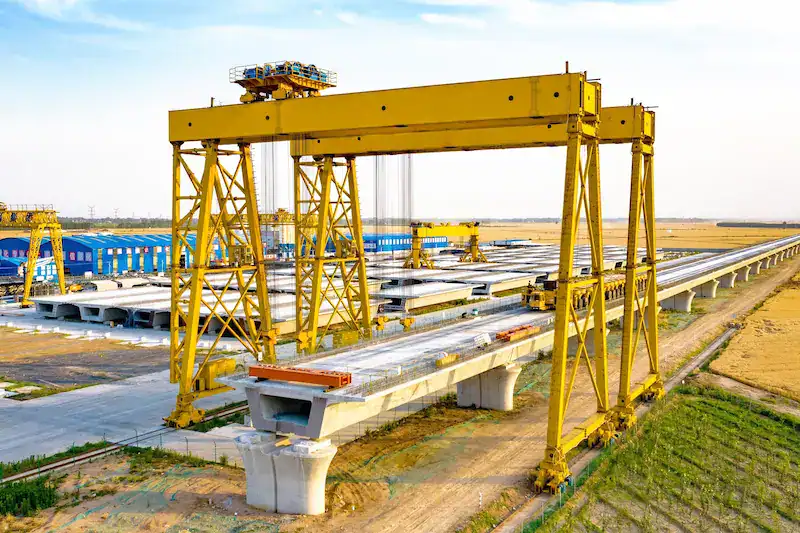
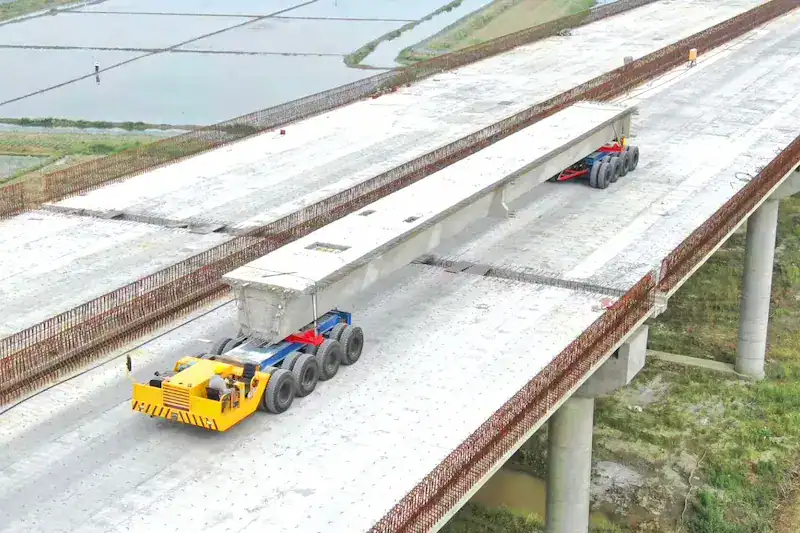
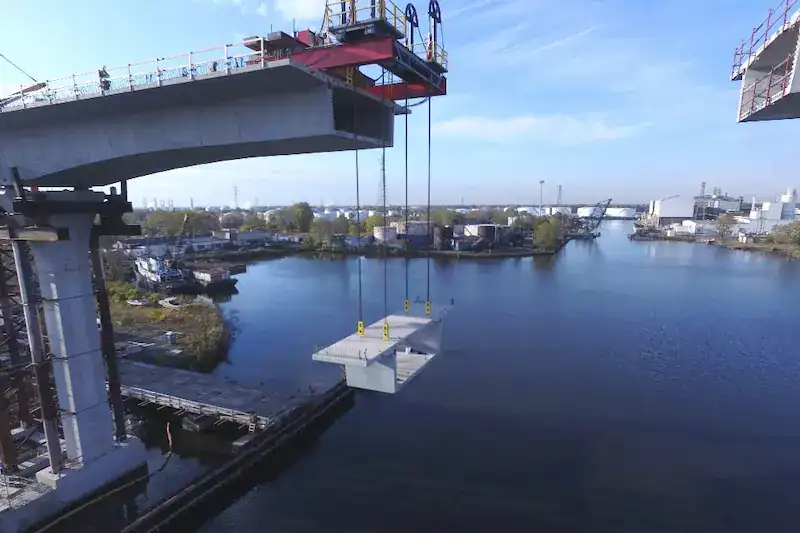
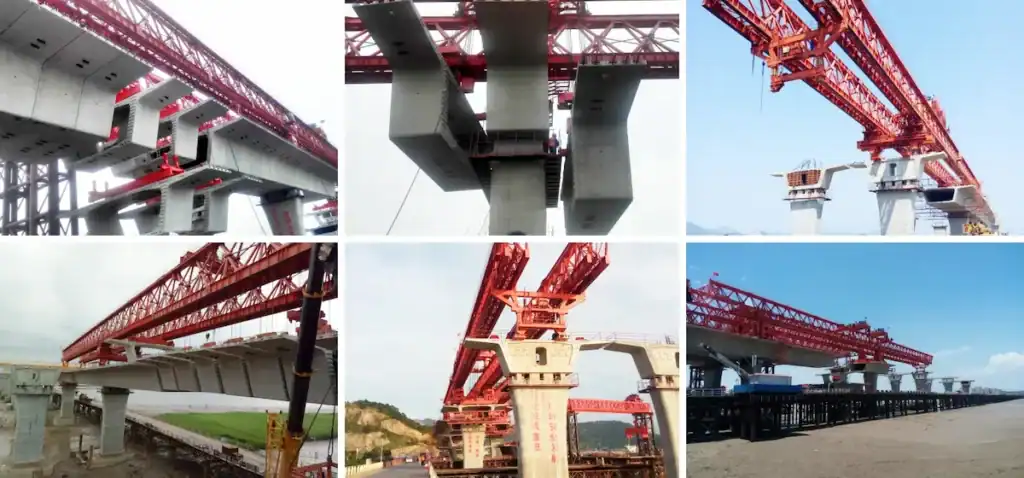
When discussing international certification of bridge equipment, we usually mean the following heavy machines. These handle major tasks in precast yards or sea and river bridge construction:
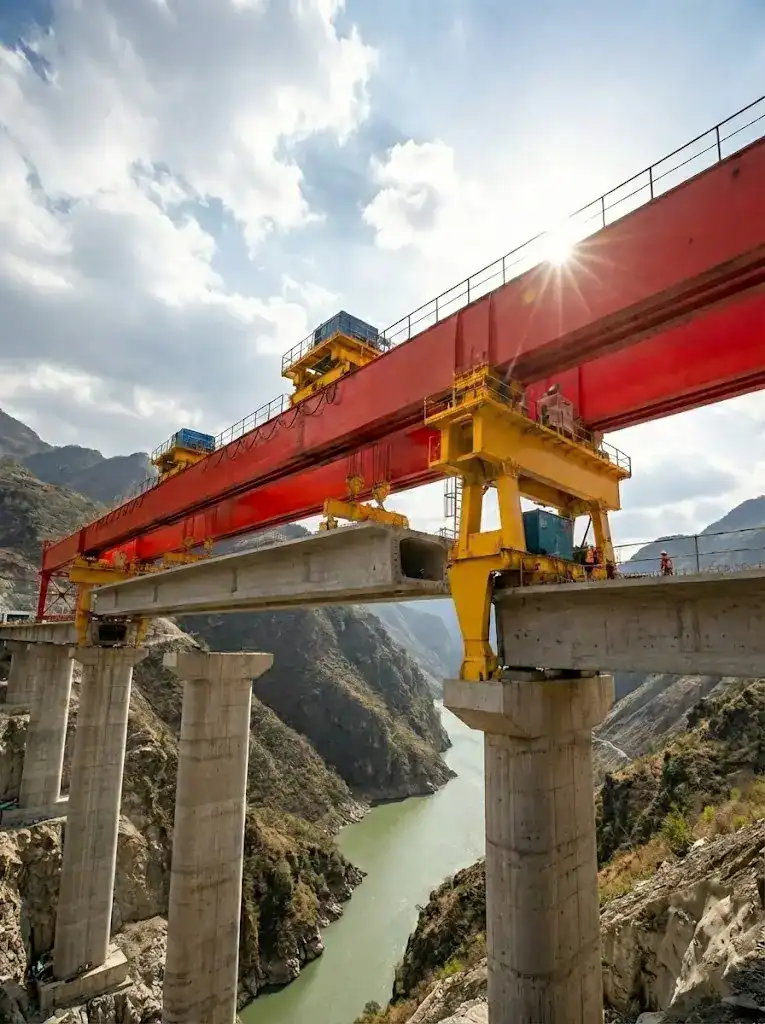
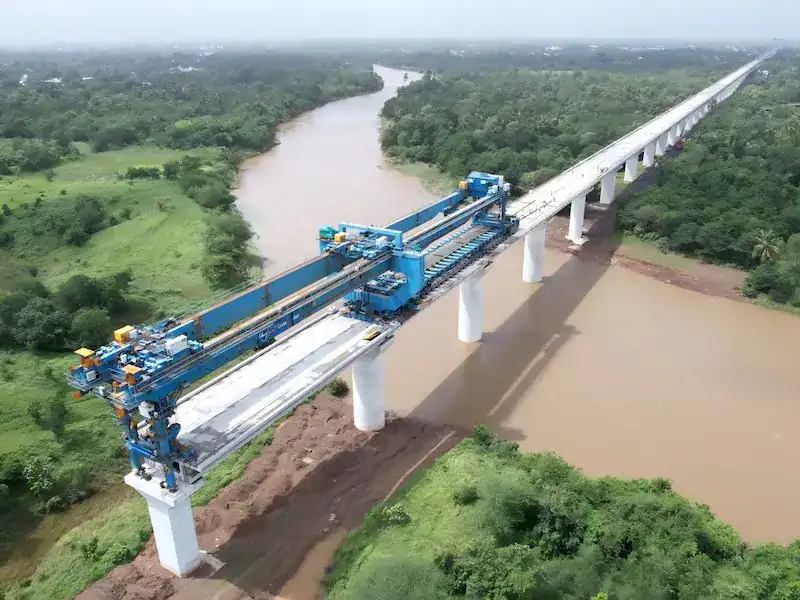
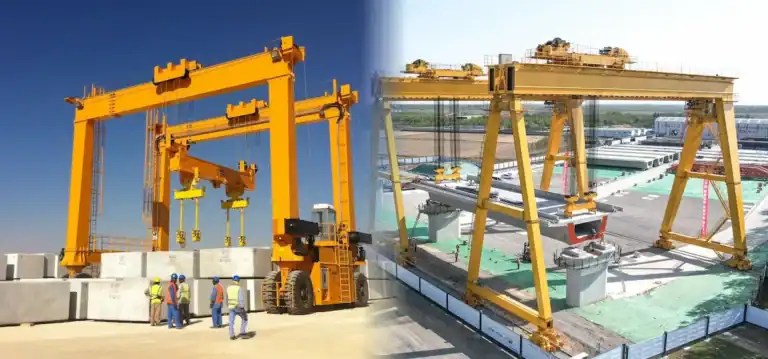
- Bridge launching gantry: It works directly on bridge piers. It is responsible for accurately erecting precast beams into place.
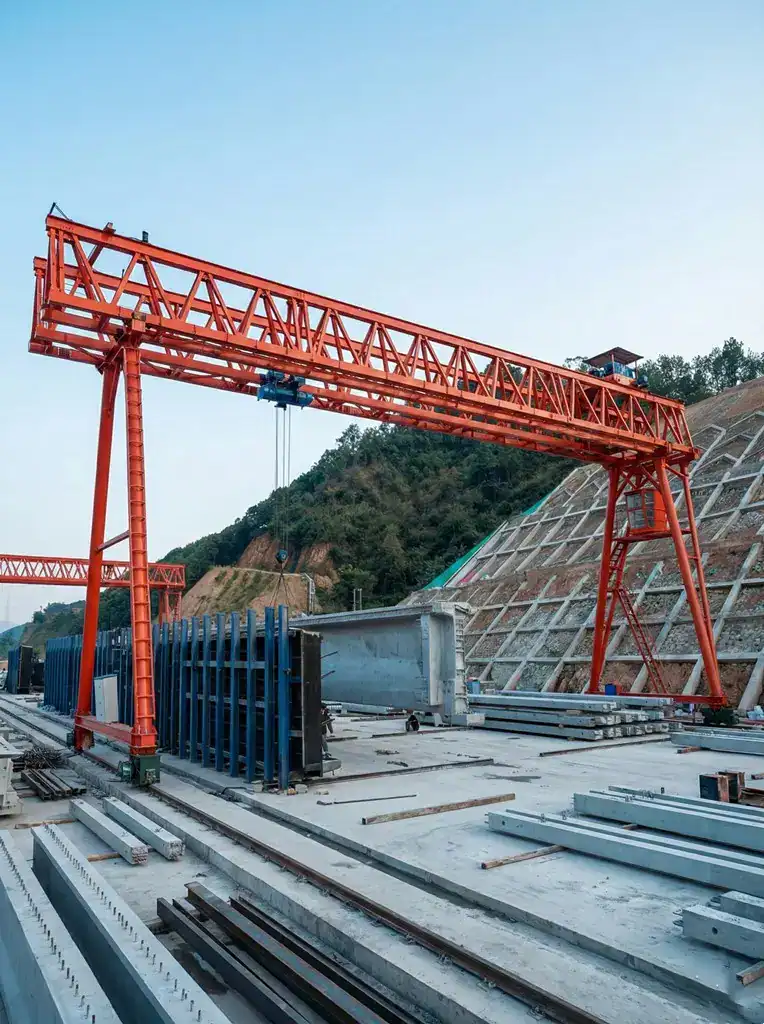
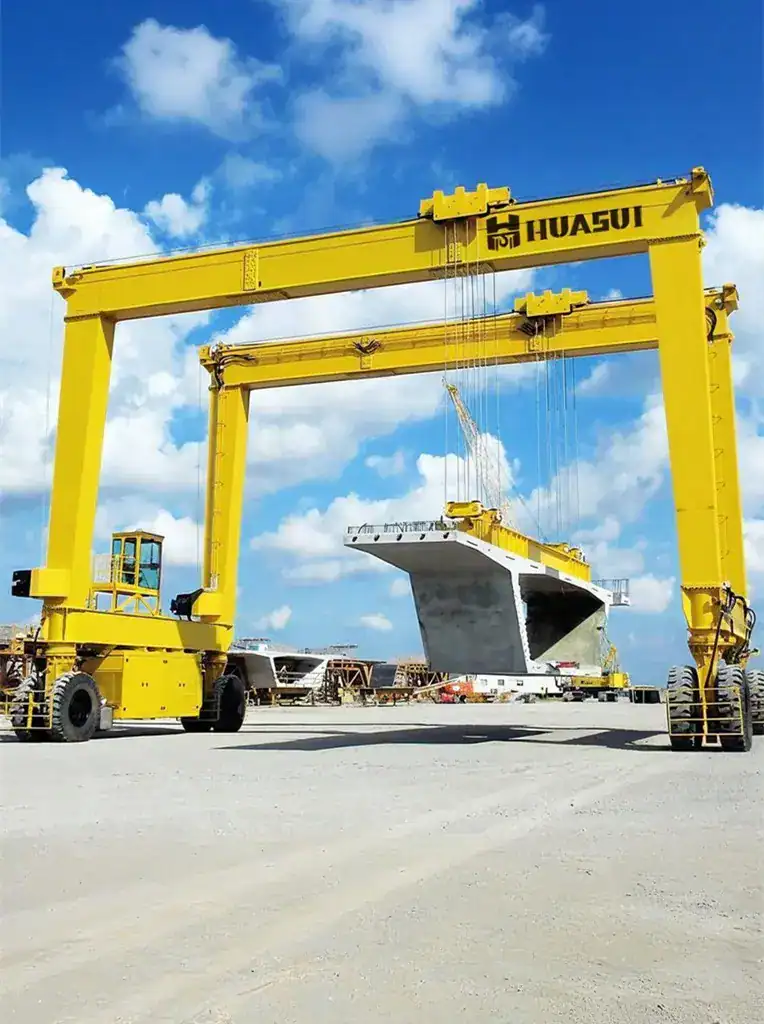
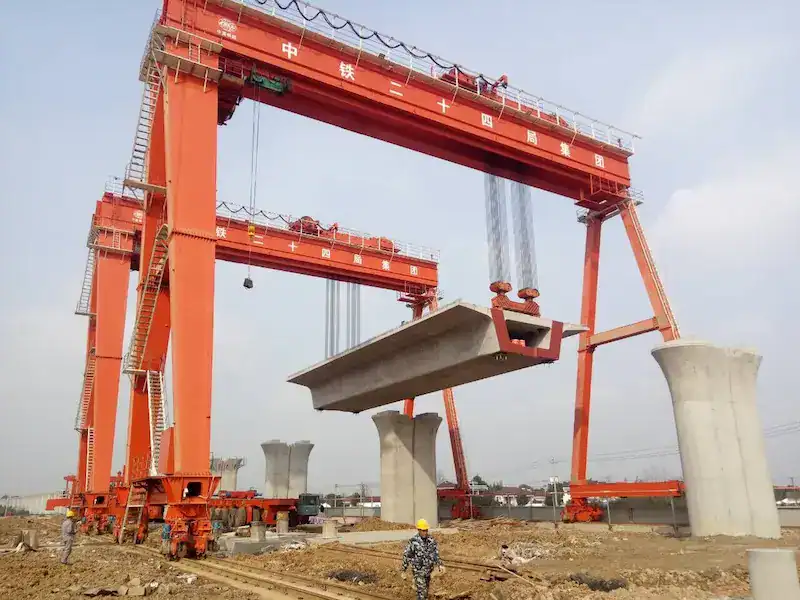
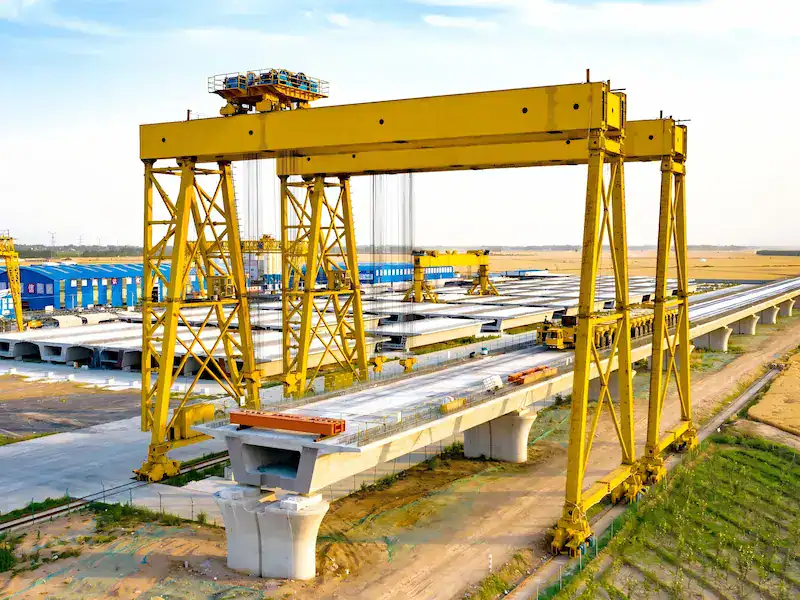
- Beam lifting lantry crane: It is a large tonnage tire or rail gantry crane. It lifts huge concrete beams from templates and loads them.
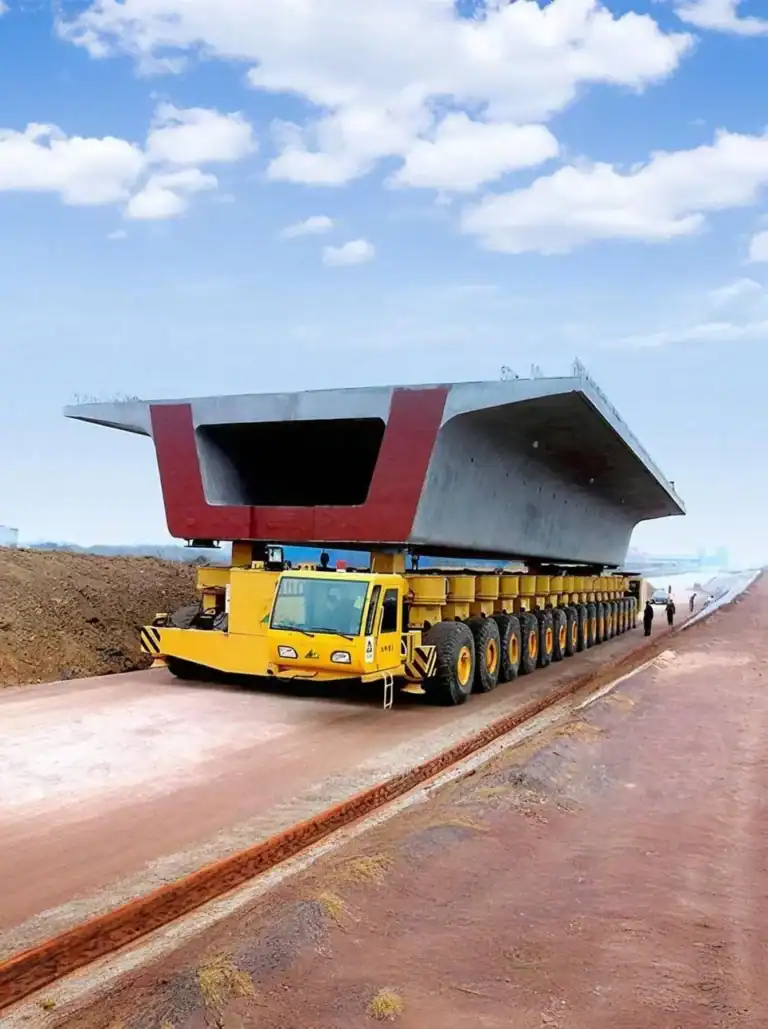
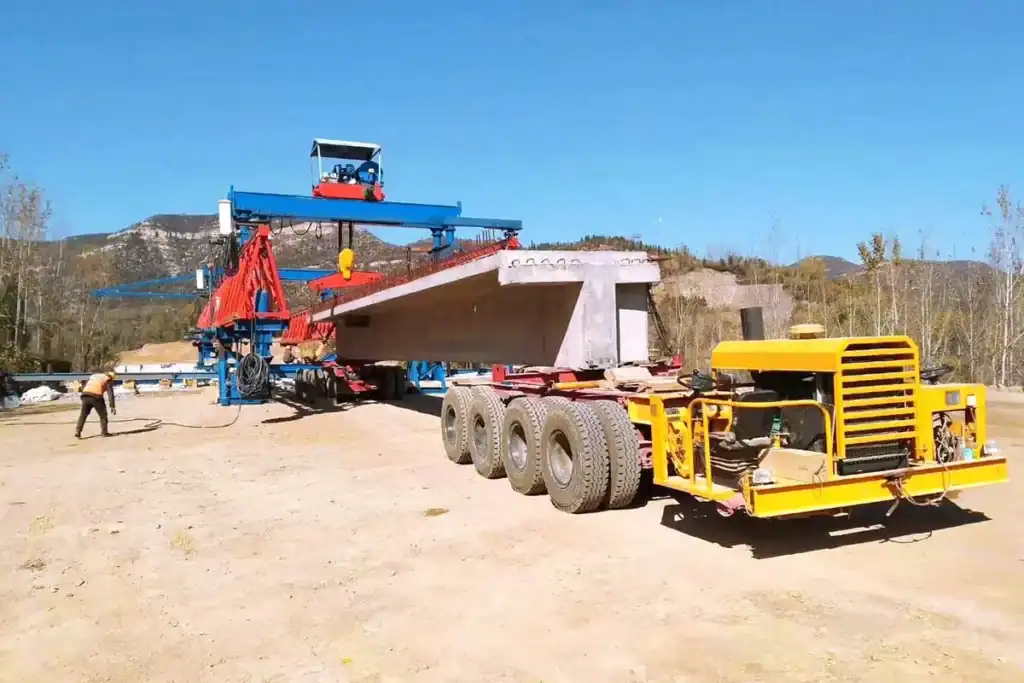
- Beam transporter: It is a super flatbed truck. It carries heavy precast beams between the yard and site.
- Auxiliary lifting equipment: This includes matching overhead cranes and gantry cranes. It also includes special gantry systems for equipment.
Why should bridge equipment focus on international standards?
Many buyers ask why customized bridge launching gantry prices differ under international standards. The answers lie in the following hidden costs:
- Improve safety: Bridge construction lifts components weighing hundreds of tons. Accidents are disastrous. International standards provide a safety baseline for equipment.
- Standardize design and manufacturing: Standardization makes drawings, materials, and welding traceable. This avoids random workshop manufacturing for equipment.
- Reduce operation risks: It cuts failure rates of equipment in harsh conditions. This ensures the project schedule.
- Cross market barriers: This is very realistic. Without certification like CE, equipment cannot clear customs.
- Facilitate overseas acceptance: Contractors and owners come from different countries. Standards like FEM or ISO become a common language. This reduces disputes during equipment acceptance.
What problems do CE, ISO, and FEM solve respectively?
Clients often confuse these three concepts in actual communication. We must clarify that they cannot replace each other.
- CE is a market pass: It is strictly mandatory. It focuses on whether equipment meets European safety laws.
- ISO is a basic enterprise skill: It mainly evaluates our management system. It does not directly target specific equipment.
- FEM is a design skeleton: It is a design code from Europe. It focuses on the workload and fatigue life of cranes.

CE Certification: Important Requirements for Bridge Equipment Entering the European Market
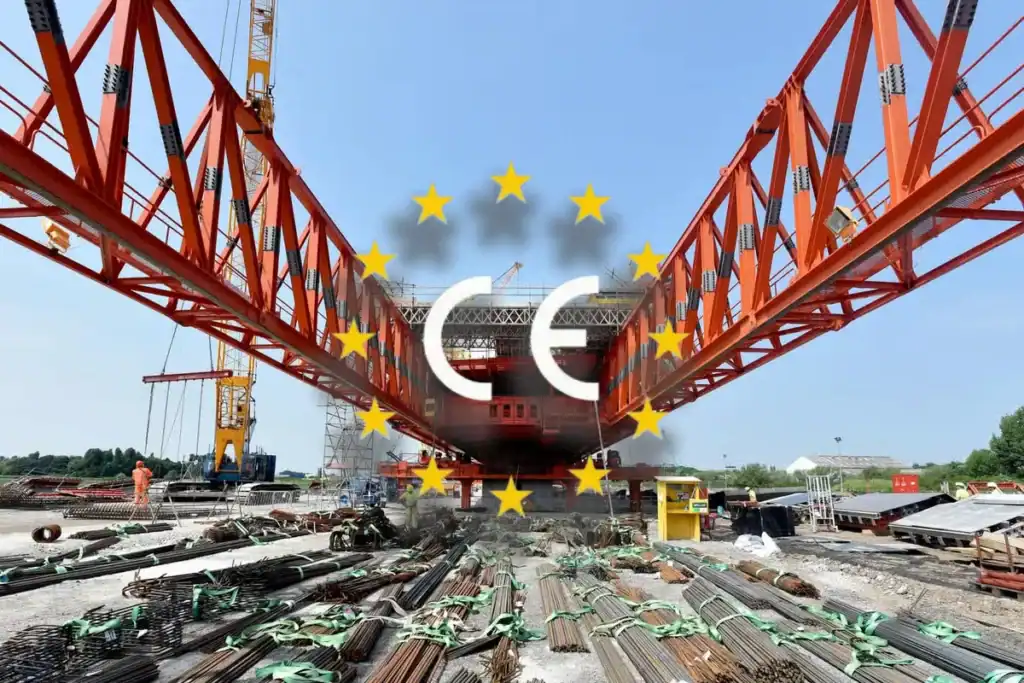
If your bridge project is in the EU, CE mark is essential. Or, owners may require European standards. CE is not an excellent quality medal. It is a mandatory safety declaration. It proves to regulators this huge bridge equipment will not fatally endanger operators and the public.
Why Should Bridge Equipment Focus on CE?
For heavy lifting equipment, getting CE compliance means factories must work hard on these core dimensions:
- Mechanical safety: Ensure structures will not break suddenly. Wire ropes and slings must meet safety factors.
- Electrical safety: Prevent electrical leakage. Ensure control systems stop safely during power outages or anomalies.
- Risk assessment: All potential hazards like crushing, falling, or overloading must be listed during drawing stages. Design must be used to avoid them.
- Technical Construction File (TCF) and Declaration of Conformity (DoC): Every equipment needs a complete file. It also needs a legal commitment signed by the maker for inspection.
What Does Bridge Equipment CE Compliance Usually Involve?
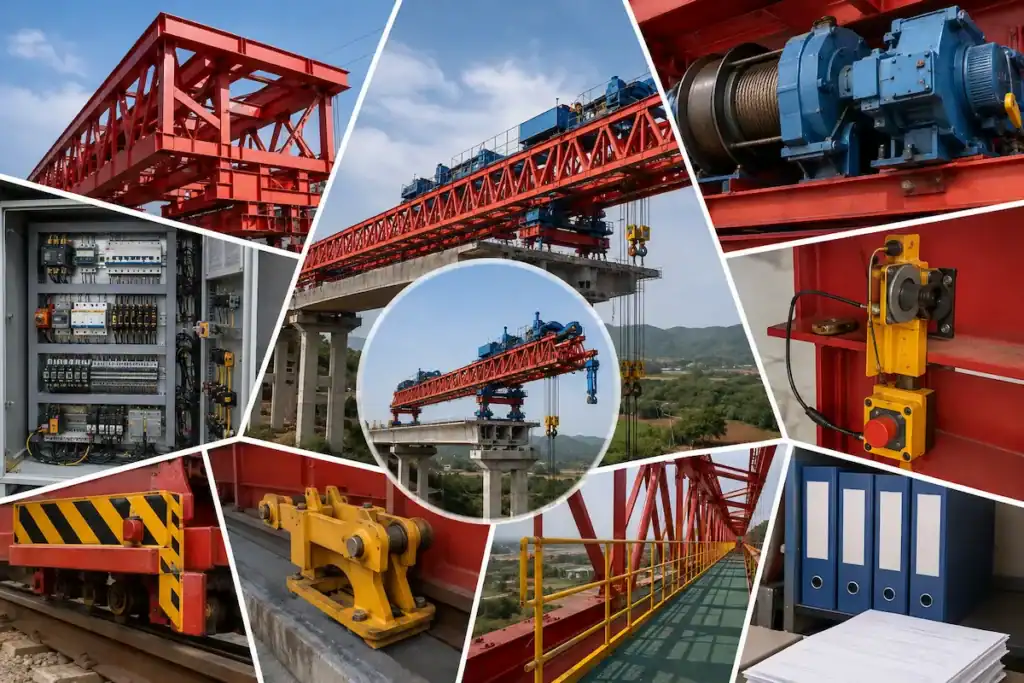
To make it more intuitive, we broke down CE assessment focuses into this list:
| Assessment System / Process | Core Focus of CE |
| Mechanical structure design | Is steel selection qualified? Does welding process assessment pass? Are wind and earthquake calculations sufficient? |
| Lifting and traveling mechanism | What happens when brakes fail? Are safety margins of reducers and drums sufficient? |
| Electrical control system | How is cable flame retardancy? Are emergency stop buttons placed reasonably? Does control cabinet IP rating pass? |
| Safety protection device | Are weight limits, height limits, wind rail clamps, and travel switches fully equipped and sensitive? |
| Operation and maintenance | Are there obvious warning signs at dangerous parts? Is there foolproof design preventing misoperation? |
| Document review | Can a full set of traceable technical files be provided? Regulators love checking this most. |
What Documents Are Needed for CE Certification and Compliance?
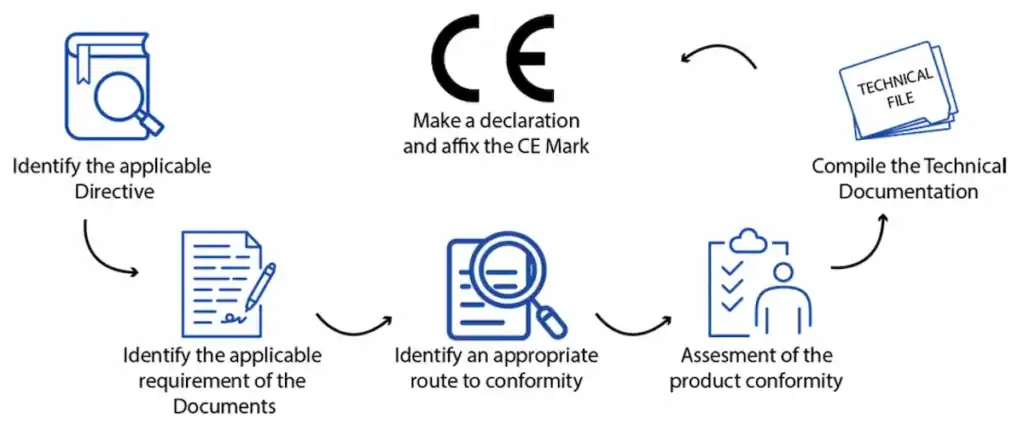
Many factories lacking export experience think CE is simple. They think paying an agency for a certificate works. Actually, real and compliant CE certification requires a thick pile of technical documents. When executing export projects, we usually confirm the following documents with clients and audit agencies:
- Product technical parameter sheet: It includes detailed span, lifting height, working duty, and speeds of mechanisms.
- Complete design drawings: These include general assembly, core load-bearing parts, electrical schematics, and hydraulic system drawings.
- Calculation data: This is hard evidence proving equipment won’t collapse. It includes structural statics, dynamics, and stability calculations.
- Risk assessment report: It contains hazard investigation and rectification records based on the EN ISO 12100 standard.
- Test and inspection records: These include no-load, static, and dynamic test reports before leaving the factory. Non-destructive testing reports are also required.
- Operation and maintenance manual: It must be in the target market language. It details operating procedures and scrapping standards.
- Declaration of Conformity (DoC): It is finally signed by factories as a document bearing legal responsibility.
Factory trap avoidance advice: Never wait until equipment is built to prepare these documents. In HSBRIDGE’s process, this work starts during bidding and drawing stages. This ensures smooth delivery of equipment later.
ISO Standards: Important Foundation for Bridge Equipment Quality Management and Manufacturing
When clients visit our factory, they first see if the bridge equipment is big. However, real experts look at workshop management. At this time, ISO standards come into play. CE focuses on equipment safety. Unlike CE, ISO is more like scoring manufacturers. It does not target specific bridge launching gantry or beam lifting lantry crane. It evaluates standardized management, quality control, and manufacturing processes. Simply put, ISO proves enterprises can stably build good equipment. It shows they do not rely on luck.
Common ISO Standards for Crane Enterprises
In the heavy bridge equipment industry, the three-system certification is a stepping stone to strength:
- ISO 9001 (Quality Management System): The core proves enterprises have strict quality control processes. Everything from drawings to delivery follows rules.
- ISO 14001 (Environmental Management System): It proves factory exhaust and wastewater treatments meet standards during production. Environmental protection is not lacking, which many large projects demand.
- ISO 45001 (Occupational Health and Safety): It proves enterprises value worker safety in workshops. Only well-managed enterprises can build safe equipment.
What Does ISO 9001 Mean for Crane Manufacturing?
Do not view ISO 9001 as just paper on the wall. In actual bridge equipment manufacturing, it is an obsessive process penetrating every step:
- Raw material procurement: A heavy bridge launching gantry needs a strong foundation. Steel plates need material sheets and key parts need re-inspection. No unqualified steel enters the workshop.
- Parts quality control: Core components must undergo strict sampling or full inspection before storage. Clear supplier traceability files must be established.
- Welding and processing control: This is the lifeline. Welders must hold certificates like AWD or EN. Key welds need flaw detection and processing sizes require precision.
- Product inspection: We implement a three-inspection system. Hidden works must be signed by inspectors before sealing boards. Problems are never left to the next step.
- Factory quality management: Pre-assembly and no-load debugging must be finished before shipping equipment. Parameters must match drawings, and complete inspection reports are packed.
- After-sales service: Even if equipment reaches distant sites, we can handle spare parts. We find drawings and numbers in minutes using ISO files.
FEM Specifications: Important Reference for Bridge Equipment Design and Duty
CE decides if equipment can be sold. ISO decides if the manufacturing is excellent. FEM decides how heavy the workload is. It also decides how long the equipment lasts.
FEM stands for European Federation of Materials Handling. In the crane industry, FEM specifications are the recognized technical bible. It mainly specifies calculation methods during lifting equipment design. It also evaluates fatigue life and divides working classes.
What impacts does FEM have on crane design?
Working conditions at bridge construction sites vary greatly. Some equipment lifts twice a day. Some run 24 hours continuously. FEM is used to quantify this working intensity. It directly affects the following design parameters of the equipment:
- Crane working class: It comprehensively considers the utilization class and load state.
- Load spectrum: Does the equipment occasionally lift full loads? Or does it lift full loads every time?
- Usage frequency: How many times does the mechanism start and brake daily?
- Mechanism working class: It classifies lifting and traveling mechanisms respectively. Examples include M3, M4, and M5.
- Fatigue life and structure design: Higher classes need conservative fatigue design. Steel plates are thicker and girders are stiffer.
How does FEM working class affect crane selection?
When communicating needs with clients, the first thing is determining the class. Blindly pursuing high configurations wastes budgets. Choosing a lower class leads to daily equipment maintenance.
Below is a common bridge equipment selection reference based on FEM:
| Working Intensity | Load Features and Usage Frequency | Typical Bridge Equipment Application Scenarios |
| Light duty | Rarely lifts full loads, long gaps, low frequency. | Bridge maintenance hoists, occasionally used maintenance cranes. |
| Medium duty | Sometimes lifts full loads, usually medium loads, normal single-shift. | Normal beam lifting lantry crane, some standard bridge launching gantry. |
| Heavy duty | Often lifts heavy loads, works frequently, possible double shifts. | Frequent gantry cranes in large yards, heavy beam transporter. |
| High-frequency continuous duty | Almost always full loads, 24-hour continuous, harsh environments. | High-intensity equipment for sea bridges and high-speed railways. |
Why focus on FEM when purchasing bridge equipment?
Many non-technical purchasing managers find FEM too profound. Actually, you only need to grasp its core logic. Then you can take the initiative at the negotiation table:
- Accurately judge condition adaptability: Tell factories your real frequency and loads. Factories can calculate the best model via FEM to avoid overworking.
- Avoid over or under selection: A project might last half a year and lift two beams daily. Buying heavy-duty equipment for this wastes money. Conversely, under-selection means planting a bomb for yourself.
- Effectively evaluate equipment life: FEM specifications hide an equipment health countdown. Equipment designed by FEM has controllable structural fatigue life. Core component wear is also in a predictable range.
- Provide pricing basis for core components: Two suppliers might have huge price gaps. Check if their reducers, wire ropes, and motors have identical FEM classes. The tricks are usually hidden right here.
HSBRIDGE Engineer Tip: Do not just compare tonnages across different equipment plans. A 100-ton gantry crane with FEM M3 design differs greatly from an M5 design. Their dead weights, motor powers, prices, and lifespans are vastly different.
What are the differences among CE, ISO, and FEM?
With so much said, what if owners ask about their differences in meetings? How can you explain it clearly in one sentence?
It is simple. CE guarantees the safety baseline to ensure no accidents. FEM decides the technical ceiling for how heavy the workload is. ISO stabilizes the manufacturing base to prove it is not workshop production.
We organized the following comparison matrix for easy reference. It helps during purchasing approvals or technical docking.
| Comparison Item | CE Certification | ISO Standards | FEM Specifications |
| Main Role | Legal compliance proof for market entry. | Yardstick measuring enterprise management and quality control. | Technical baseline for crane structure and duty. |
| Core Focus | Mechanical/electrical safety, risk prevention, compliance. | Raw materials, manufacturing process, improvement ability. | Load spectrum, usage frequency, fatigue life, strength. |
| Target Subject | Specific products like a bridge launching gantry. | Manufacturing enterprises and their management processes. | Specifically for lifting and material handling equipment. |
| Relation to Design | Highly related. Risks must be eliminated initially. | Indirectly related. It standardizes drawing review processes. | Highly related. It decides materials and stress calculations. |
| Relation to Europe Market | Absolute rigid threshold. No CE, no entry. | Common access requirement. Common bidding threshold. | Core technical reference. Universal European engineering language. |
| Value to Purchasing | Judges if equipment has legal and safe entry qualifications. | Judges if factories have stable delivery capabilities. | Judges if equipment perfectly matches real site conditions. |
Core Conclusion: CE, ISO, and FEM are definitely not a mutually replaceable multiple-choice question. In serious global bridge projects, they are like a stable triangle. They filter truly reliable heavy equipment from three dimensions. These are legal safety, manufacturing reliability, and working condition adaptability.

[Database] Don’t just read ads, check real export resumes!
Empty talk is worse than real cases. Are you still having a headache about compliance reviews for overseas projects? Click the link below to get real compliance files directly. They cover HSBRIDGE bridge equipment exported to Europe and Middle East. They include sample CE declarations, ISO certificates, and FEM summaries.
[Click here to get reference materials for HSBRIDGE bridge equipment certification]
How to select standards for bridge equipment based on projects?
The truly professional approach is customized selection. Combining HSBRIDGE’s years of overseas equipment project experience, we suggest this. Follow these four dimensions to precisely target required standards.
| Assessment Dimension | Actual Project Condition | HSBRIDGE Selection and Standard Advice |
| By equipment use country | EU or countries affected by European laws (like some in Middle East, North Africa). | Mandatory CE certification required. Must provide full TCF technical files. Prioritize FEM design to ensure smooth audits. |
| Asia, Latin America, or other African regions. | If no local mandatory laws, requiring ISO 9001 is the baseline. Also, agree to design by FEM or equivalent. This gives the best value. | |
| By equipment type | Bridge launching gantry, large beam lifting lantry crane, core beam transporter. | This is the project’s heart. Strict FEM structural calculations are mandatory. Configure multiple safety interlocks per CE standards. |
| Small auxiliary cranes and maintenance hoists in beam yards. | Meeting basic national safety standards is enough. Focus on reviewing ISO quality control. No need for excessive high configurations. | |
| By working environment | Sea bridges, extreme cold, or tropical rainforests. | Must use FEM environmental load parameters like extreme wind. Electrical protection must meet strict CE rules like IP65+. |
| Normal inland infrastructure environment. | Using normal FEM standard parameters is enough. No need to add extra extreme environment testing costs. | |
| By working class | High-speed rail or key projects needing 24-hour continuous equipment erection. | Must specify FEM M6, M7, or M8 heavy-duty design. Motors, reducers, and brakes must be upgraded. Underpowered drives are forbidden. |
| Normal highway bridges with intermittent beam erection. | Choosing FEM M4 or M5 medium design works. It meets schedules and slashes equipment purchasing costs. |
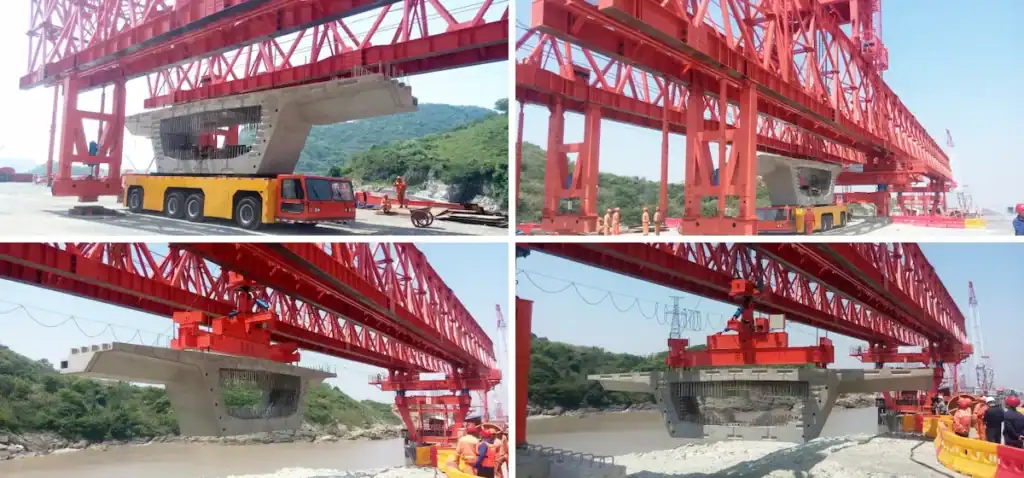
Product Advantages of HSBRIDGE Bridge Equipment
In the heavy equipment export circle, buyers want more than steel. HSBRIDGE knows clients buy confidence for smooth project delivery. Based on years of overseas project experience, we honed advantages. We focus on the following practical aspects for bridge equipment:
- Custom design based on conditions: Real bridge construction sites have no standard answers. What about steep slopes, sharp curves, unequal piers, or strong winds? Our engineers intervene early to provide one-on-one custom designs. This ensures equipment fits perfectly upon arrival.
- Focus on structure and core parts: We never compromise on core safety. Steel structures strictly follow FEM to calculate fatigue life. Core drives like motors and reducers use top international brands. This ensures equipment runs reliably during continuous intense work.
- Perfect quality control: We track everything from raw material tests to NDT. We implement full traceability up to coating thickness checks. Crucially, key structures undergo pre-assembly before leaving the factory. We never leave mismatched holes for overseas site workers.
- Support export transport: How to ship a heavy bridge launching gantry? We consider container and breakbulk ship limits during design. We offer turnkey global logistics support for equipment. This includes rust prevention, custom fixtures, and OOG transport coordination.
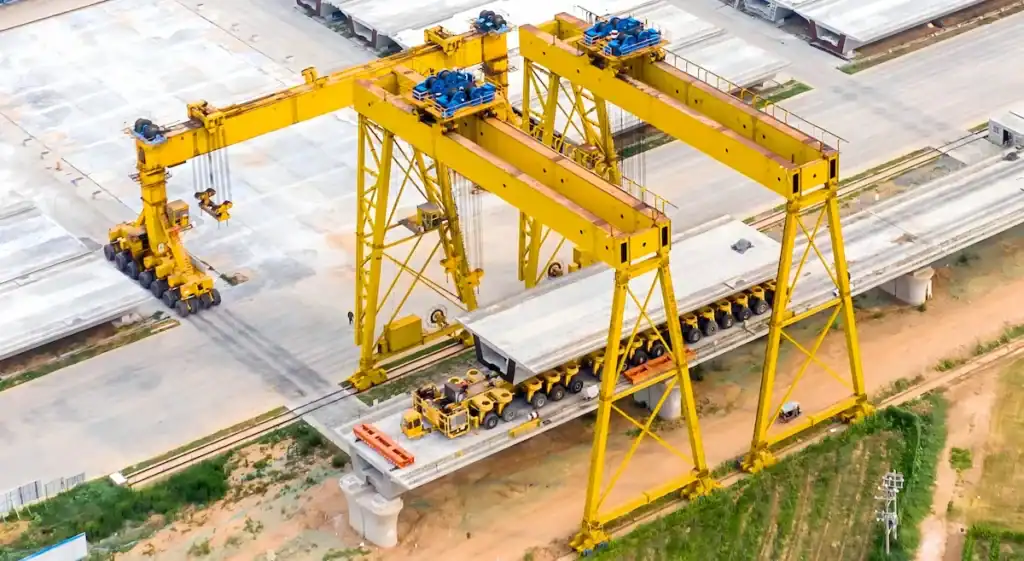
Classic Bridge Equipment Project Cases of HSBRIDGE
- Project Background: A large coastal highway viaduct in Indonesia. The site faced high heat, humidity, and salt spray. They also had tight pressure before the rainy season.
- Equipment Demand: PT. WIKA urgently needed two 120-ton beam lifting lantry cranes. They required CE safety compliance and FEM M5 working class. This was for high-frequency full-load beam lifting work.
- HSBRIDGE Solution: For corrosive islands, equipment got marine-grade anti-corrosion coating. Electrical systems were fully upgraded to IP65 protection. Based on CE risk assessment, multiple windproof systems were added. Emergency stop interlocks were also configured for the equipment.
- Production and QC: ISO 9001 quality monitoring covered the whole project. Certified inspectors performed 100% UT/MT flaw detection on key points. Before shipping, 1.25x static and 1.1x dynamic tests were completed. All parameters of the equipment met standards instantly.
- Packaging and Transport: Custom heavy steel brackets prevented sea transport deformation. The equipment shipped directly to Jakarta Port safely.
- Project Results: After arrival, the team finished assembly in 14 days. The equipment started working a week ahead of schedule. During peak construction, the twin machines safely lifted 600 beams. This zero-fault operation saved precious time for the project.
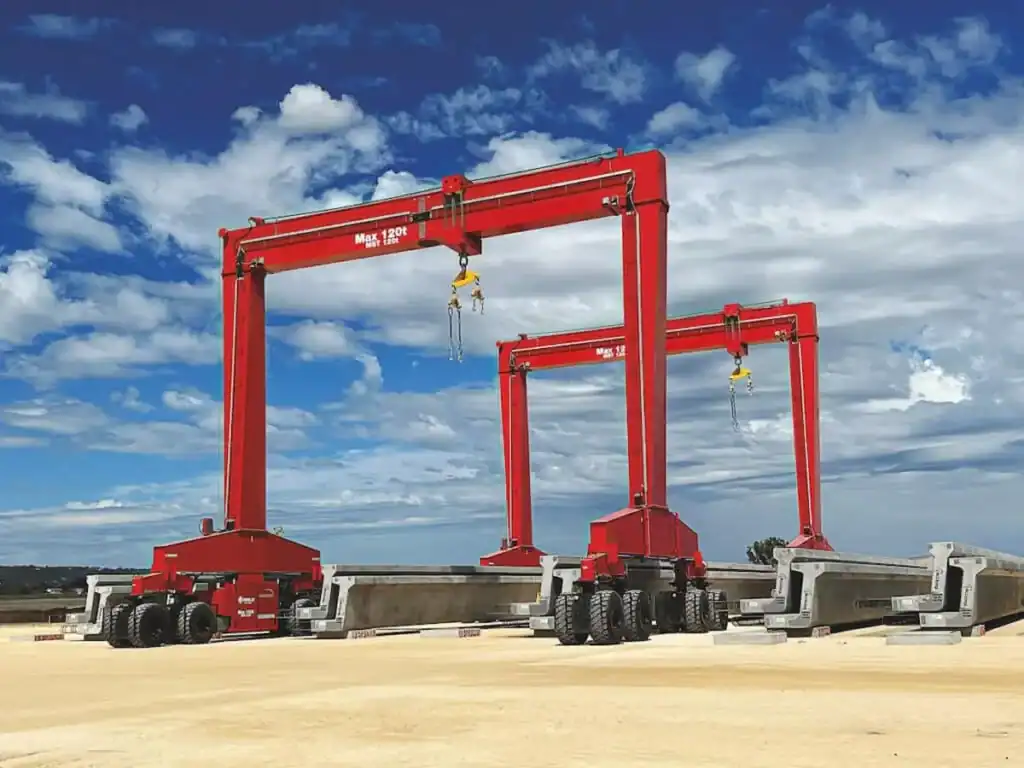
Conclusion
In global bridge projects, purchasing bridge equipment is not just about tonnage and low price. You can use three rules: CE for safety, ISO for manufacturing, and FEM for duty class. Then you easily spot cheap but dangerous low-quality equipment.
Building a bridge launching gantry is not hard. The difficulty is building a bridge launching gantry for harsh conditions passing global inspections. At HSBRIDGE, we sell more than steel structures and mechanical parts. We deliver ready-to-use and compliant lifting solutions for equipment.
Are you ready to start your next viaduct or sea bridge equipment project?
Do not ask for quotes blindly before drawings are finalized. Bring your project conditions like max load, span, target country, and daily workload. Talk with our senior engineer team today.
[Click here: Get free HSBRIDGE selection and compliance solutions for bridge equipment]
FAQ
Q: Our project is in Africa or Southeast Asia with no local rules. Is CE required for bridge equipment?
A: It is legally optional, but we offer two suggestions for equipment. First, with a limited budget, you can skip official CE certificates. Designing bridge equipment following FEM and CE safety logic cuts site accidents. Second, CE marks keep higher resale value for equipment.
Q: What is the delivery time for a 100-ton bridge launching gantry or beam lifting lantry crane under FEM?
A: Delivery takes 60 to 120 days depending on complexity and duty class. Compliant equipment requires structural calculations, part sourcing, and pre-assembly testing. We advise ordering bridge equipment during piling to avoid project delays.
Q: Why is a 160-ton CE/FEM beam lifting lantry crane pricier than standard bridge equipment?
A: The price difference secures safety and project schedules for equipment. Costs come from three areas:
Solid materials: FEM requires thicker steel plates for longer fatigue life.
Costly core parts: High protection ratings (IP55/IP65) and multi-brake motors are mandatory.
Hidden costs: Costs cover NDT testing, load tests, and TCF files for equipment.
Q: How do you handle overseas site installation and third-party testing for bridge equipment?
A: We provide full support for equipment. Experienced engineers offer on-site installation guidance after arrival. We understand SGS, TUV, and BV inspection processes. We assist clients with load testing and final compliance sign-off.
This document is for reference only. Specific operations must strictly comply with local laws and regulations and equipment manuals.

Get Expert Advice for Your Bridge Project
Our engineering team brings decades of experience in bridge construction equipment. Let us help you find the right solution.
 Scan to chat