 EN_US
EN_US  Español
  Русский
  العربية
  Português do Brasil
  Français
  Bahasa Indonesia
  Türkçe
  Tiếng Việt
  Bahasa Melayu
  Українська


 Technical Insight
Technical Insight
Bridge Launching Gantry for Complex Terrains: Types, Workflows & Safety
Overview
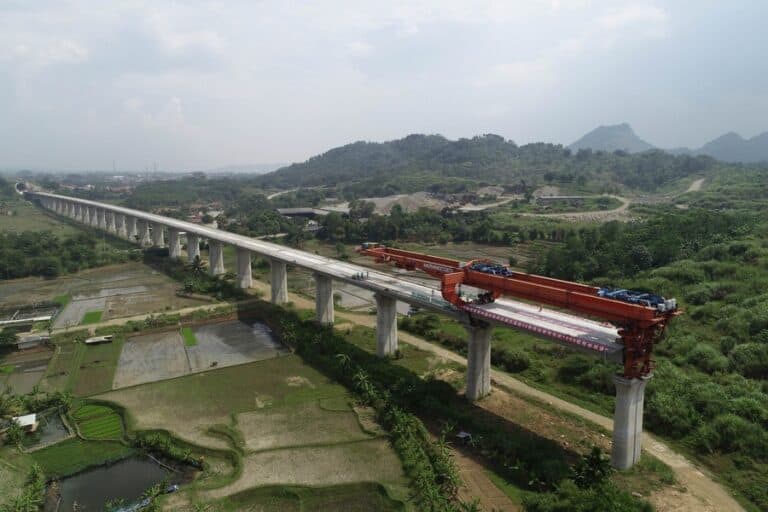
This article focuses on the application of bridge launching gantry in complex terrain bridge construction. It analyzes technical challenges in mountainous, canyon, and river-crossing environments. It explains working principles, types, and key roles of bridge launching gantry in complex conditions. These include improving efficiency, ensuring safety, and achieving precise beam placement. It also discusses typical application scenarios and practical engineering value. The article further analyzes key construction techniques and future development trends. It provides reference for selecting and applying bridge launching gantry.
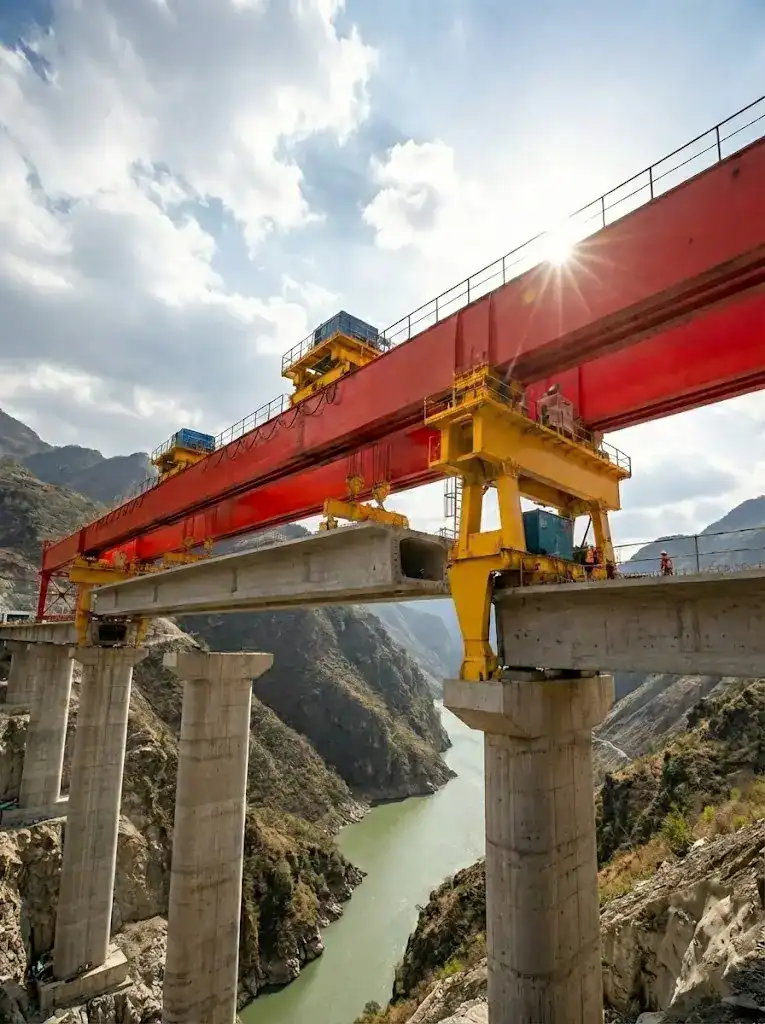
As bridge projects expand into mountains, canyons, and river-crossing areas, construction environments become more complex. Traditional lifting methods cannot meet safety and efficiency requirements. Bridge launching gantry offers high-altitude erection capability and low terrain dependence. It has become core equipment in modern bridge construction. It plays an irreplaceable role in complex terrain projects.
Key Challenges in Complex Terrain Bridge Construction
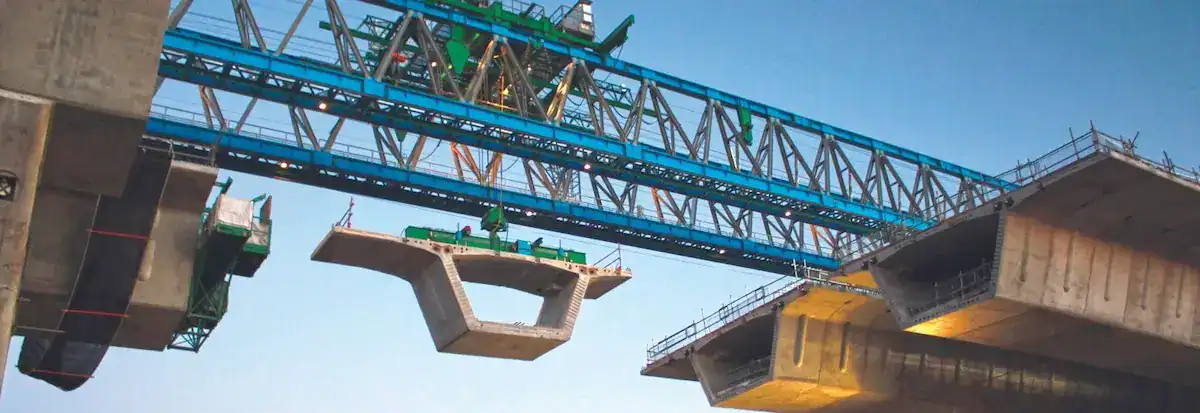
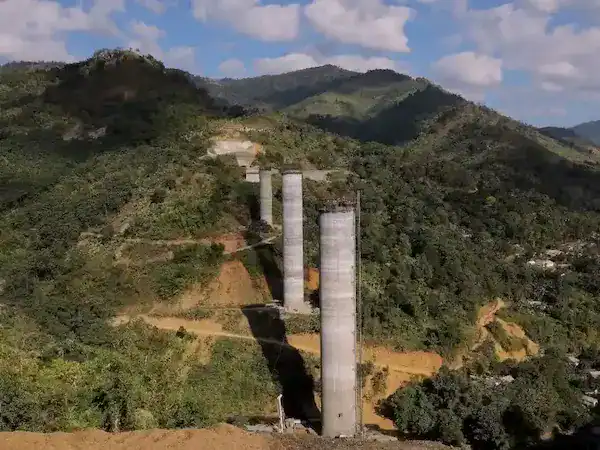
In mountainous, canyon, and river environments, bridge construction tests both engineering and equipment performance. Key challenges include:
- Large terrain variation and limited workspace: Mountain and canyon areas lack flat working platforms. Narrow spaces restrict equipment deployment, support, and transportation.
- High lifting difficulty and safety risks: In high-pier canyon construction, beams are lifted at great heights. Suspended loads are affected by airflow, increasing accident risks (Reference: Statistical Analysis of Global Bridge Construction Safety Accidents).
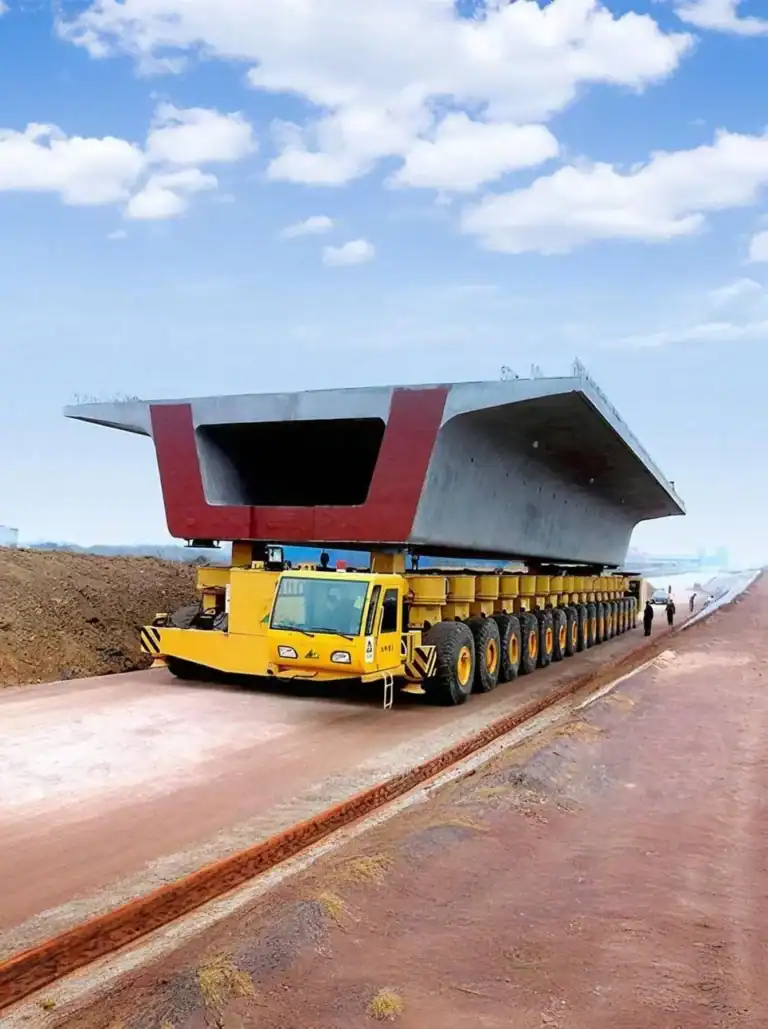
- High precision requirements for transport and positioning: Roads are narrow and uneven, making beam transport difficult. Precise longitudinal and transverse positioning is critical for stability.
- Climate and environmental impact:High altitude and water-crossing projects face strong winds, fog, and heavy rain. These factors affect schedules and equipment durability.

Working Principle and Types of Bridge Launching Gantry
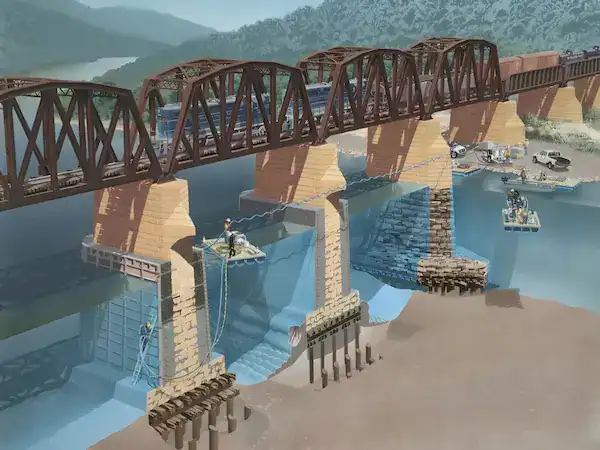
A bridge launching gantry is not just lifting equipment. It is a mobile construction platform. Understanding its operation ensures efficiency in complex terrain.
Basic Structure and Working Process
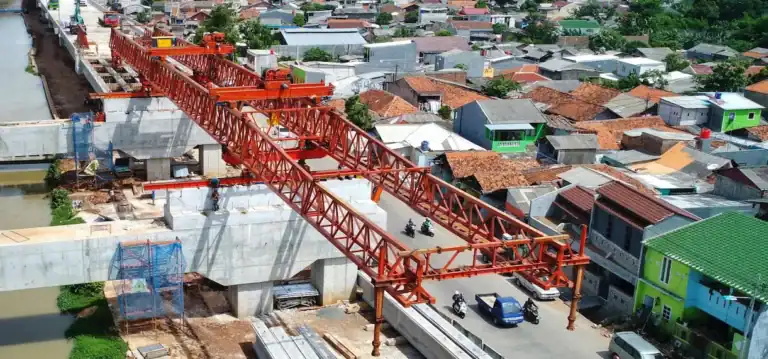
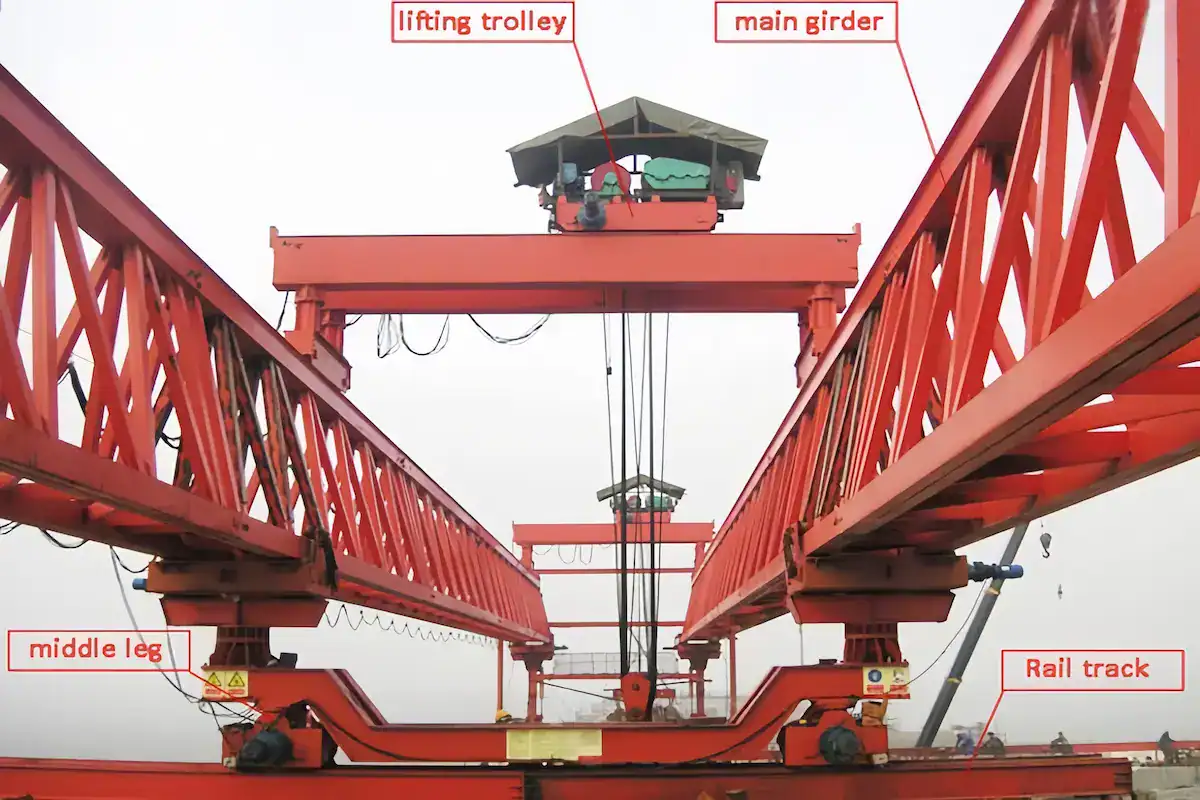
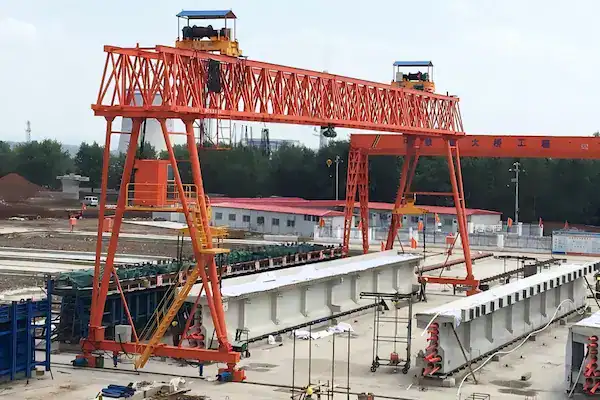
A typical bridge launching gantry includes main girder, support legs, lifting trolley, hydraulic system, and electrical control system.
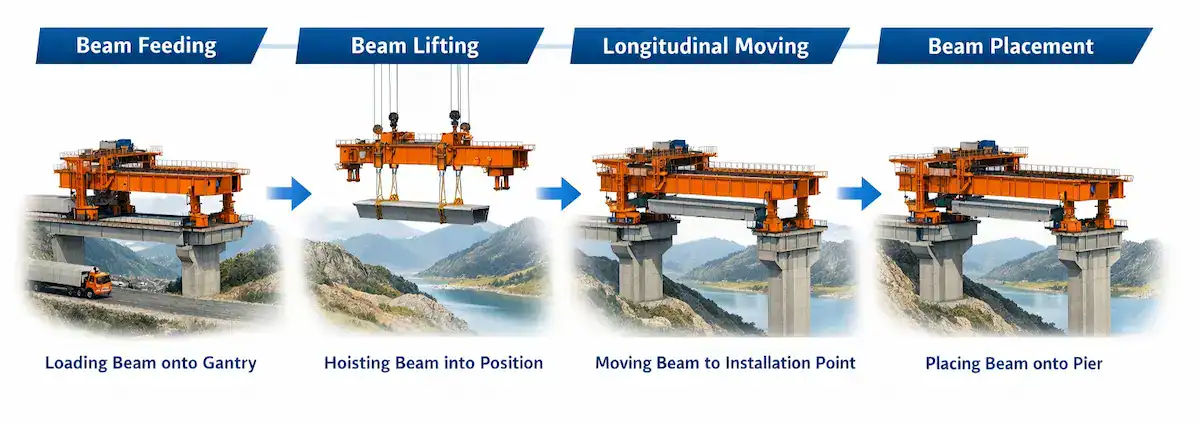
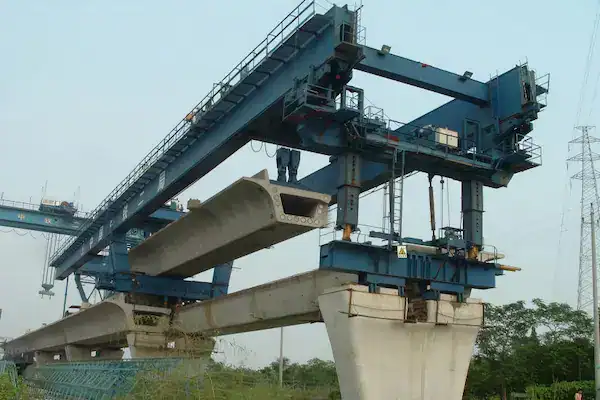
Its working cycle follows: feeding beam, lifting beam, longitudinal movement, and beam placement.
- Feeding beam: A beam transporter delivers the precast beam to the rear of the gantry.
- Lifting beam: The trolley lifts the beam and moves it along the main girder.
- Span crossing: After one span, the gantry moves forward using its own power. The front support crosses to the next pier.
- Precise positioning: Hydraulic legs and trolley adjustments ensure accurate alignment with pier bearings.
Common Types
In complex terrain, three main types are commonly used:
Self-Launching Bridge Launching Gantry
- Features: Uses hydraulic walking system without rails.
- Advantages: Strong adaptability to slopes and uneven terrain.
- Structure: Supported by front, middle, and rear legs driven by hydraulic cylinders.
The self-launching gantry excels in extreme topographies, capable of handling longitudinal slopes up to ±5%, transverse slopes up to ±4%, and minimum curve radii as tight as 300m.
Beam Lifting Bridge Launching Gantry
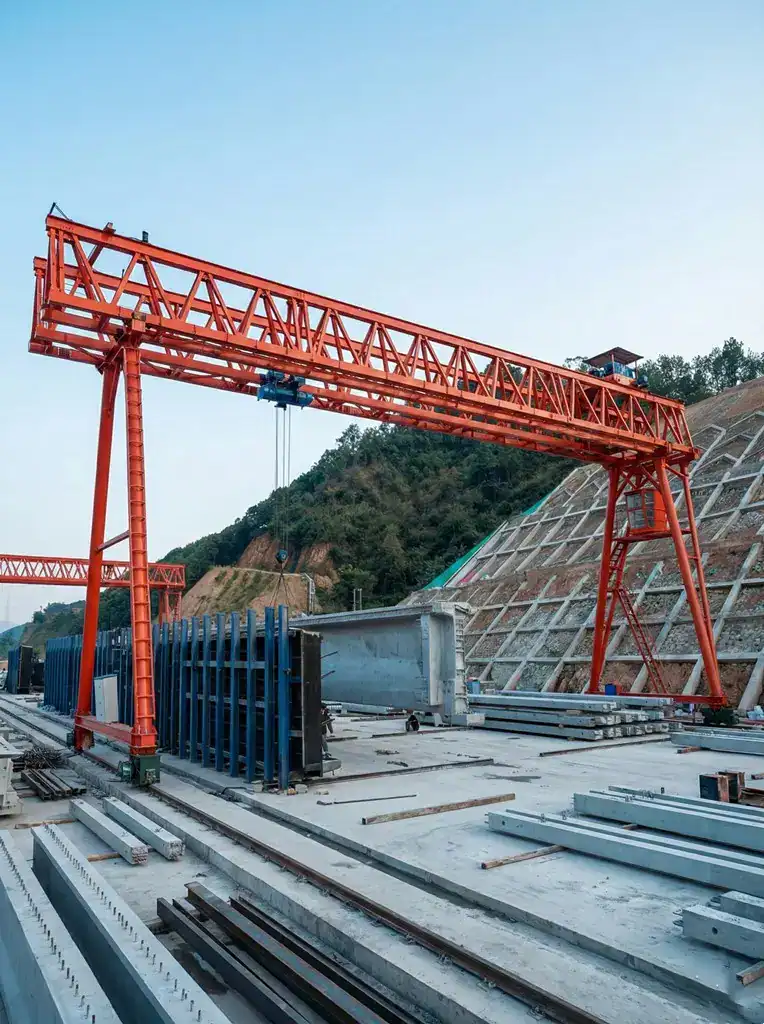
- Features: Used in precast yards or large-span projects.
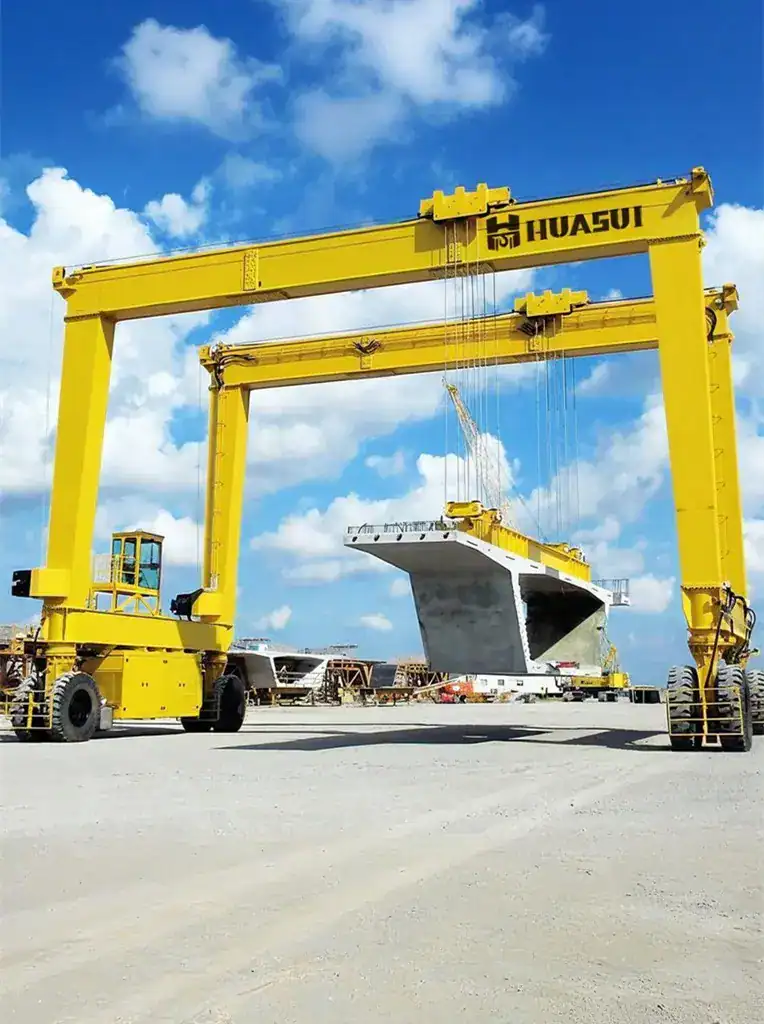
- Advantages: Strong vertical lifting capacity and high stability. Suitable for heavy beams such as T-beams and box girders.
Double Girder Bridge Launching Gantry
- Features: Two parallel girders form a stable frame structure.
- Advantages: Excellent torsional resistance and wind stability. Suitable for curved bridges and high-wind environments.
Application Scenarios by Type
To help project owners select the right model, we compared different terrain types with recommended models:
Terrain / Requirement | Recommended Type | Reason |
Large slope and small-radius curve bridges | Self-launching bridge launching gantry | Flexible movement and automatic leveling adapt to curvature |
Large span and heavy beams | Beam lifting or integrated transport-launch system | High capacity ensures stability under heavy loads |
High piers and windy canyon areas | Double girder bridge launching gantry | Strong anti-overturning performance for high-altitude work |
Standardized long-span continuous erection | Single girder bridge launching gantry | Lightweight design and fast assembly improve efficiency 🚀 |
- Dealing with a challenging skew bridge or extreme curve radius?
Send us your bridge drawings. HSCRANE engineers will provide a free Custom Launching Simulation & Equipment Sizing Report within 48 hours.
[Submit Your Project Drawings]
Key Roles of Bridge Launching Gantry in Complex Terrain
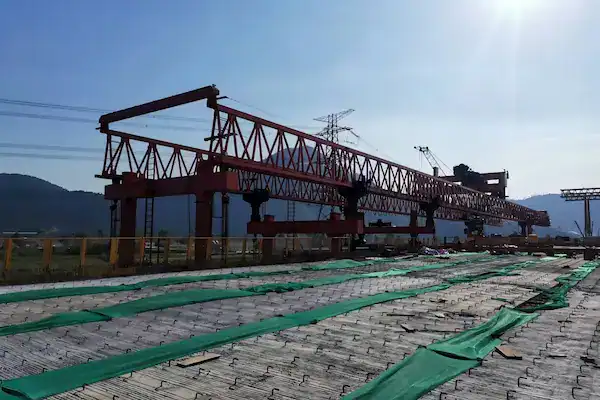
A bridge launching gantry is more than a lifting machine. It is a core solution for terrain constraints and construction quality.
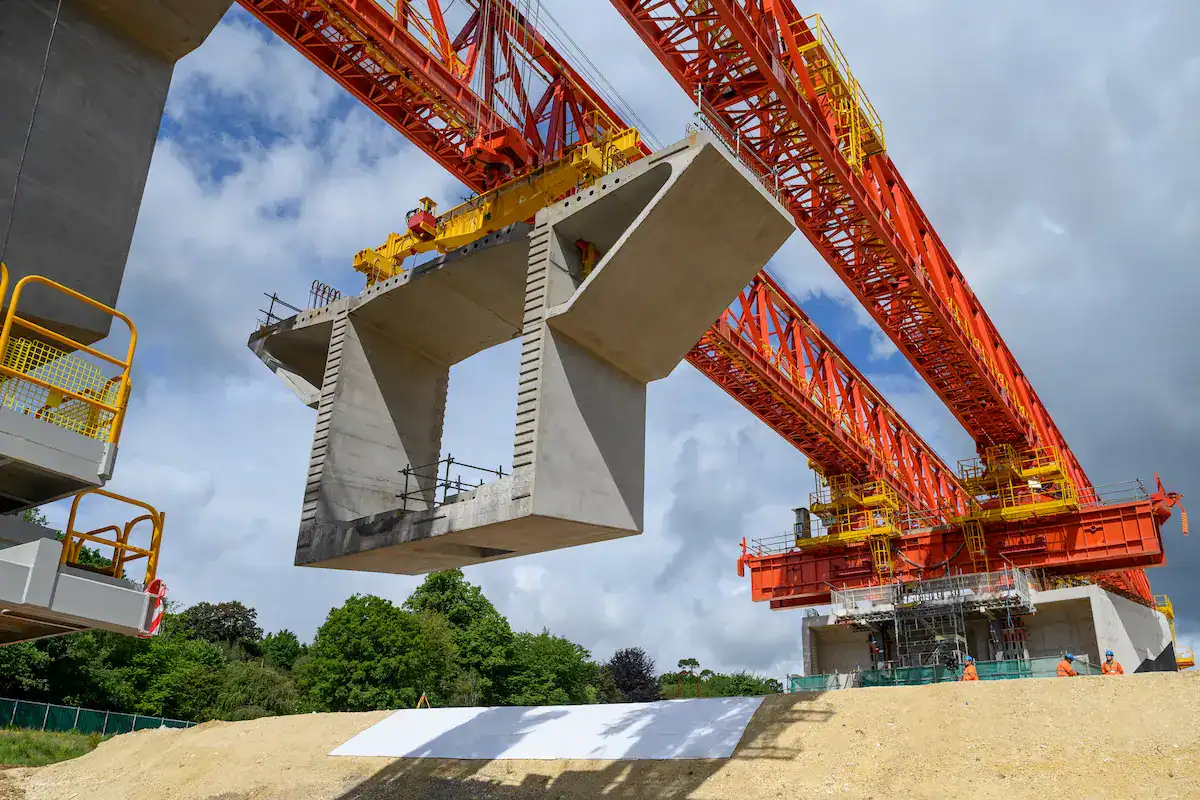
- Precise high-altitude beam erection:In canyons and high piers, hydraulic leveling and VFD control ensure accurate placement. Long beams are positioned with millimeter-level precision despite airflow and visibility limits.
- Reduced dependence on ground conditions: Unlike ground cranes, it uses completed piers as support. It operates above the bridge deck, minimizing reliance on steep slopes or deep water foundations.
- Improved safety and stability: Equipped with locking and anti-overturning systems. Self-balancing mechanisms resist wind loads and center shifts, ensuring safe operations.
- Higher efficiency and shorter schedules: Automated span crossing and beam feeding enable continuous operations. Even in mountains, high erection frequency significantly reduces construction time.
Typical Application Scenarios
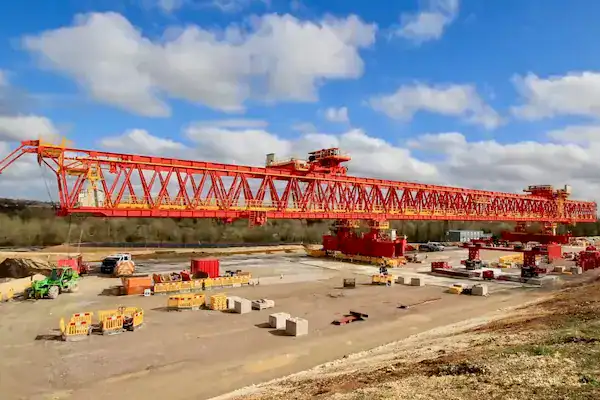
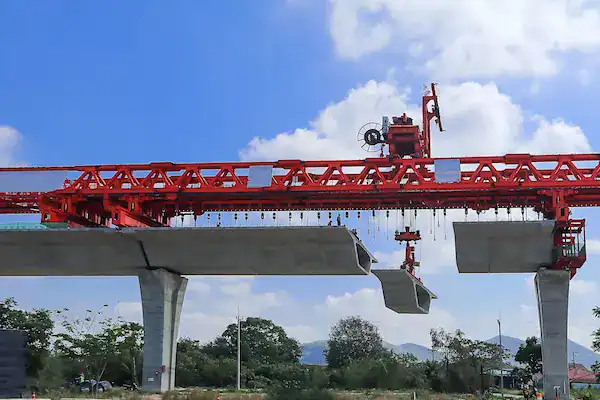
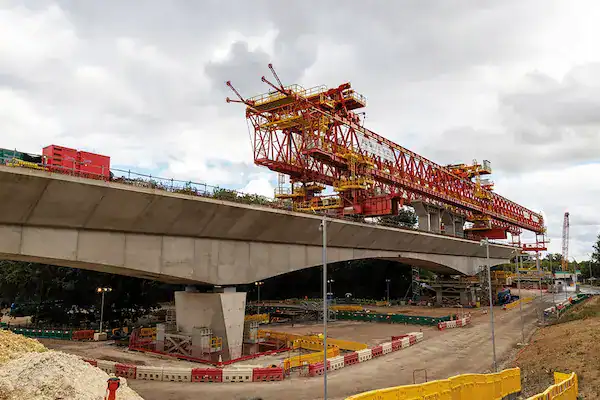
The risks involved in bridge construction vary depending on the geographical environment. Bridge erecting machines, with their versatile structural forms and exceptional stability, have become core equipment in the following scenarios:
Application Scenario | Construction Features | Advantages of Bridge Launching Gantry |
Mountain bridge construction | Large terrain variation, difficult transport, limited workspace | Enables beam erection in confined areas and reduces ground dependency |
Canyon and high-pier bridges | Complex water operations and difficult foundations | Reduces need for water supports and improves construction continuity |
High-speed railway and highway bridges | Tight schedules, high precision, continuous work | Ensures standardized erection, high efficiency, and precise installation |
Key Construction Techniques for Bridge Launching Gantry
In complex terrain, advanced equipment alone is not enough. Standardized techniques and strict risk control ensure project success.
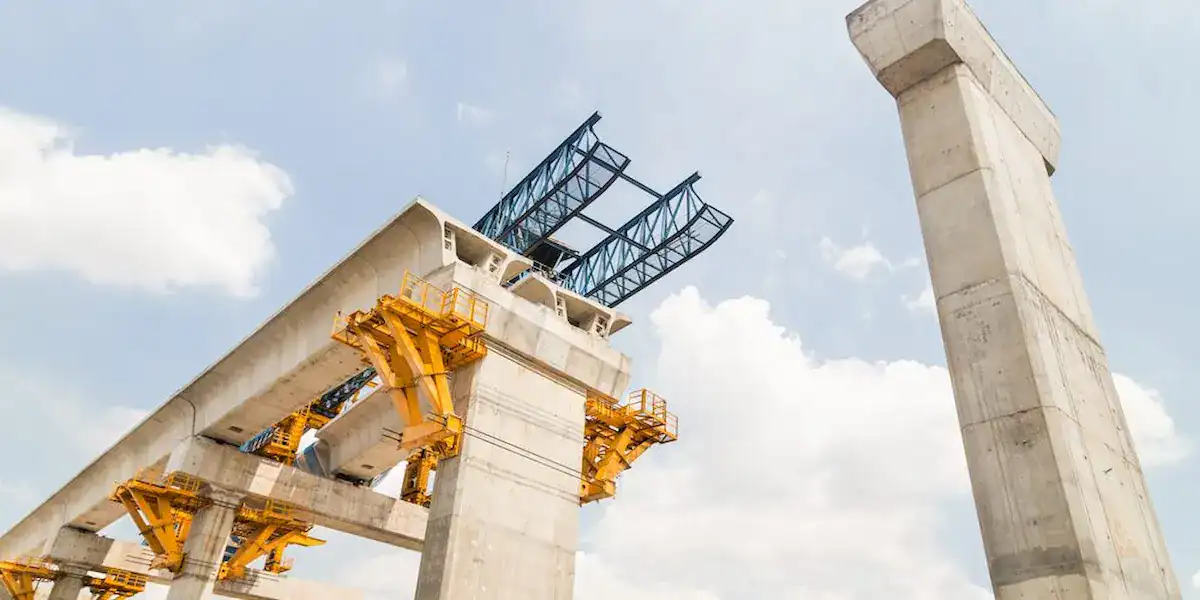
Selection Principles
Correct selection is the starting point for efficient construction. Project owners must adhere to the following core principles:
- Working condition matching:Select based on span, beam weight, and bridge slope conditions.
- Terrain adaptability:Use self-launching types for curves and slopes. Use double girder types for large spans and heights.
- Transport feasibility:Ensure dismantled components can pass narrow roads and tunnels.
Key Control Points During Erection
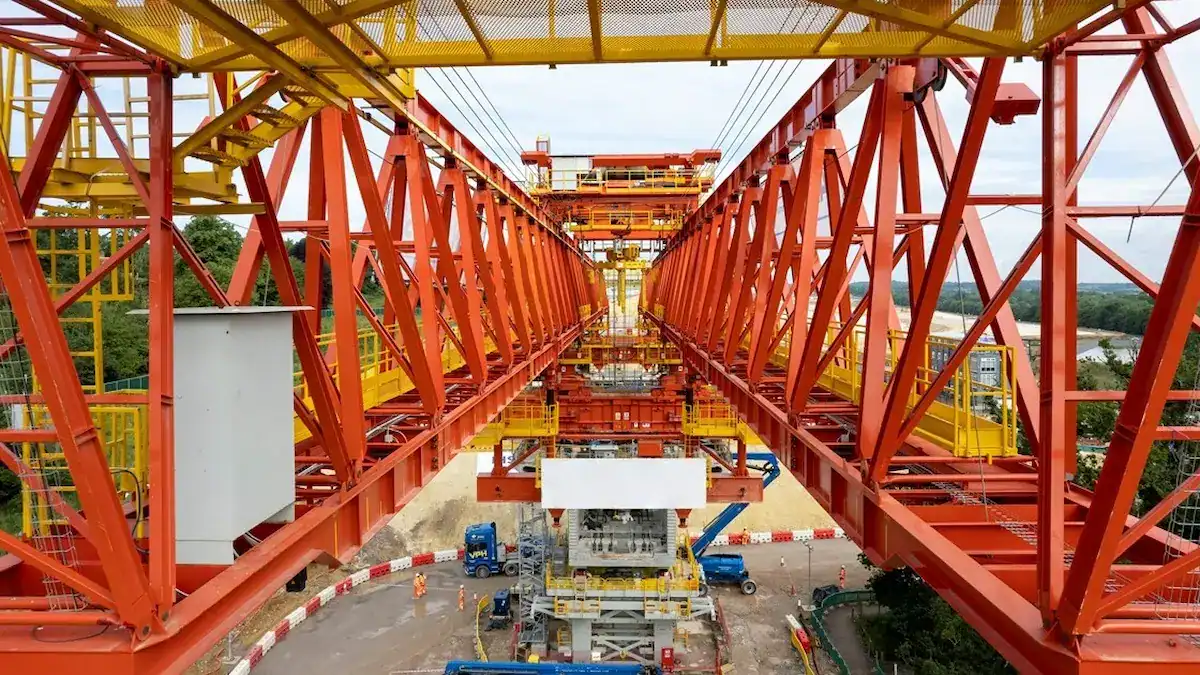
During construction, the following technical aspects must be monitored in real time:
- Support stability:Verify bearing capacity under each support before erection. Inclined support is strictly prohibited.
- Span crossing synchronization: Front, middle, and rear supports must move synchronously. This prevents abnormal torsional stress.
- Beam positioning accuracy:Use total stations or laser tools to ensure millimeter-level alignment with supports.
Safety Management and Risk Control Measures
Safety is critical in complex terrain construction. Recommended measures include:
- Multiple limit protections: Equip longitudinal travel limits, overload protection, and wind rail clamps.
- Dynamic monitoring systems:Monitor wind speed and structural stress in real time.
- Regular non-destructive testing: Inspect wire ropes, hydraulic systems, and electrical components periodically.

Trends in Automation and Intelligent Technology
With Industry 4.0, bridge launching gantry technology is becoming more intelligent.
- Remote diagnostics: IoT enables real-time data transmission and remote fault analysis.
- Automatic leveling and positioning: High-precision sensors adjust support legs automatically. One-click span crossing becomes possible.
- Digital construction simulation: BIM models simulate erection processes in advance. This helps identify and avoid potential conflicts.
HSCRANE Bridge Launching Gantry Advantages
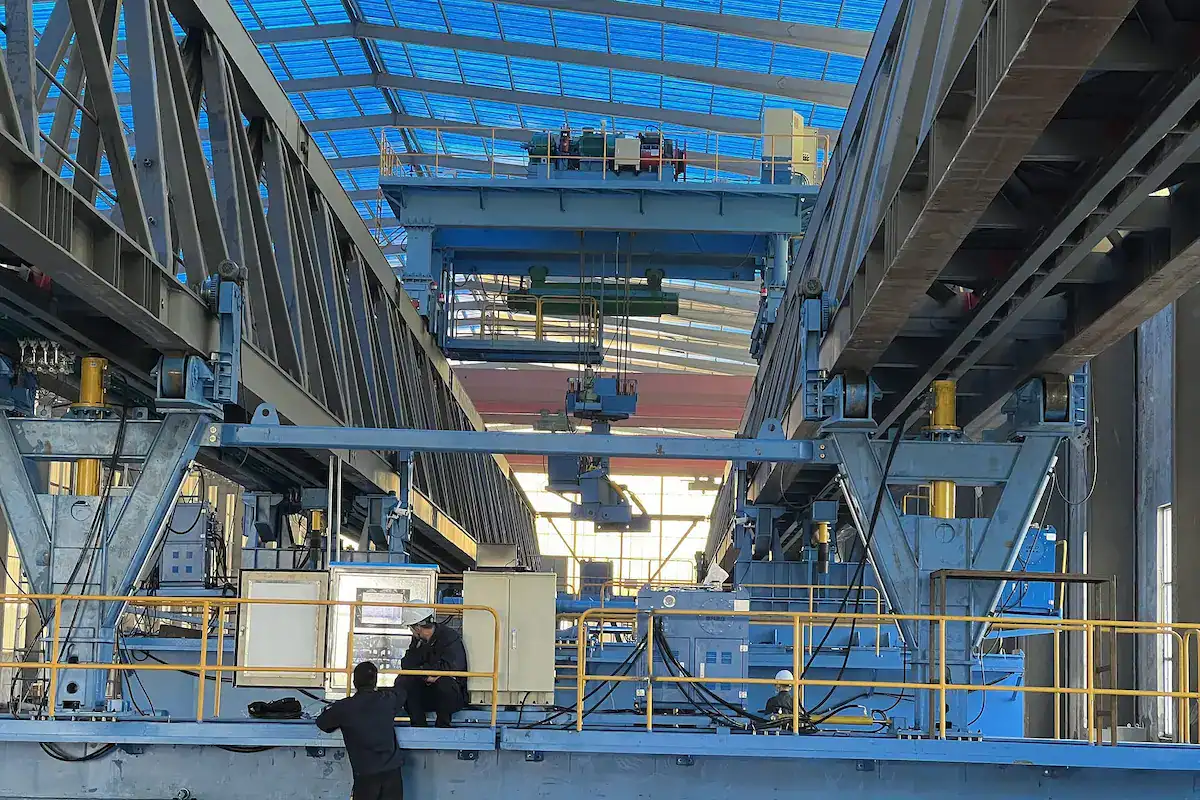
As a leading bridge construction equipment provider, HSCRANE solves complex engineering challenges through innovation. Our bridge launching gantry offers the following advantages:
- Customized design capability:Tailored solutions for special conditions. From mountain curve bridges to sea-crossing projects, designs match terrain and structure precisely.
- High load capacity and stability: High-strength alloy steel and optimized truss structures ensure rigidity and torsional resistance. Suitable for heavy beams such as high-speed rail box girders.
- Advanced control system: VFD and multi-point synchronization ensure smooth longitudinal movement and beam placement. Digital interfaces improve efficiency and enable millimeter-level positioning.
- Comprehensive safety system:Includes load monitoring, travel limits, wind clamps, and hydraulic locking. Dynamic monitoring minimizes risks during high-altitude operations.
- Energy efficiency and high productivity:Energy recovery systems and lightweight design reduce power consumption. Fast assembly and span crossing improve erection efficiency and lower costs.
- Extensive project experience:Proven in global bridge projects. HSCRANE provides full lifecycle support from design to on-site guidance.
Future Development Trends
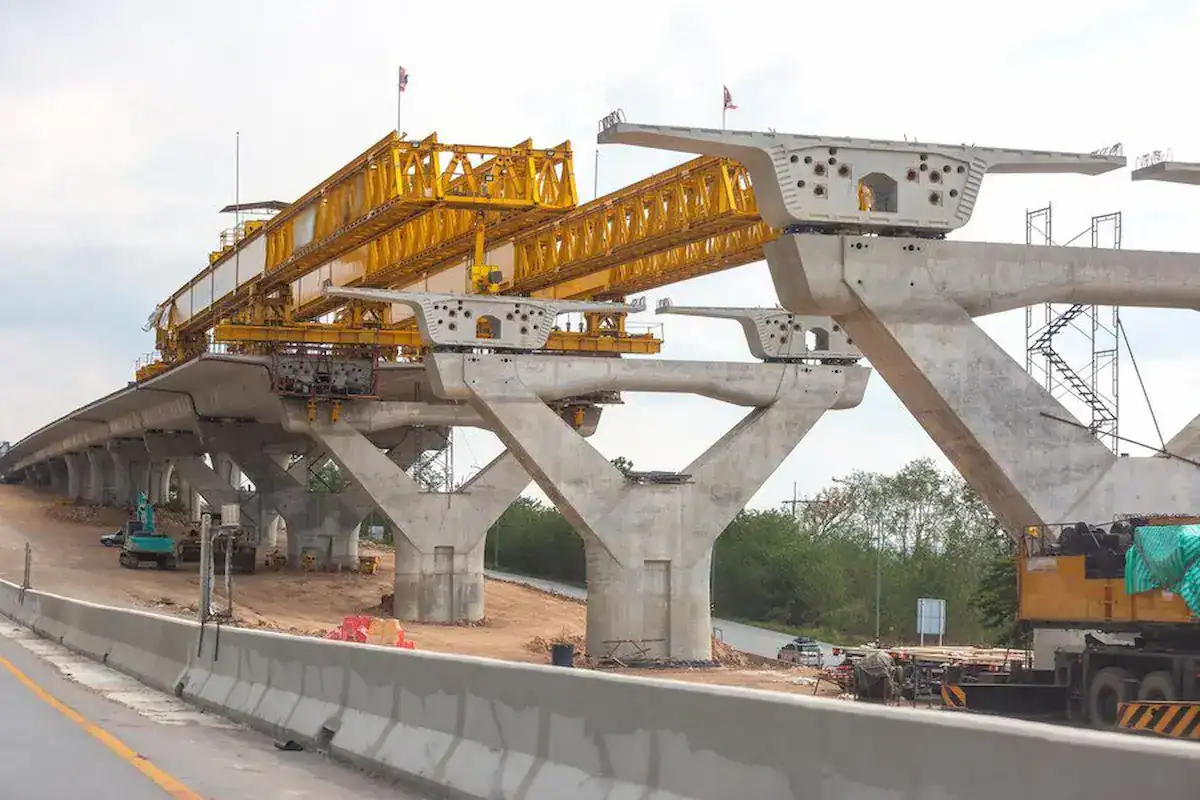
As infrastructure expands into harsher environments, bridge launching gantry technology is evolving toward digitalization. Key trends include:
- Intelligent and unmanned systems: High-precision radar, vision systems, and adaptive algorithms enable autonomous movement and positioning. Unmanned operation reduces human risk and errors.
- Green and energy-efficient technology:Energy recovery, permanent magnet motors, and lightweight materials reduce emissions and energy use. Noise reduction supports environmentally sensitive areas.
- Digital construction and remote monitoring:With 5G and digital twin technology, managers monitor equipment status and progress remotely. Cloud-based management improves coordination and maintenance.
- High adaptability equipment development:Modular and multifunctional designs adapt to variable-width, skewed, and tight-radius bridges. Advanced materials improve performance in extreme climates.
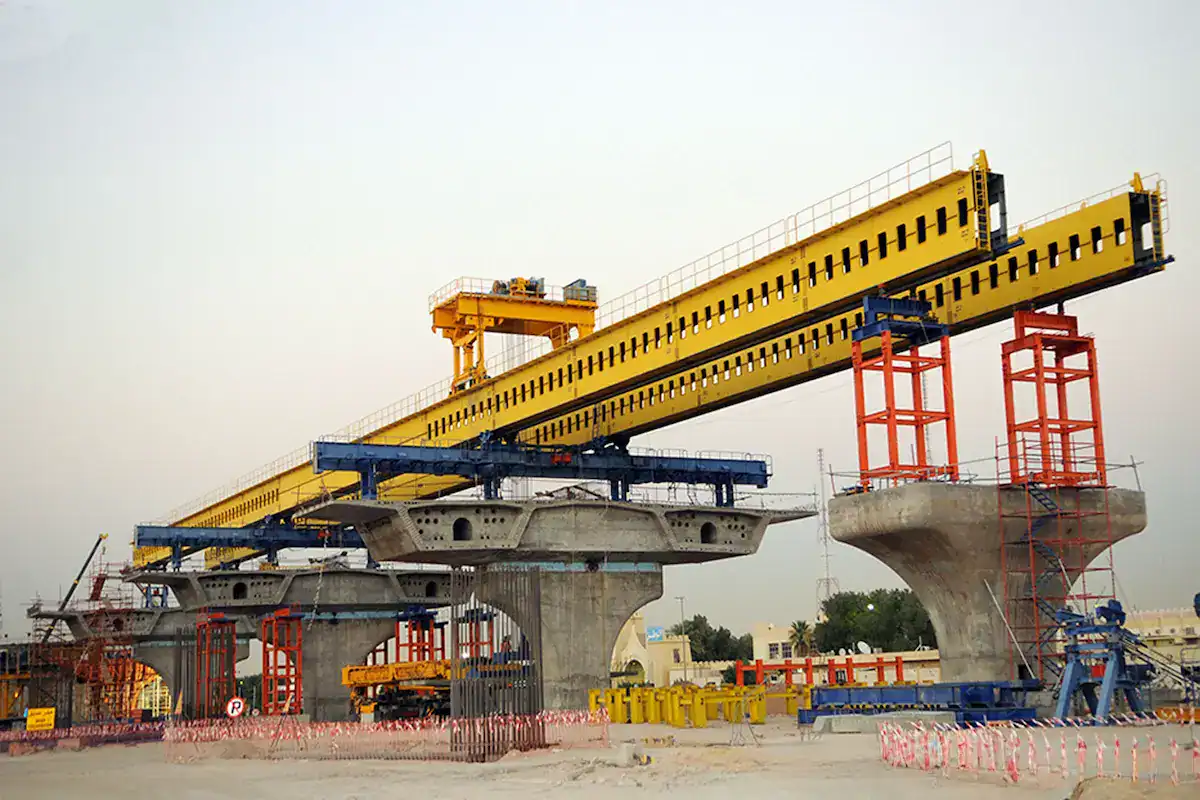
In summary, bridge launching gantry plays an essential role in complex terrain bridge construction. It addresses challenges in mountains, canyons, and river crossings. Its efficiency, stability, and low terrain dependence outperform traditional methods. With advances in automation, monitoring, and energy-saving technologies, it improves efficiency, safety, and quality. It drives bridge construction toward smarter, greener, and more efficient development.
Contact HSCRANE for Your Customized Solution
If you are planning a complex bridge project, HSCRANE experts are ready to assist. We provide full support from equipment selection to installation.
[Contact Us Now] Let us help launch your project successfully.
Further Reading: How to Achieve Millimeter-Level Alignment at Height
In complex terrain, the transverse movement system determines beam placement accuracy. It must handle heavy loads and maintain stability under strong winds.
[Read More: Bridge Launching Gantry Movement System Design: Key Technologies & Principles]
This document is for reference only. Specific operations must strictly comply with local laws and regulations and equipment manuals.

Get Expert Advice for Your Bridge Project
Our engineering team brings decades of experience in bridge construction equipment. Let us help you find the right solution.

 Scan to chat