 EN_US
EN_US  Español
  Русский
  العربية
  Português do Brasil
  Français
  Bahasa Indonesia
  Türkçe
  Tiếng Việt
  Bahasa Melayu
  Українська

 Technical Insight
Technical Insight
Truss Gantry Cranes for Bridge Construction: Applications and Advantages
Overview
This article introduces the application of truss gantry cranes in bridge engineering. We explain their structural features and differences from box-type gantry cranes. The text analyzes the demand for heavy lifting equipment in bridge construction. We focus on precast yard lifting, component transport, bridge installation, and maintenance. Finally, we summarize the advantages of truss gantry cranes for bridge projects. Based on HSCRANE product features, we provide guidance on selecting the right equipment.
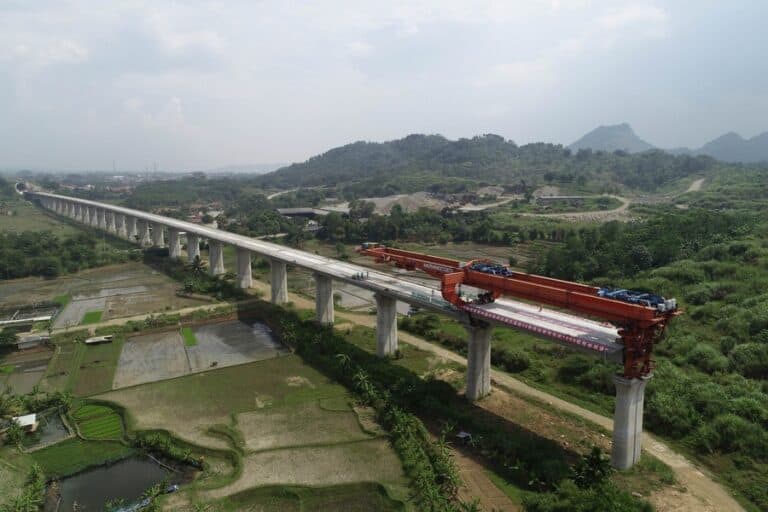
Rapid infrastructure growth has increased the number of highway and railway bridge projects. This trend raises the demand for large lifting equipment in bridge construction. Truss gantry cranes are widely used due to their light structure and large spans. They offer excellent wind resistance for complex outdoor construction sites. These cranes efficiently handle precast beam lifting and component transfer. They have become essential equipment for modern bridge engineering.

What is a Truss Gantry Crane?
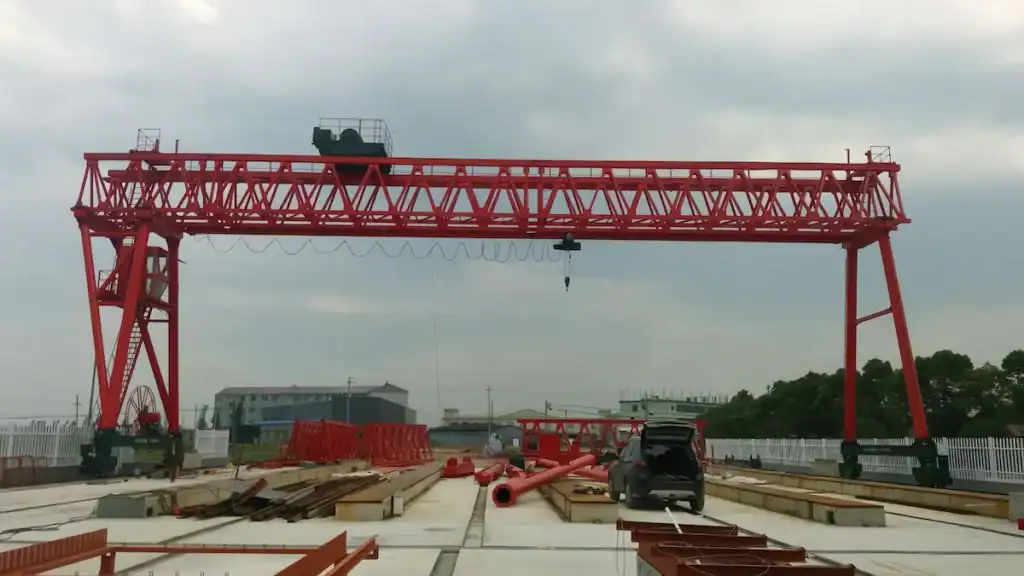
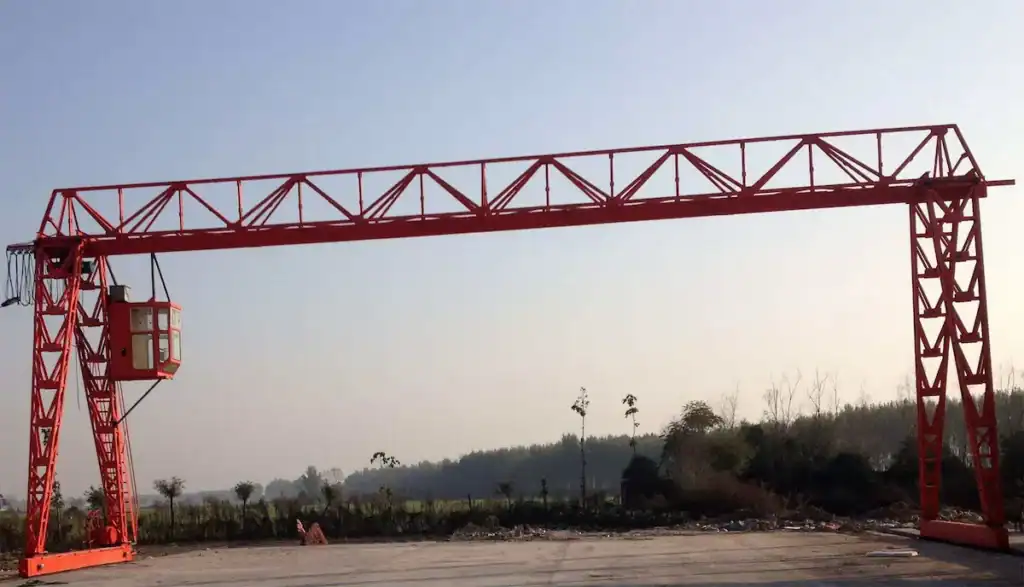
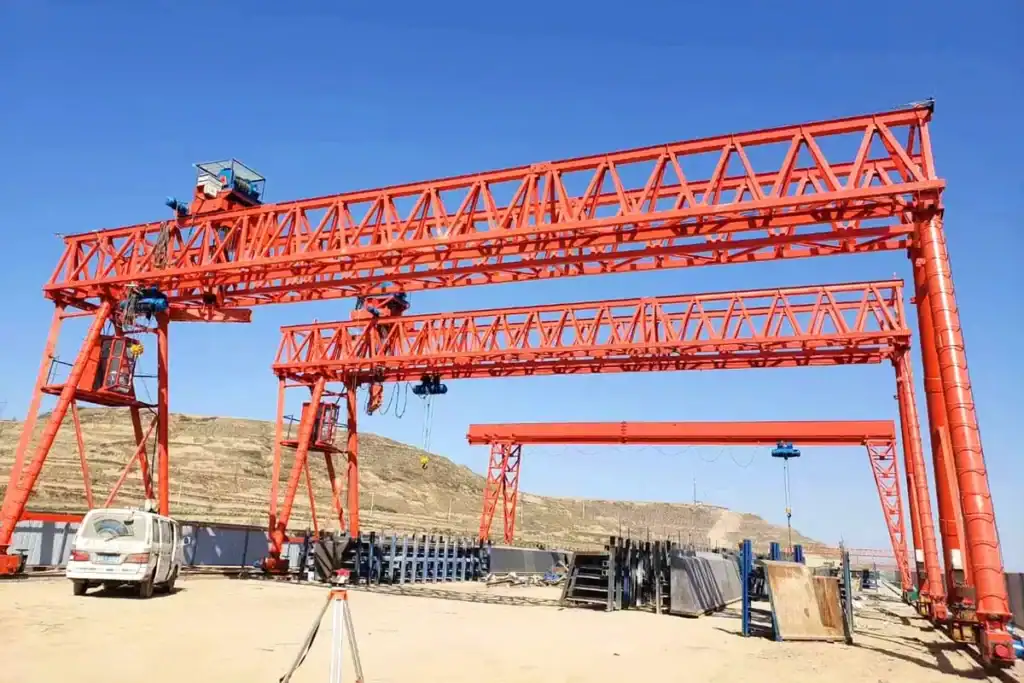
In bridge engineering, a truss gantry crane uses a truss structure for its main beams and legs. Unlike enclosed designs, it consists of precision-welded metal rods. This makes it the top choice for outdoor environments with high wind pressure.
Basic Definition of Truss Gantry Cranes
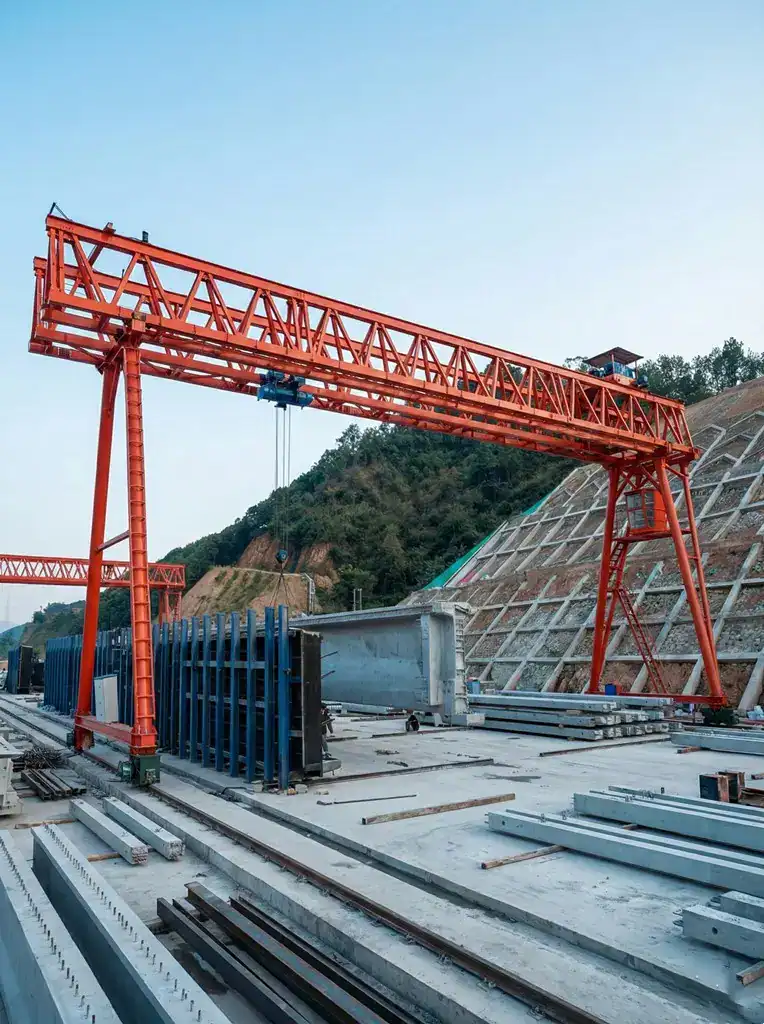
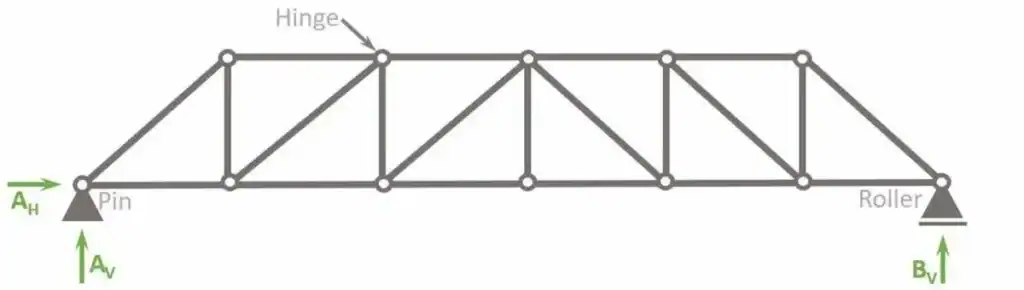
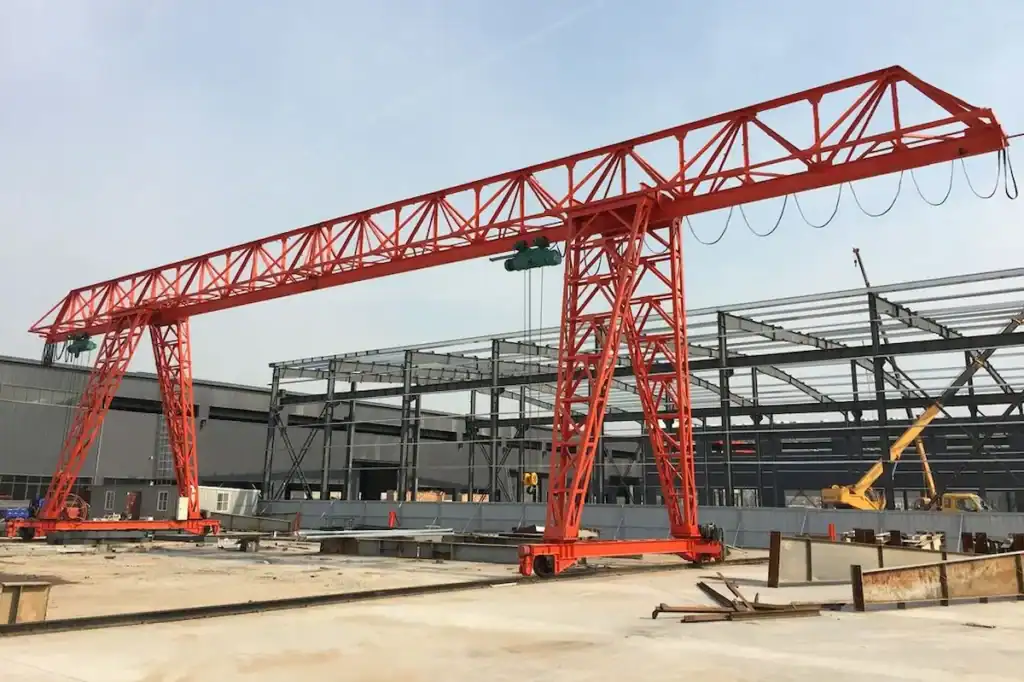
The core feature of a truss gantry crane is its open-web design. The main beam uses angle steel, I-beams, or seamless steel pipes. These parts are welded in a mechanical triangular geometric arrangement. This structure uses triangular stability to convert bending moments into internal tension or pressure. This design ensures high load capacity while significantly reducing structural self-weight.
Structural Differences from Box Gantry Cranes
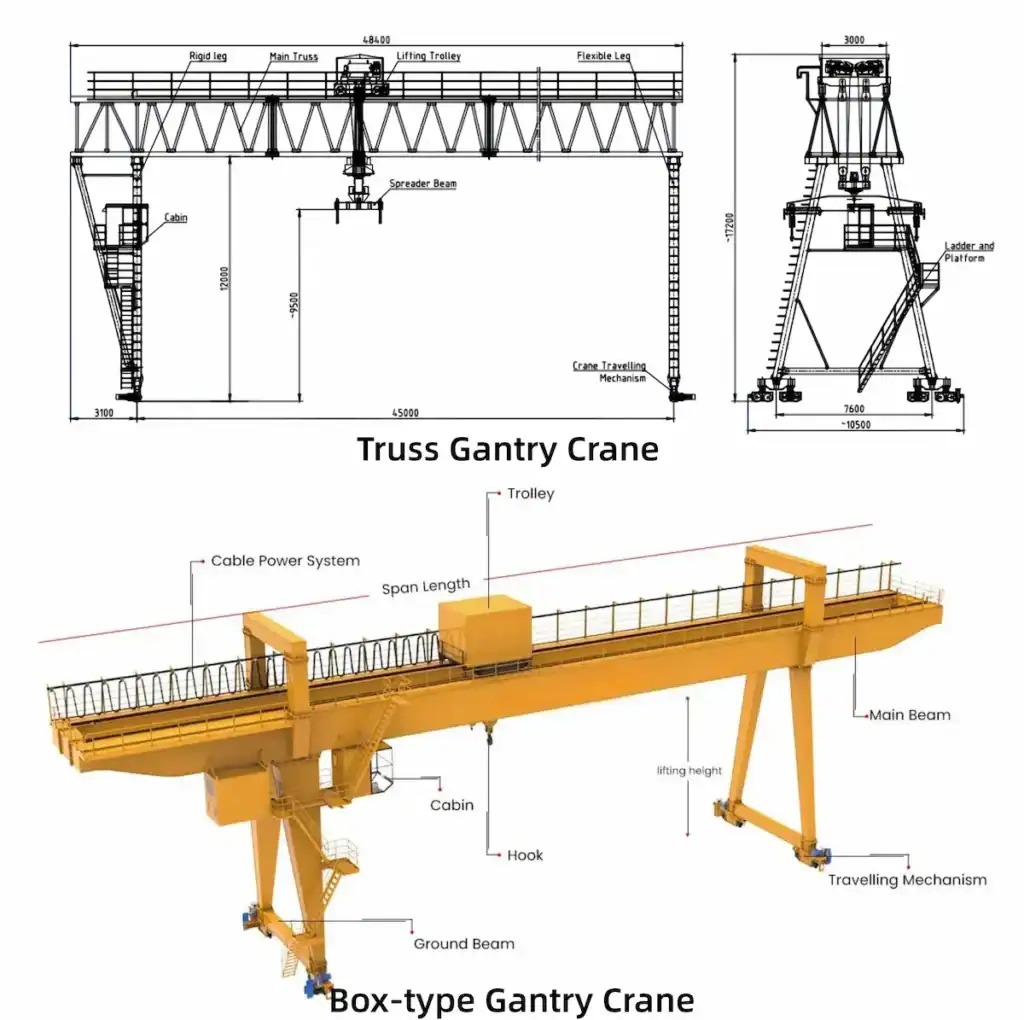
Truss and box structures are the two most common forms of gantry cranes. They differ in beam design, weight, wind resistance, and application scenarios. The following table compares these two structural types:
| Comparison Item | Truss Gantry Crane | Box Gantry Crane |
| Main Beam Structure | Open truss system made of steel sections in triangular or grid patterns. | Closed box structure formed by welded steel plates. |
| Structural Weight | Uses less steel, resulting in a lighter overall weight. | Enclosed structure uses more steel, leading to higher self-weight. |
| Wind Resistance | Open design with small wind surface; wind passes through easily. | Closed design with large wind surface; wind load impact is higher. |
| Span Capacity | Ideal for large spans and covering extensive working areas. | Moderate spans, typically used for medium-range working conditions. |
| Manufacturing & Installation | Complex structure but lightweight; easier to transport and install. | Mature process but heavy; requires more for transport and setup. |
| Maintenance | Open structure allows for easy daily inspection and repair. | Internal inspection of the closed structure is less convenient. |
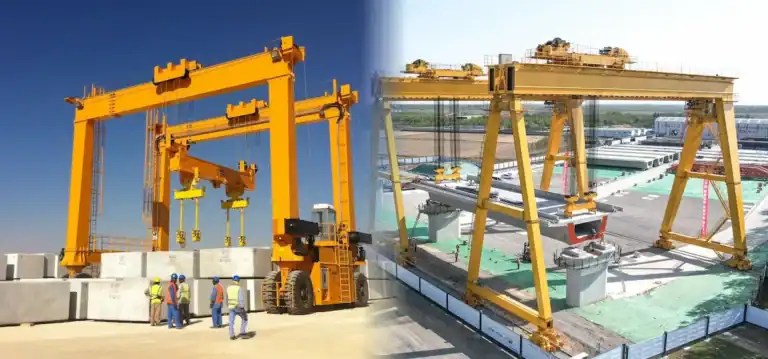
| Applicable Environment | Ideal for bridge engineering, port yards, and precast beam yards. | Commonly used in factories, workshops, or high-rigidity indoor sites. |
The comparison shows that truss gantry cranes excel in weight control and wind resistance. They are more suitable for large-span outdoor bridge construction and precast component lifting.
Main Features of the Truss Structure
As key equipment in bridge engineering, truss gantry cranes offer these distinct advantages:
- Lightweight Design: Optimized mechanical models make truss structures lighter than box beams at the same capacity. This reduces raw material costs and investment in rail and foundation construction.
- Superior Wind Resistance: The hollow design allows wind to pass through the main beam easily. This ensures high safety and prevents tipping risks in windy coastal or open bridge sites.
- Triple Anti-Wind System: We include top-mounted anemometers for alarms and hydraulic rail clamps for automatic locking. Storm anchors are used for extreme seasons to achieve 100% anti-slip protection.
- Large Span Coverage: Truss structures naturally excel at spanning long distances. In precast yards, one crane can cover multiple production lines, greatly improving space utility.
- Easy Transport and Assembly: HSCRANE uses heavy-duty pin connections instead of standard bolts. Pulling pins allows for quick disassembly. This makes relocation 40% faster and saves thousands in costs.
HSCRANE utilizes a high-frequency hardened heavy-duty pin connection rather than a standard bolted connection. The system can be disassembled simply by removing the pins, making relocation and reassembly 40% faster than with traditional bolted connections—saving you tens of thousands of dollars in relocation costs for each project.
Why Bridge Engineering Needs Truss Gantry Cranes
Bridge projects involve complex environments, heavy components, and high precision. Truss gantry cranes are essential because they perfectly match these specific construction demands.
Heavy Lifting Needs in Bridge Construction
Modern bridges are moving toward higher strength and larger spans. This requires lifting heavy raw materials and machinery.
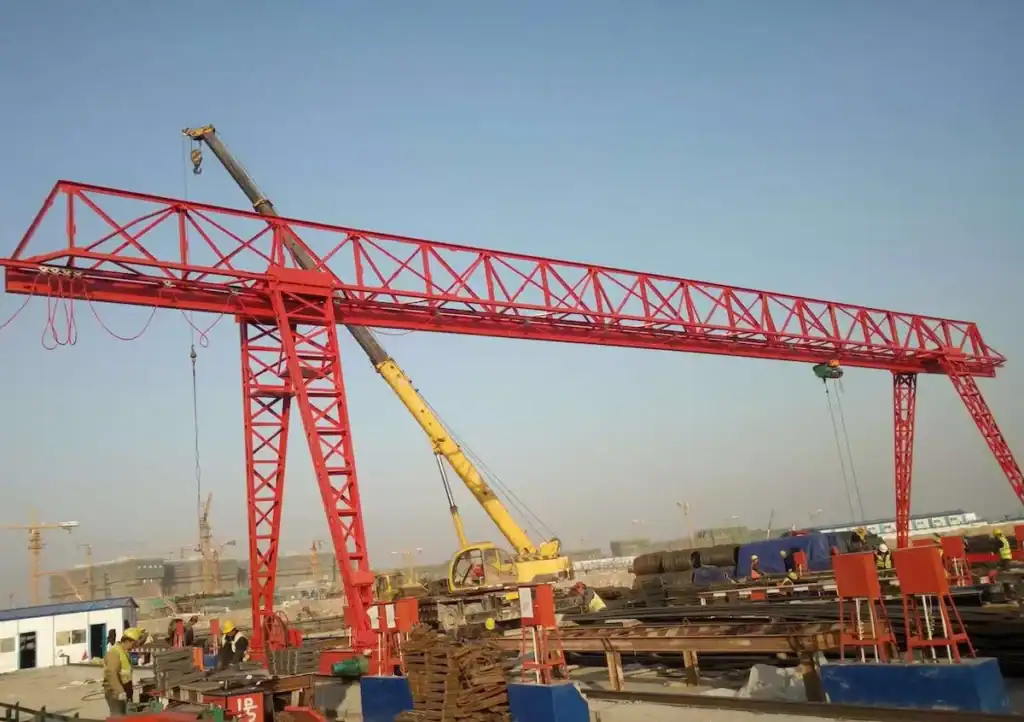
- High Load Capacity: Bridge cranes frequently lift dozens or even hundreds of tons.
- High Safety Factor: The triangular stability design ensures structural integrity under full loads. This provides a safe guarantee for high-intensity lifting operations.
Handling and Installing Precast Components
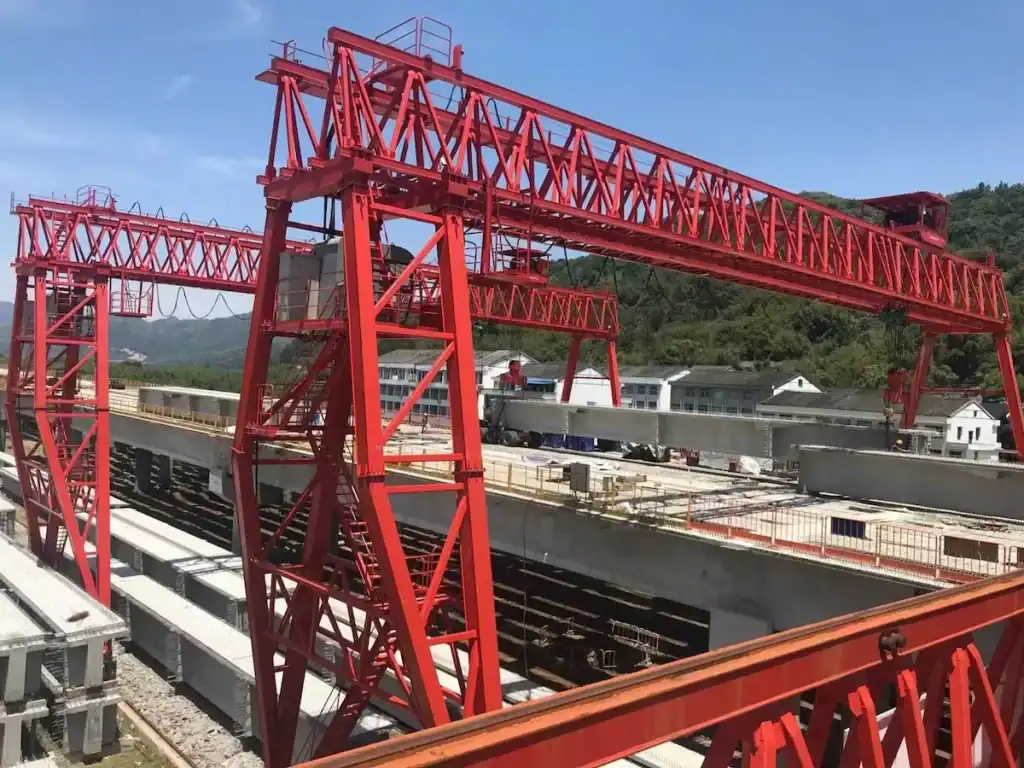
Transferring precast beams, such as T-beams or box beams, is a core task. These components are often 20 to 50 meters long and very heavy.
- Multi-Crane Coordination: Precast yards often use two truss gantry cranes for tandem lifting. Their light weight makes synchronized movement easier to control.
- Precise Positioning: These cranes feature fine-tuning functions. They can place beams onto transport vehicles or bridge piers with centimeter-level accuracy.
Large Spans and Wide Working Areas
Bridge construction sites are usually long and narrow.
- Coverage Ability: Truss designs can achieve spans of 40 to 50 meters or more. One machine can cover multiple production lines, reducing secondary handling.
- Operational Range: With long travel rails, the crane moves along the bridge axis. It covers the entire process from steel processing to finished product stacking.
Suitability for Complex Outdoor Conditions
Most bridge projects are located in wild areas, along rivers, or on open plains.
- Wind Endurance: Unlike box beams, truss gaps let strong winds pass through. This reduces swaying and rail pressure in coastal or high-altitude areas.
- Foundation Adaptability: Since truss cranes are lighter, they require lower ground bearing capacity. This reduces foundation treatment costs and improves setup flexibility at temporary sites.
Main Applications of Truss Gantry Cranes in Bridge Engineering
In modern bridge construction, truss gantry cranes are key links for production, transfer, and installation. Here are four core application scenarios in bridge engineering:
Lifting Operations in Precast Beam Yards
Precast yards are processing plants for bridge components where truss gantry cranes are most commonly used.
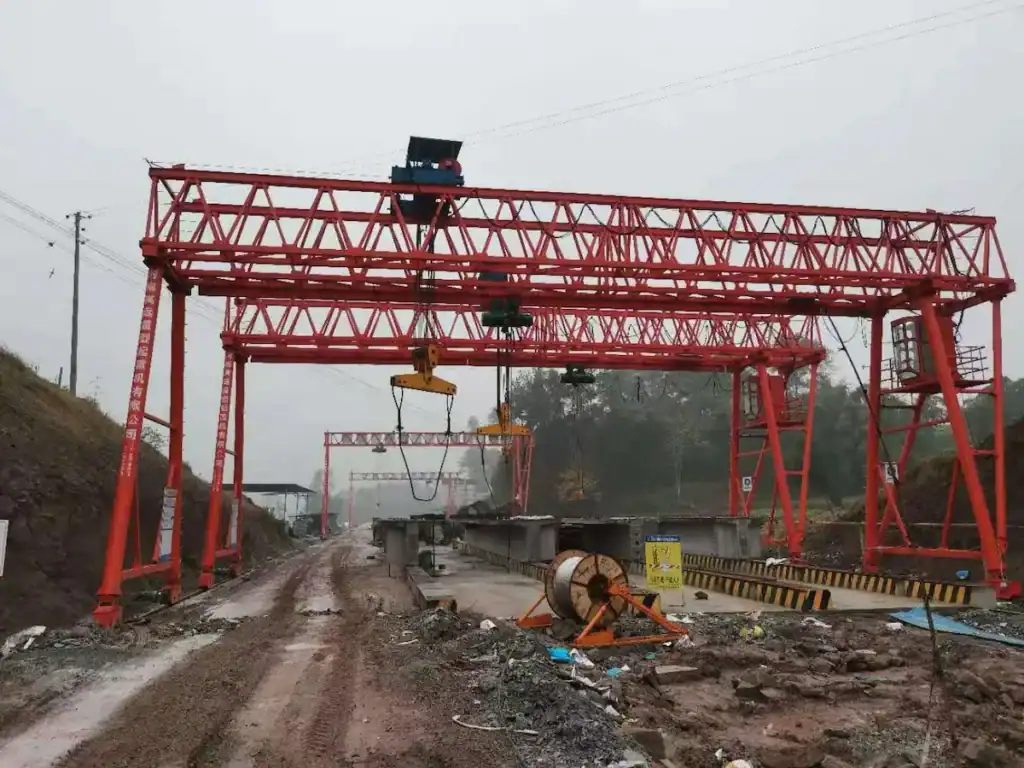
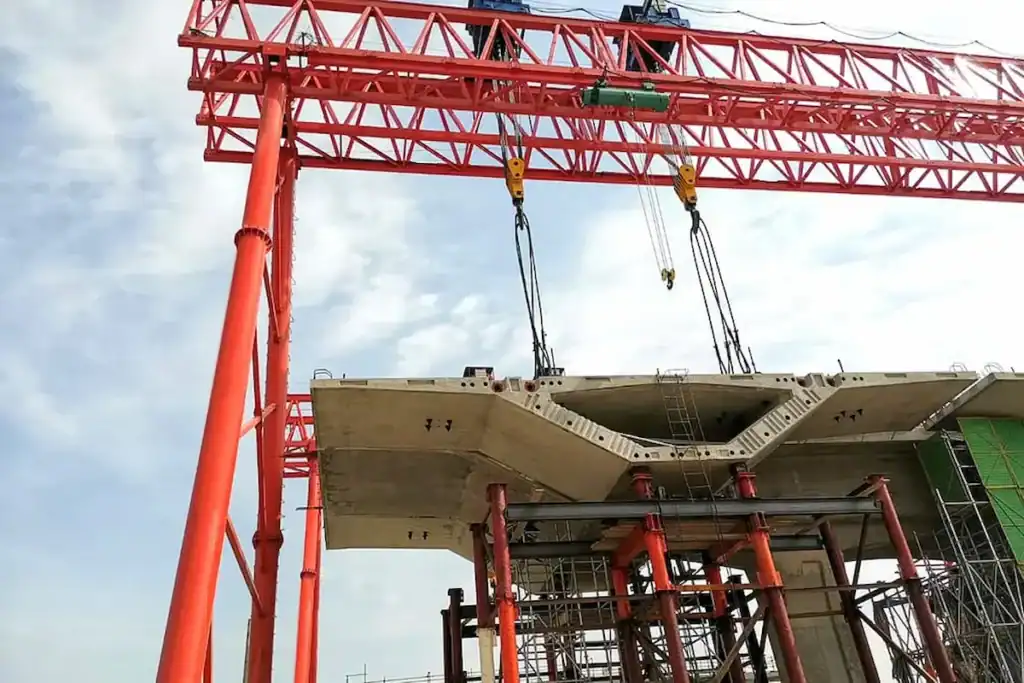
- Lifting Large Bridge Components: Cranes move finished box beams, T-beams, and I-beams from molds. Since these components are dozens of meters long, two cranes usually perform synchronized tandem lifting. This ensures even force distribution on the beams.
- Component Storage and Precise Stacking: Large spans allow these cranes to cross multiple storage positions. They stack finished beams by serial number to maximize site space.
Transport and Transfer of Bridge Components
Truss gantry cranes play an efficient transit role as components move toward the bridge piers.
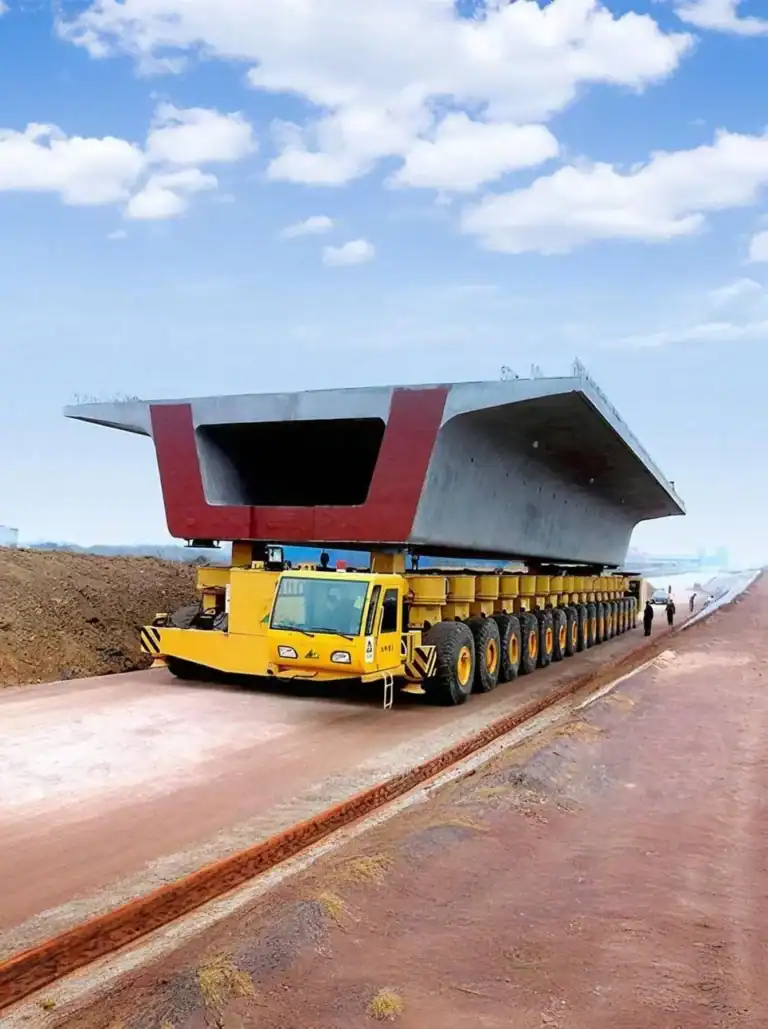
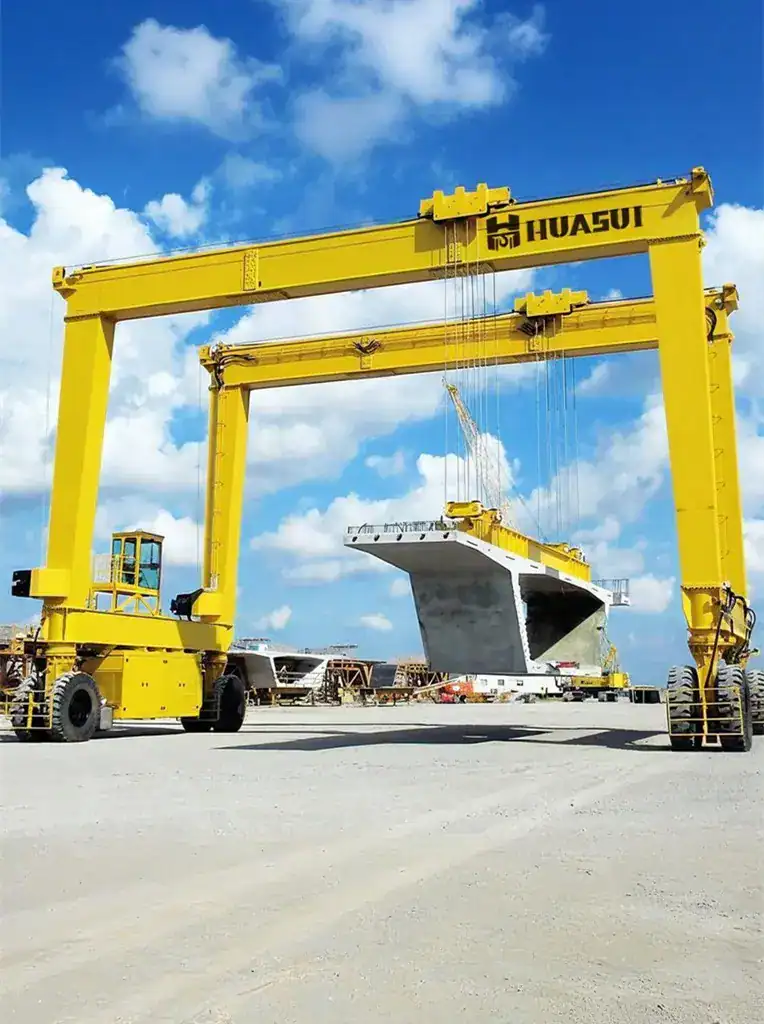
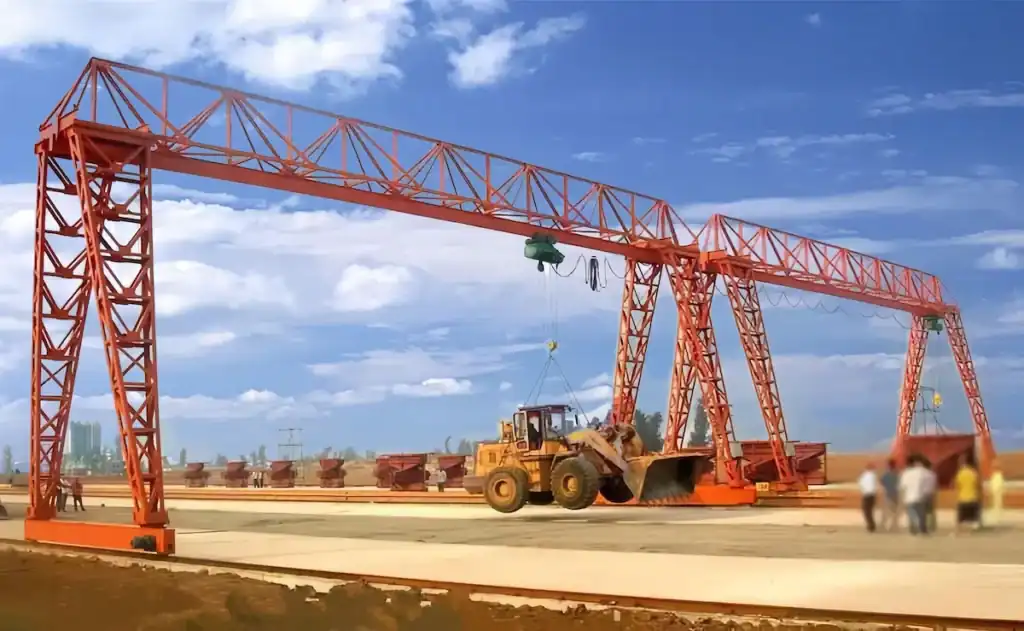
- Loading Operations: Working with heavy flatbed trailers, the crane lifts precast beams onto transport vehicles. Its micro-motion lifting function ensures a perfect fit between the heavy beam and the vehicle support.
- Inter-zone Allocation: In large projects, cranes move components from the precast area to temporary loading zones. This prepares the beams for subsequent long-distance transport.
Bridge Installation and Construction
On actual bridge sites, truss gantry cranes serve as main or auxiliary equipment.
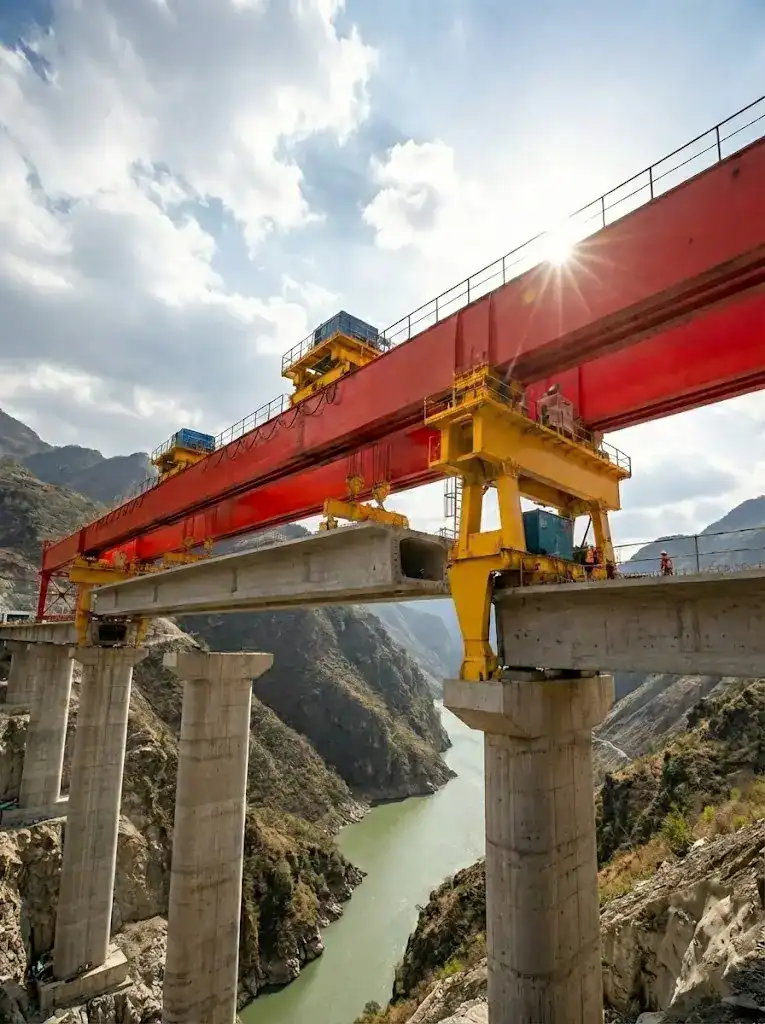
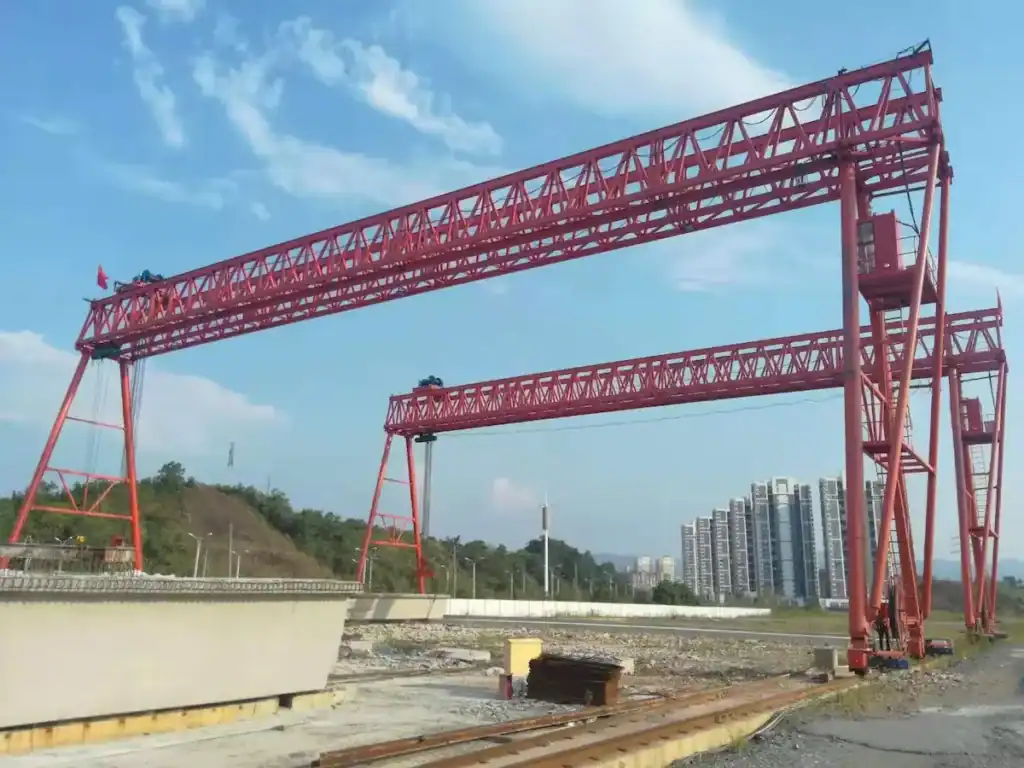
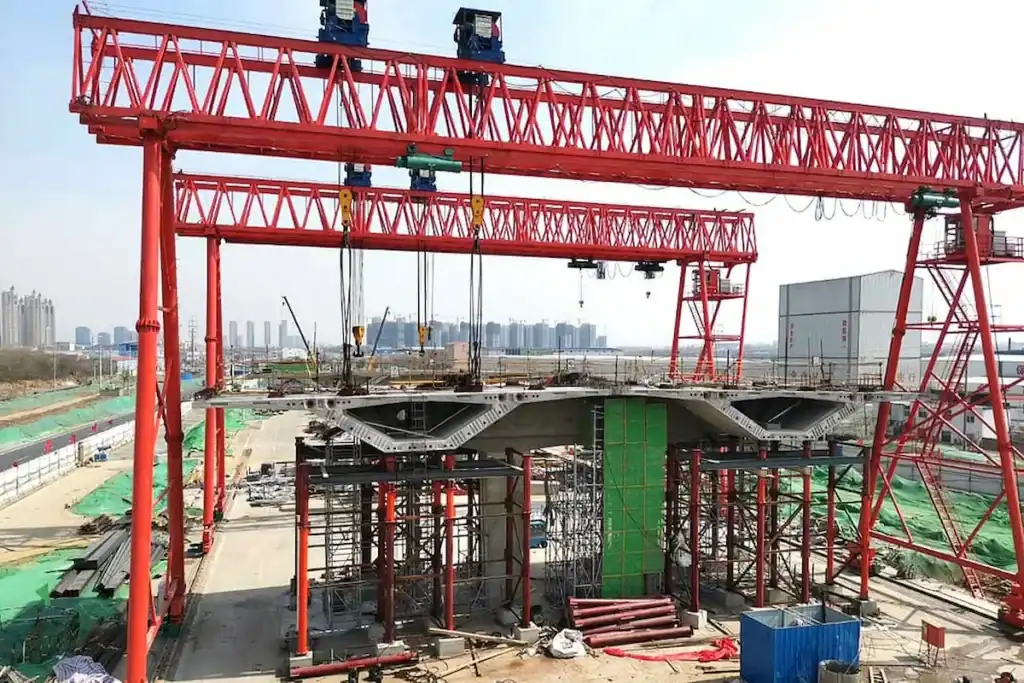
- Direct Lifting into Position: For small and medium bridges or interchanges, these cranes span the piers directly. They complete the lifting and installation of precast blocks.
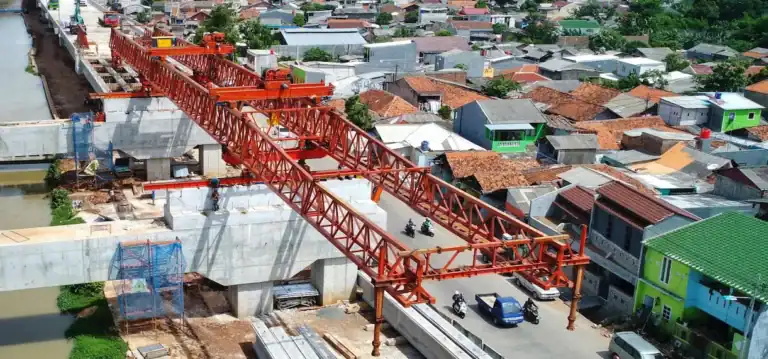
- Assisting Bridge Launching Machines: In mega-bridge projects, they sit behind the launching machine. They “feed” beams from transport vehicles or help install the machine’s rails and auxiliary equipment.
Large Bridge Maintenance and Repair
Truss gantry cranes remain essential during the maintenance stage after bridge delivery.
- Replacing Worn Components: For old bridge reinforcement, these cranes lift out damaged beams or bearings. They then install new precast parts accurately.
- Lifting Heavy Maintenance Equipment: During deck renovation or structural testing, they lift large generators and cutting tools. This provides strong logistical support for maintenance projects.
Advantages of Truss Gantry Cranes in Bridge Engineering
Truss gantry cranes offer unique structural benefits that traditional box cranes cannot match.
- Lightweight Structure Reduces Costs: The optimized truss design uses less steel while ensuring strength. A lighter machine reduces the bearing requirements for rails and foundations, lowering civil engineering costs.
- Excellent Wind Resistance for Outdoor Use: The open-frame design has a small wind surface. Wind passes through the gaps, reducing wind load impact. This increases stability and safety in open-air bridge construction environments.
- Large Span Covers Vast Construction Areas: Truss structures have high load capacity and stability for large-span designs. One machine can cover massive areas in precast yards, improving efficiency and reducing equipment needs.
- Low Maintenance Costs: The open structure allows for quick daily inspections. Workers can easily find wear or issues in key parts. This reduces repair difficulty and long-term maintenance expenses.
Product Advantages of HSCRANE Truss Gantry Cranes
As a leading manufacturer, HSCRANE has deep expertise in bridge engineering. Our truss gantry cranes optimize structural benefits, craft details, and system safety.
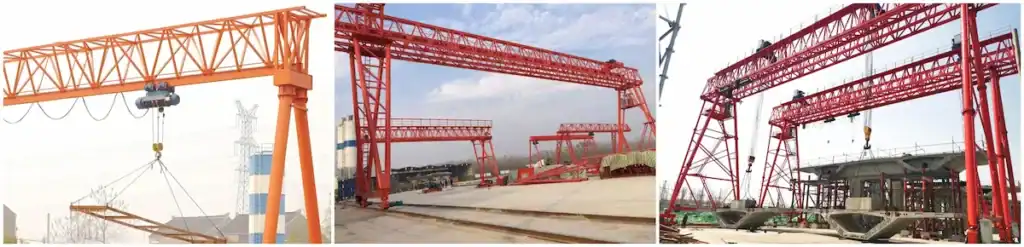
- High-Strength Truss Design: HSCRANE uses high-strength steel and optimized structural layouts. This design ensures rigidity and stability while reducing self-weight. It enhances load capacity and safety for large-span operations.
- Customized Solutions: We provide tailored gantry crane designs for specific bridge project needs. This includes personalized capacity, span, height, and mechanism configurations. Our solutions fit precast yards and installation sites perfectly.
- Safe and Reliable Hoisting: Our cranes feature high-performance hoisting mechanisms. We use premium motors, reducers, and wire ropes with multiple safety devices. This ensures stable operation under heavy-load conditions.
- Extensive Project Experience: HSCRANE has rich experience in large-scale lifting equipment manufacturing. Our products are widely used in bridge construction and infrastructure. We offer reliable equipment and full technical support.
How to Choose a Truss Gantry Crane for Bridge Engineering
When configuring a crane for bridge projects, please refer to these technical parameters:
| Selection Dimension | Core Considerations | HSCRANE Professional Advice |
| Lifting Capacity | Max component weight, spreader weight, safety redundancy. | Keep a 10%-15% safety margin. For tandem lifting, each crane needs 60% of total capacity. |
| Span Design | Production line layout, storage area width, transport lanes. | Use large-span benefits. We suggest covering multiple lines (40m-60m) to reduce machine movement. |
| Lifting Height | Component height, spreader size, trailer height, clearance. | We recommend 1-2 meters higher than theoretical needs for different terrain and loading. |
| Work Class | Daily frequency, load rate, service life requirements. | For high-intensity bridge yards, we recommend A5 or A6 classes for fatigue resistance. |
| Travel Mechanism | Start smoothness, dual-crane sync, wind safety. | Variable Frequency Drives (VFD) and sync controls are mandatory. Add auto-correction and wind brakes. |
[HSCRANE Expert Tip]: Proper selection reduces initial costs. It also significantly lowers energy consumption and maintenance during long-term bridge construction.
Dual-Crane Tandem Lifting System and Relocation Costs
- The Ultimate Test:Tandem Lifting Precast Box GirdersLifting a 200-ton to 900-ton precast concrete box girder using two separate truss gantry cranes is the most critical operation in bridge construction. A synchronization failure or track settlement during travel can induce massive torsional stress, cracking the million-dollar girder instantly.How
- HSCRANE Eliminates the Risk: We don’t just rely on standard VFDs. Our Truss Gantry Cranes are equipped with a Master-Slave Wireless Synchronization System. Utilizing laser distance sensors and absolute encoders on the traveling mechanisms, the control system monitors the real-time displacement of both cranes. If wheel slip or track deviation occurs, the PLC triggers micro-second automatic correction, keeping synchronization error strictly under ±10mm.Engineered for Rapid Relocation (Pin-Connected Truss)Bridge projects end, but your crane’s lifespan shouldn’t. Traditional bolted truss cranes rust over time, making disassembly a nightmare that costs tens of thousands of dollars in labor and mobile crane rentals. HSCRANE utilizes Heavy-Duty Pin Connections for the main truss sections. You can simply pull the pins and modularize the crane for transport in days, not weeks. This rapid assembly/disassembly feature slashes your relocation costs by up to 40% per project.
- HSCRANE tandem lifting system: The HSCRANE tandem lifting system goes beyond monitoring height. It uses laser ranging and absolute encoders to monitor travel displacement in real time. If the system detects asynchrony from rail settlement or wheel slip, it triggers microsecond auto-correction.
Conclusion
In the challenging field of bridge engineering, truss gantry cranes are a core force. Their lightweight, wind-resistant, and large-span advantages make them essential for precast yards. They significantly reduce construction costs for foundations and rails. These cranes also ensure safe and precise positioning for large components in complex outdoor conditions.
Contact HSCRANE Now for Customized Bridge Lifting Solutions
Are you planning a new precast beam yard? Do you need to upgrade your current lifting equipment? Our technical experts provide full support from selection to maintenance.
[Click Here for Immediate Consultation]
FAQ
Q1: What is the specific wind resistance of a truss gantry crane?
A1: Truss structures have small wind surfaces. They typically handle Level 6 winds (10.8-13.8 m/s) during operation. With rail clamps and anchors, they resist Level 11-12 typhoons when idle. This makes them the top choice for coastal projects.
Q2: How do you ensure synchronization when using two cranes in a beam yard?
A2: HSCRANE provides an advanced electronic sync control system. We use PLCs and Variable Frequency Drives (VFD) to monitor displacement and height. We keep deviations within ± 10mm to prevent structural damage to the beams.
Q3: Is the assembly and disassembly of truss gantry cranes complex?
A3: Truss cranes are easier to transport as individual components than box structures. HSCRANE uses modular pin or bolt connections. Main structure installation usually takes 3-5 days under proper conditions. This is ideal for projects requiring frequent relocation.
Q4: Why is the price of a truss crane sometimes better than a box crane?
A4: The main reason is steel weight. At the same span and capacity, truss structures use less steel. This lowers raw material costs. Additionally, lighter weight allows for smaller motors and rails, reducing overall procurement and construction expenses.
Q5: What core maintenance is required for truss gantry cranes?
A5: Key maintenance includes:
Weld Inspection: Regularly check truss connection nodes for fatigue cracks.
Connection Bolts: Inspect and tighten high-strength bolts.
Lubrication System: Periodically lubricate pulley blocks, reducers, and wheels.
Anti-corrosion Coating: Repair paint regularly to prevent rust in outdoor environments.
This document is for reference only. Specific operations must strictly comply with local laws and regulations and equipment manuals.

Get Expert Advice for Your Bridge Project
Our engineering team brings decades of experience in bridge construction equipment. Let us help you find the right solution.

 Scan to chat