 EN_US
EN_US  Español
  Русский
  العربية
  Português do Brasil
  Français
  Bahasa Indonesia
  Türkçe
  Tiếng Việt
  Bahasa Melayu
  Українська
 Technical Insight
Technical Insight
High-Altitude Erection: Ensuring Launching Gantry Stability in Strong Winds
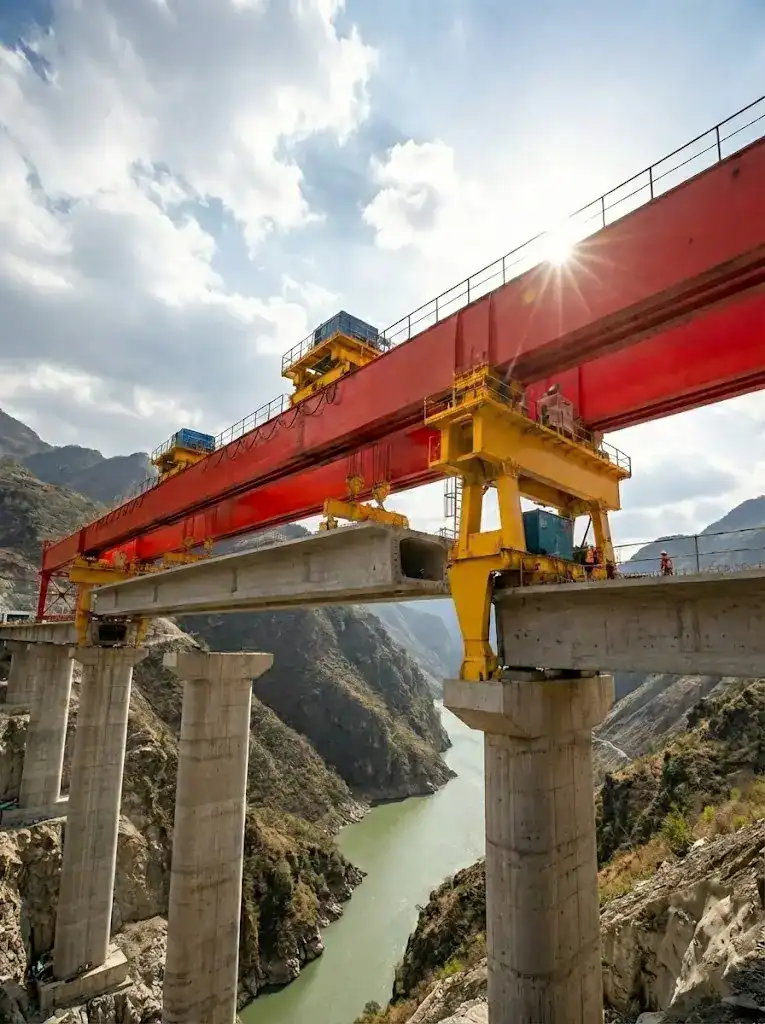
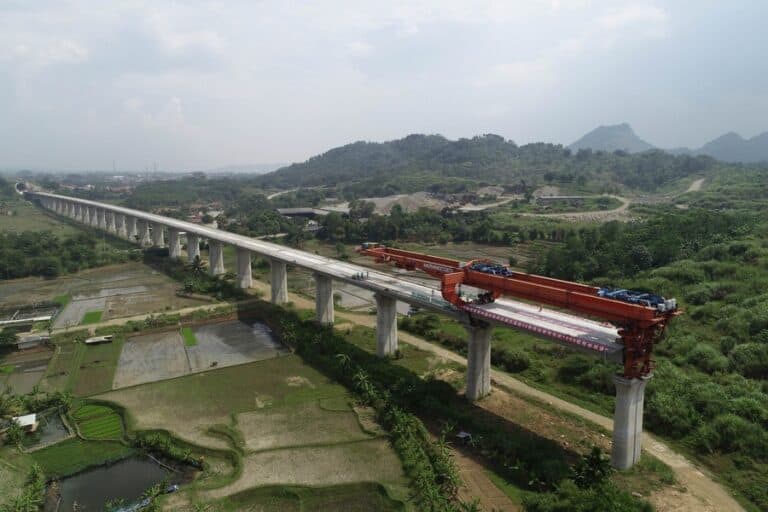
Constructing a viaduct across a deep mountain valley or a cross-sea bridge presents a unique set of engineering challenges. When bridge piers reach heights of 50 meters, 100 meters, or even higher, contractors face a relentless and invisible enemy: High-Altitude Winds.
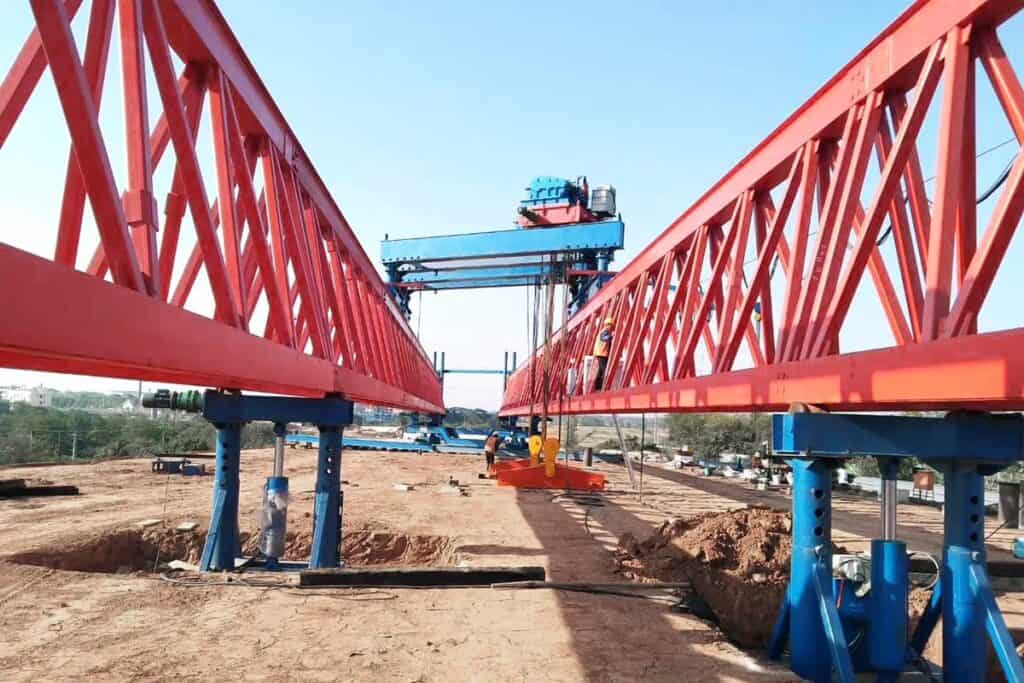
At these elevations, wind speeds are significantly higher and more unpredictable than at ground level. When a Bridge Girder Erection Machine (Launching Gantry) is suspending a 200-ton concrete beam 100 meters in the air, the girder acts like a massive sail. Without rigorous engineering and advanced safety systems, sudden wind gusts can cause severe swaying, equipment derailment, or catastrophic overturning.
In this technical insight, we explore how our Launching Gantries are purposefully engineered to neutralize wind loads, ensuring absolute stability and worker safety in extreme high-altitude environments.
The Aerodynamics of the Truss Structure
The defense against strong winds begins in the design phase. Solid box-girder equipment designs suffer from a massive wind-facing surface area, making them highly susceptible to lateral wind pressure.
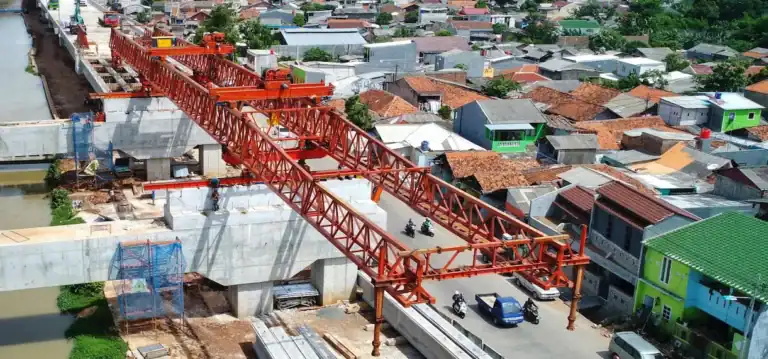
The Honeycomb Truss Advantage: Our Launching Gantries utilize an optimized open-web truss structure. This “honeycomb” design allows high-velocity winds to pass completely through the main steel framework. By drastically reducing the aerodynamic drag coefficient, the lateral force exerted on the machine is minimized.
Finite Element Analysis (FEA): Before any steel is cut, our engineering team utilizes advanced FEA software to simulate extreme wind loads based on your specific project location’s meteorological data. We reinforce critical stress points—such as the connections between the main girder and the support legs—ensuring the structure exceeds the required safety factor of 1.5 even under severe dynamic loads.
3-Tier Active Safety and Anchoring Systems
Structural design is only the first line of defense. To guarantee operational safety, our equipment is fitted with a comprehensive, multi-layered safety and monitoring system.
1. Real-Time Wind Monitoring (Anemometers)
Every gantry is equipped with industrial-grade anemometers (wind speed sensors) installed at the highest point of the structure. These sensors feed real-time data directly to the operator’s cabin PLC interface.
- Warning System: If wind speeds approach the operational safety threshold, the system triggers an automatic visual and auditory alarm, warning the crew to prepare for securing the load.
2. Hydraulic Anti-Sway Technology
When suspending a heavy precast concrete beam, wind-induced swinging can shift the center of gravity dangerously. Our winch trolleys feature a rigid lifting spreader design combined with hydraulic anti-sway mechanisms. This restricts the pendulum effect of the suspended load, keeping the concrete girder perfectly aligned with the pier bearing pads, even in gusty conditions.
3. Heavy-Duty Mechanical Anchoring
During the critical “launching” phase (when the gantry moves forward to the next pier), the machine is most vulnerable. To prevent sliding or tipping, the gantry utilizes:
- Transverse Locking Pins: Heavy steel pins that lock the support legs directly into the pier cap.
- Hydraulic Rail Clamps: Storm brakes that grip the transverse moving rails with immense pressure.
- Steel Wire Guy Ropes (Typhoon Mode): For cross-sea projects facing potential typhoons, the gantry includes dedicated anchor points for steel guy ropes, allowing the crew to tie the machine securely to the massive concrete piers during non-working hours.
Operational Wind Ratings You Can Trust
We do not leave safety to guesswork. Our Bridge Erection Machines are rigorously tested and certified to specific environmental thresholds:
- Safe Operation: Fully operational during Level 6 winds (up to 13.8 m/s). Girders can be lifted and placed with precision.
- Suspended Operation: At Level 7 winds (up to 17.1 m/s), lifting operations must cease, but the machine can safely hold its position.
- Storm Survivability: When properly anchored in “non-working mode,” the gantry structure is designed to withstand Level 11 to Level 12 typhoons, ensuring your multi-million dollar asset survives extreme weather events.
Conclusion: Don’t Compromise on High-Altitude Safety
When bidding on high-pier viaducts or coastal bridges, the safety of your crew and equipment cannot be compromised. Choosing a Launching Gantry with a proven, wind-resistant open-truss design and intelligent monitoring systems ensures that your project continues safely, avoiding costly weather delays and preventing fatal accidents.

Get Expert Advice for Your Bridge Project
Our engineering team brings decades of experience in bridge construction equipment. Let us help you find the right solution.

 Scan to chat