 EN_US
EN_US  Español
  Русский
  العربية
  Português do Brasil
  Français
  Bahasa Indonesia
  Türkçe
  Tiếng Việt
  Bahasa Melayu
  Українська

 Technical Insight
Technical Insight
10 Questions to Ask Before Purchasing a Bridge Launching Gantry
Overview
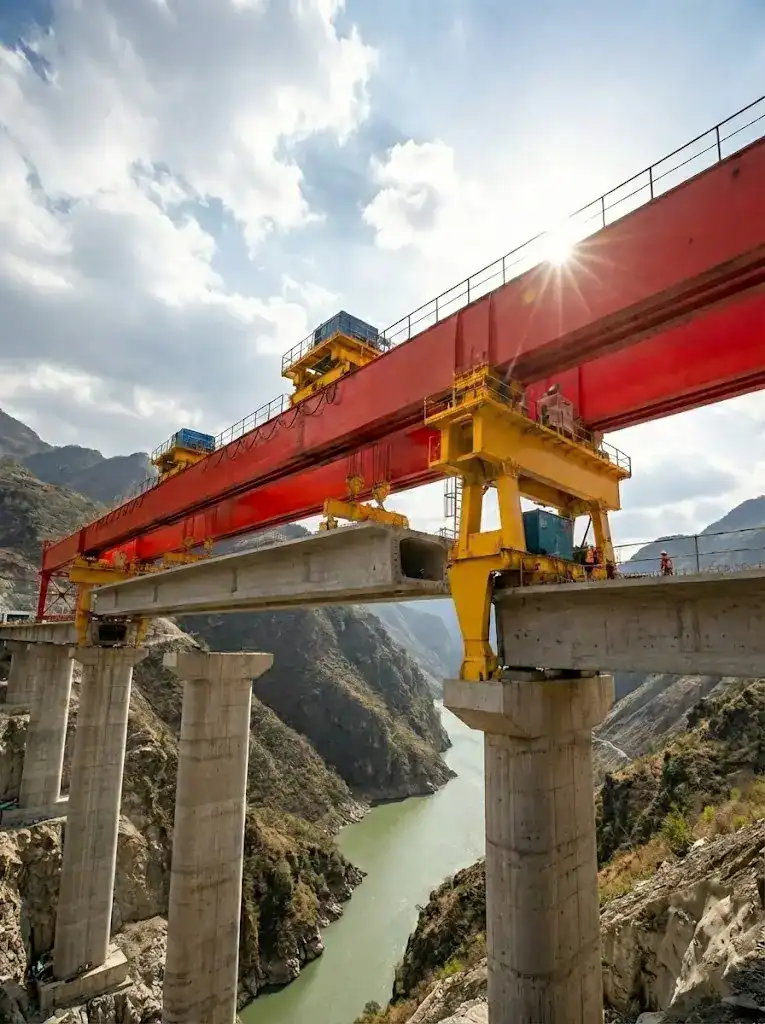
Buying a bridge launching gantry is never as simple as checking specifications or comparing prices. Anyone in the industry knows that a single selection mistake leads to endless troubles on site. The equipment might be too bulky for mountain roads, or too clumsy for curved bridges. The worst nightmare is frequent breakdowns, which cause project delays and massive budget overruns. Facing various brands and aggressive sales pitches, how can you avoid these traps? Based on real experience from multiple bridge projects, we compiled 10 core questions you must ask manufacturers. From basic span and tonnage to transport, assembly, and after-sales response, every detail affects your project safety and timeline.
Are you ready to negotiate with suppliers?
We recommend spending five minutes reviewing this checklist before contacting manufacturers. Click the button below to download the “Bridge Launching Gantry Procurement Technical Requirement Confirmation Form” for free. Go into negotiations with these questions and keep full control of the process.
👉 [Download the confirmation form now]

Question 1: What are your project’s bridge span and beam weight?
Span and load capacity define the core framework of a bridge launching gantry, marking the first step in equipment selection. Underestimating these parameters creates fatal safety hazards from equipment overload. Conversely, blindly choosing oversized equipment to be safe causes a needless spike in purchasing and transport costs. To achieve a precise match, you need to verify the following details:
- Plan future business redundancy: Evaluate the utilization plan within the equipment’s lifespan. If you might undertake larger bridge projects in the next few years, moderately increasing current equipment parameters is a smart move. It significantly improves your return on investment (ROI).
- List the complete span details: We suggest providing manufacturers with both typical spans and the exact difference between maximum and minimum spans. This determines whether the equipment is adaptable enough for non-standard bridge sections.
- Calculate the actual lifting weight: The beam weight on blueprints never equals the real lifting load. You must add the weight of reinforcement, temporary construction loads, and lifting rigging. This combined total is the only true basis for setting the equipment’s rated lifting capacity.
Question 2: What are the topography and spatial constraints of the construction environment?
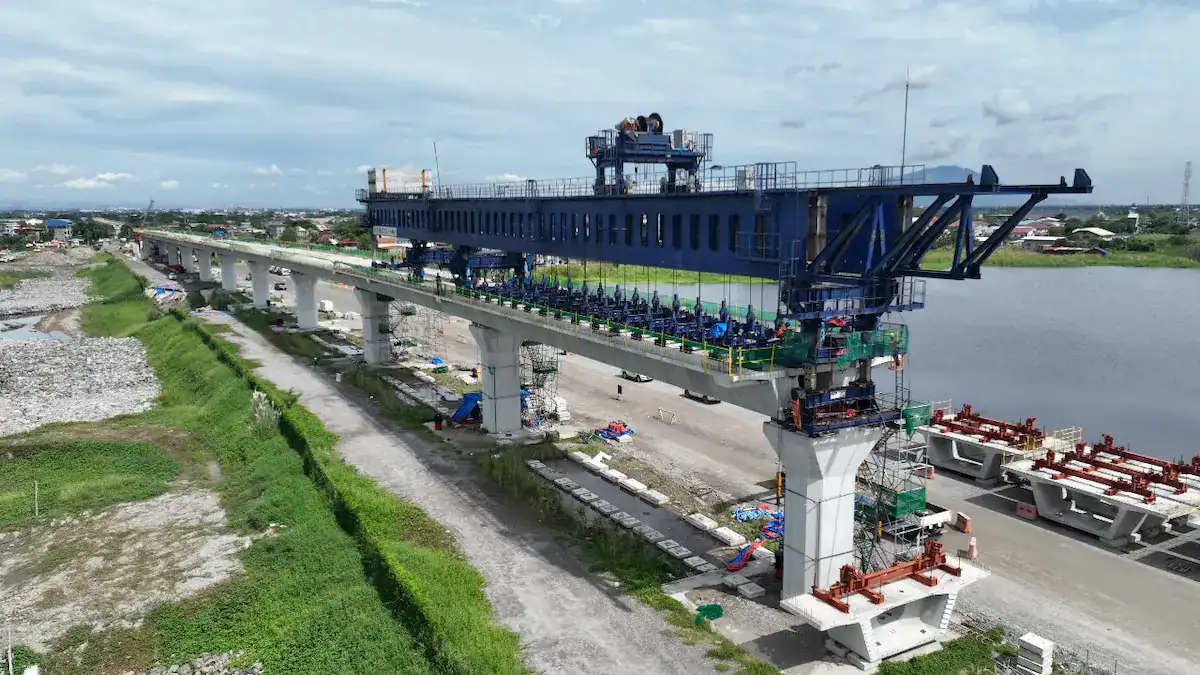
A bridge launching gantry must not only lift heavy loads but also fit into the site and deploy smoothly. Whether dealing with mountain valleys, urban interchanges, or cross-water projects, complex site environments impose strict requirements on leg structures, hole-crossing methods, and overall layout. Focusing solely on blueprints while ignoring site realities during procurement often leads to interference issues that prevent assembly on site. It can even force costly and time-consuming non-standard modifications later. To avoid being caught off guard after entering the site, you must provide the supplier with the following field survey data:
- Identify bottlenecks in access and operation spaces: Carefully evaluate the maximum width and minimum turning radius of construction access roads. If you face restricted conditions like mountainous areas or tunnel entrances, the equipment will likely require a deeply modular design. This ensures it can be disassembled into smaller pieces and transported smoothly to the work surface.
- Anchor pier heights and extreme slopes: Terrain fluctuations directly determine the hydraulic adjustment range of the gantry legs and the climbing capability of the equipment. Be sure to provide high-pier drop data under extreme conditions, as well as maximum longitudinal and transverse slope limits. These are core parameters to ensure the equipment does not capsize during hole-crossing and erection.
- Scan surrounding obstacles: When constructing in dense urban areas or next to existing lines, restricted clearance is common. You must mark the precise locations of high-voltage wire corridors, adjacent buildings, or overpasses in advance. These hard boundaries will directly determine whether the equipment needs a low-clearance custom design or a special guide beam structure.
Question 3: What are the load capacity and span range of the bridge launching gantry?
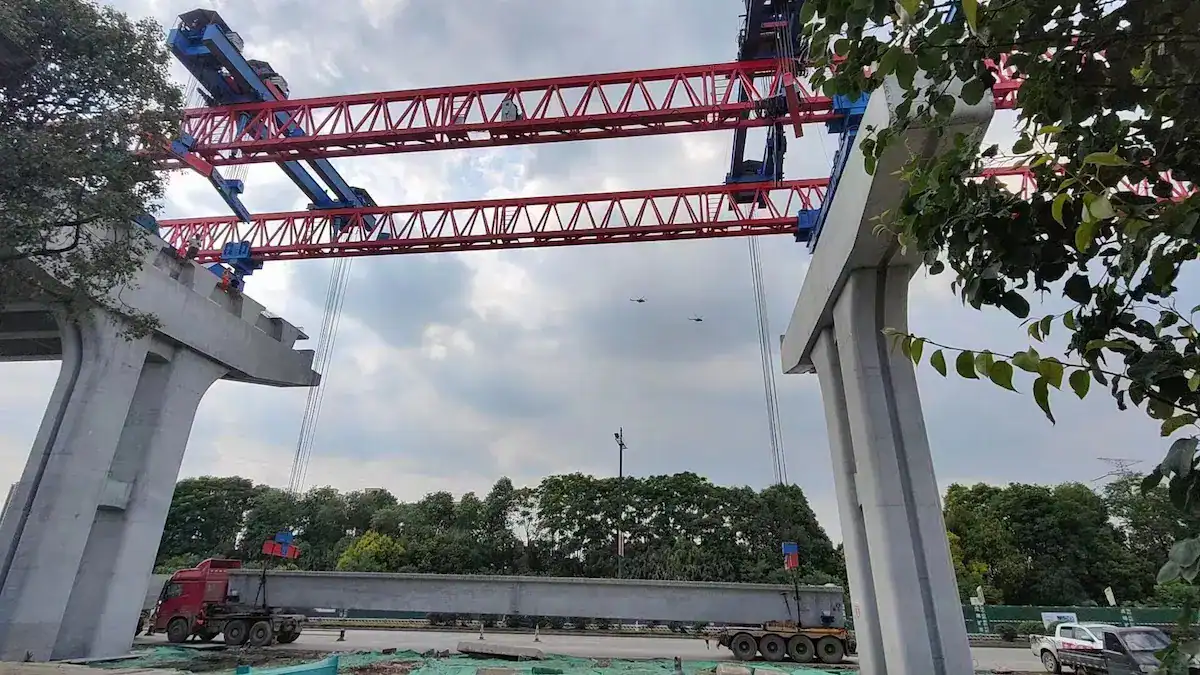
Do not easily be satisfied by the flashy “maximum load capacity” words in a supplier’s product brochure. Paper data is one thing, but whether the equipment can perform stably under various harsh working conditions on site is another. You need to verify the technical bottom line through the following checklist:
| Core Inspection Points | Common Procurement Blind Spots | Real Negotiation Bottom Line |
| Rated lifting weight and dynamic load coefficient | Looking only at static lifting weight while ignoring instantaneous impact forces from lifting, braking, or wind load superposition. | Demand that the manufacturer clarify the dynamic load coefficient. Reinforcement, temporary loads, and rigging weight must all be included in the total lifting weight, leaving sufficient safety margins. |
| Variable span operation and curved bridge erection capability | Inquiring with standard spans and assuming the equipment can naturally adapt to non-standard bridge sections or small-radius curves. | If drawings include curved bridges, the manufacturer must provide exclusive leg-traversing or rotating rigging solutions, and estimate operation complexity during different span switches. |
| Core steel materials and structural rigidity | Assuming the main girder will not deform without asking about steel grades and full-load deflection standards. | Clarify the steel yield grade of main load-bearing components and strictly verify the maximum downward deflection under full load to prevent fatigue fracture after long-term use. |
Question 4: Does the equipment comply with international safety and quality standards?
In large infrastructure, especially transnational projects, equipment compliance often holds veto power. Buying a gantry that meets parameters but fails the inspection of local supervisors or safety authorities is like buying scrap metal that cannot start work. To ensure the equipment not only works but also operates legally and compliantly, you need to focus on reviewing the supplier’s quality control capabilities:
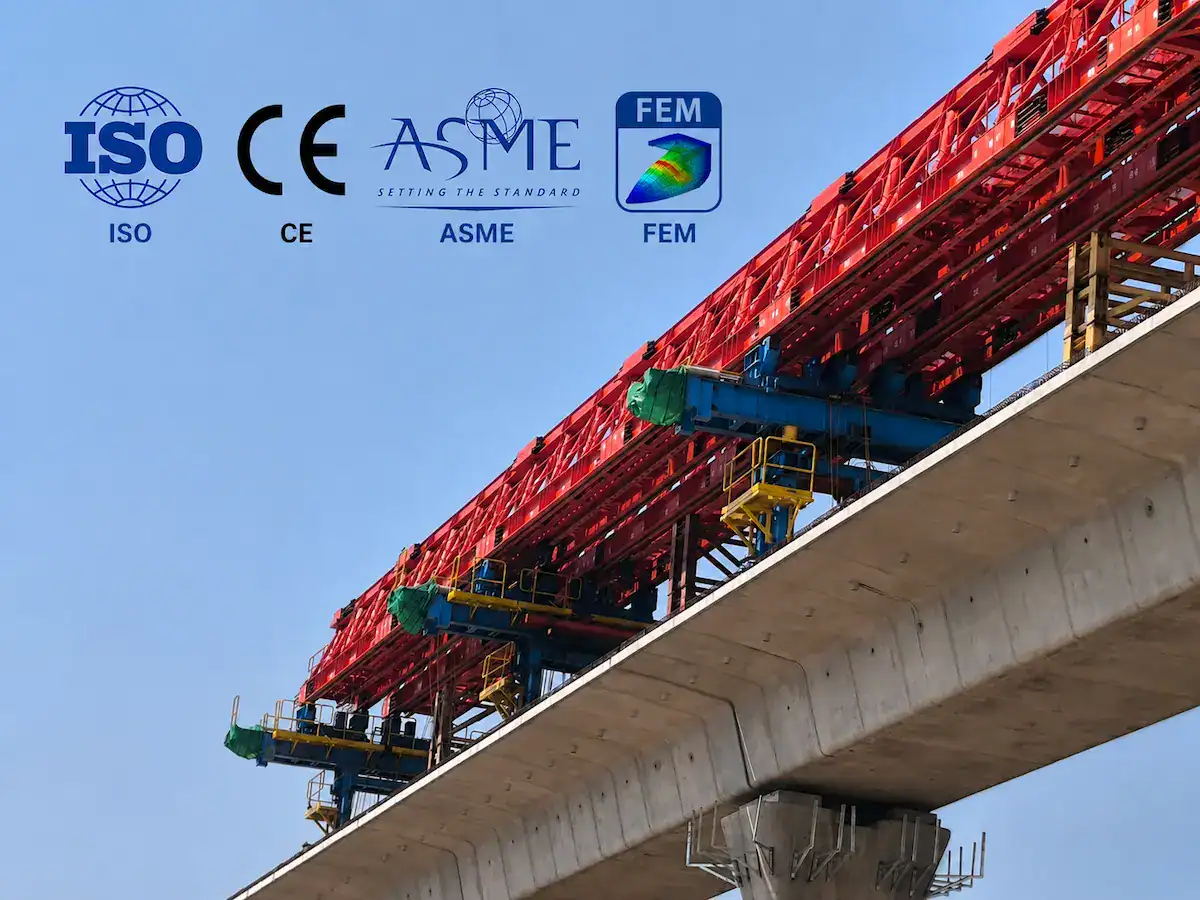
- Secure entry permits for target markets: Do not wait until the equipment crosses the ocean and arrives at the port to find out key certificates are missing. For overseas projects, you must confirm in advance whether the manufacturer can provide EU CE certification, US ASME, or ISO system certificates. Demand to see real document records of their past successful inspections.
- Check welding processes and Non-Destructive Testing (NDT) commitments: A bridge launching gantry is heavy specialized equipment, and weld quality is the lifeline of the machine. The contract cannot just say “guaranteed quality.” It must explicitly require 100% Ultrasonic Testing (UT) or Radiographic Testing (RT) for welds of main load-bearing components, accompanied by reports from qualified third-party testers.
- Evaluate safety redundancy (SIL level) of the electronic control system: Modern high-altitude hoisting cannot rely solely on the personal experience of operators. Look deep into the Safety Integrity Level (SIL) of the electrical control system. Is it equipped with sensitive anti-mistouch mechanisms, overload limiters, anemometer alarms, and multiple electrical interlocking protections?
Question 5: Does the supplier have successful case studies for similar projects?
In bridge launching gantry procurement, the biggest fear is paying a high price only to become a guinea pig for the manufacturer. No matter how beautiful the models in the showroom or the renderings in PPTs are, they cannot hide a lack of real-world experience. You need a mature piece of equipment that has been tested and proven under your project’s specific geological conditions, identical spans, and special beam types. To examine a supplier’s true track record, you must look past the surface to the substance:
- Conduct a thorough background check: Do they dare to let you call their previous buyers directly? Demand that the supplier provide contact information for clients from three recent similar projects, and ask the actual users directly: Is the equipment easy to use? Are there hidden defects? Did the parameters promised by the manufacturer fall short?
- Reject PPTs and demand raw on-site records: Do not just watch edited promotional videos. Focus on requesting actual operation videos of the equipment under extreme working conditions, original construction logs, and even equipment runtime schedules.
- Get serious about failure and overhaul data: Ask clearly where high-frequency failure points usually concentrate for this model in past projects. What is the Mean Time Between Failures (MTBF)? Only manufacturers who dare to put these data on the table are worthy of trust.
Question 6: What are the automation degree and operational convenience of the bridge launching gantry?
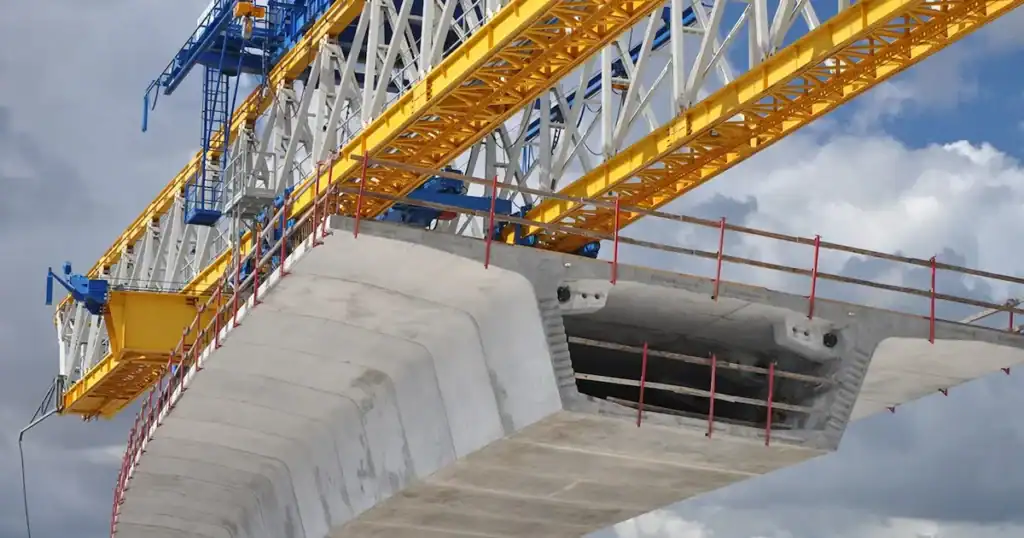
With labor costs soaring and construction safety red lines becoming stricter, the automation degree of a bridge launching gantry is definitely not just a marketing gimmick. It is a real tool used to speed up schedules and cut costs. A poorly designed machine increases the probability of safety accidents caused by misoperation and makes your training costs skyrocket.
- Say goodbye to labor-intensive hole-crossing systems: Confirm in detail whether the equipment comes standard with automated or one-key hole-crossing functions, and whether it supports high-precision synchronous control and wireless remote control operations. Reducing the number of high-pressure operators in dangerous high-altitude areas is the greatest protection for the project.
- Review user-friendly self-diagnostic capabilities: Is the Human-Machine Interface (HMI) truly friendly? When the equipment stops suddenly, can the control system accurately report which valve or wire went wrong? Do not let a short circuit in a cheap relay cause a total shutdown of two or three days for troubleshooting.
- Assess operator thresholds and training cycles: The more high-end the equipment, the simpler the operational logic should be. Learn about the operator qualification thresholds required by the manufacturer, and how long their on-site training cycle takes before a novice can operate independently.
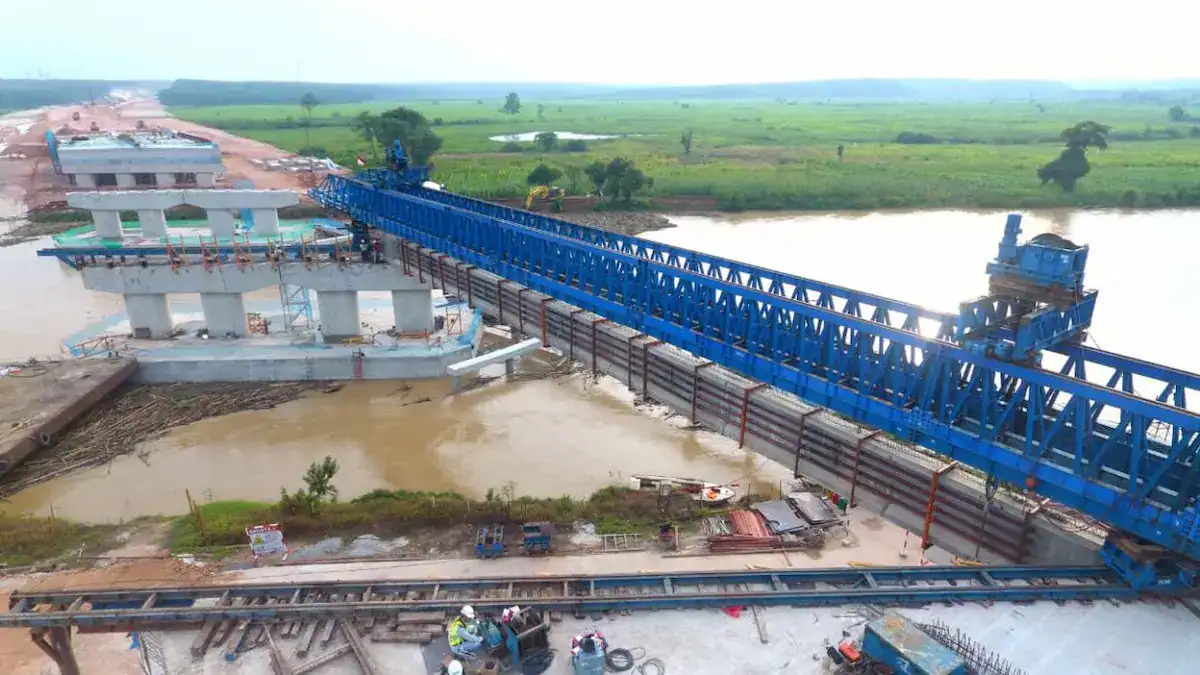
Question 7: What is the scope of after-sales service and technical support?
Buying a bridge launching gantry is not just buying a heap of steel, but buying a full lifecycle guarantee. Under long-term high-load operation, minor repairs and maintenance are inevitable for heavy specialized equipment. The biggest fear is that once the equipment arrives, the manufacturer’s attitude changes from supportive to indifferent. To avoid downtime penalties caused by delayed parts, the initial negotiation must firmly lock down the following after-sales terms:
- Uncover the word games of warranty periods: A “one-year warranty” is an empty phrase. The absolute coverage of the warranty must be clearly defined in the contract: Does it include core hydraulic parts and the main electrical control board? Who pays for the wear and tear of consumable parts?
- Question the spare parts warehouse and emergency response speed: Once a beam cracks or a critical component fails, how far is the manufacturer’s spare parts warehouse from your site? Are parts sent via express courier or dedicated vehicles? Request a detailed “Recommended Two-Year Operation Spare Parts List” from the supplier and stock up in advance.
- Address the pain points of overseas projects: If your project is overseas, you must press the supplier on these points: How is the English communication ability of the technical team? Do they provide 24-hour remote diagnosis considering time zone differences? If an engineer must fly to the site, what is the maximum cycle for visa processing and dispatching?
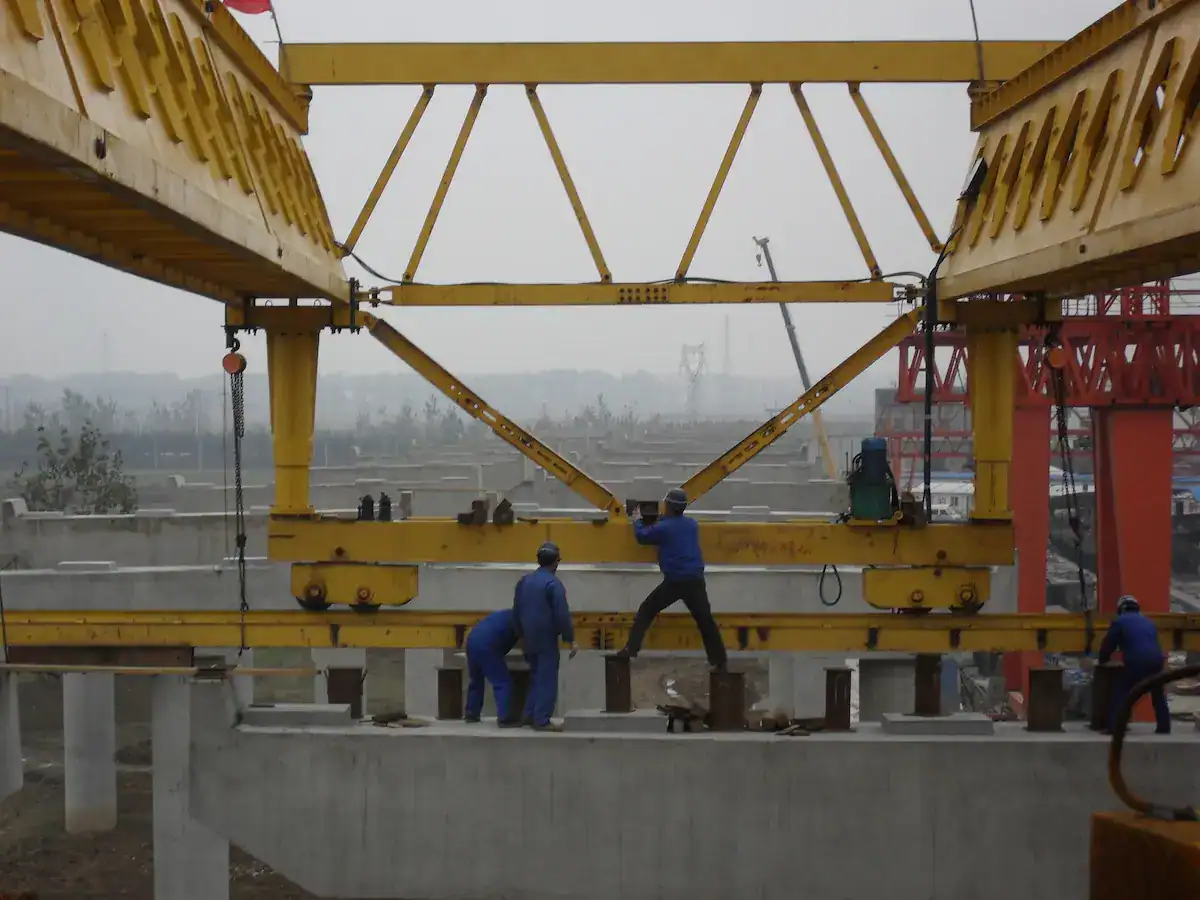
Question 8: What are the modularity and transport feasibility of the equipment?
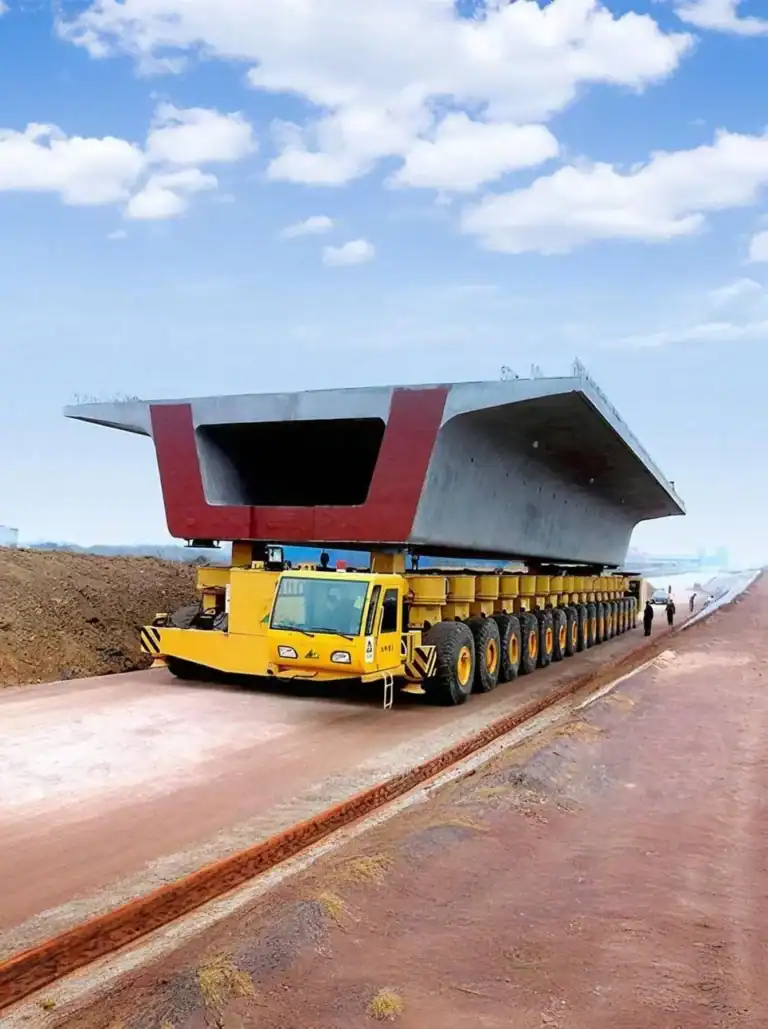
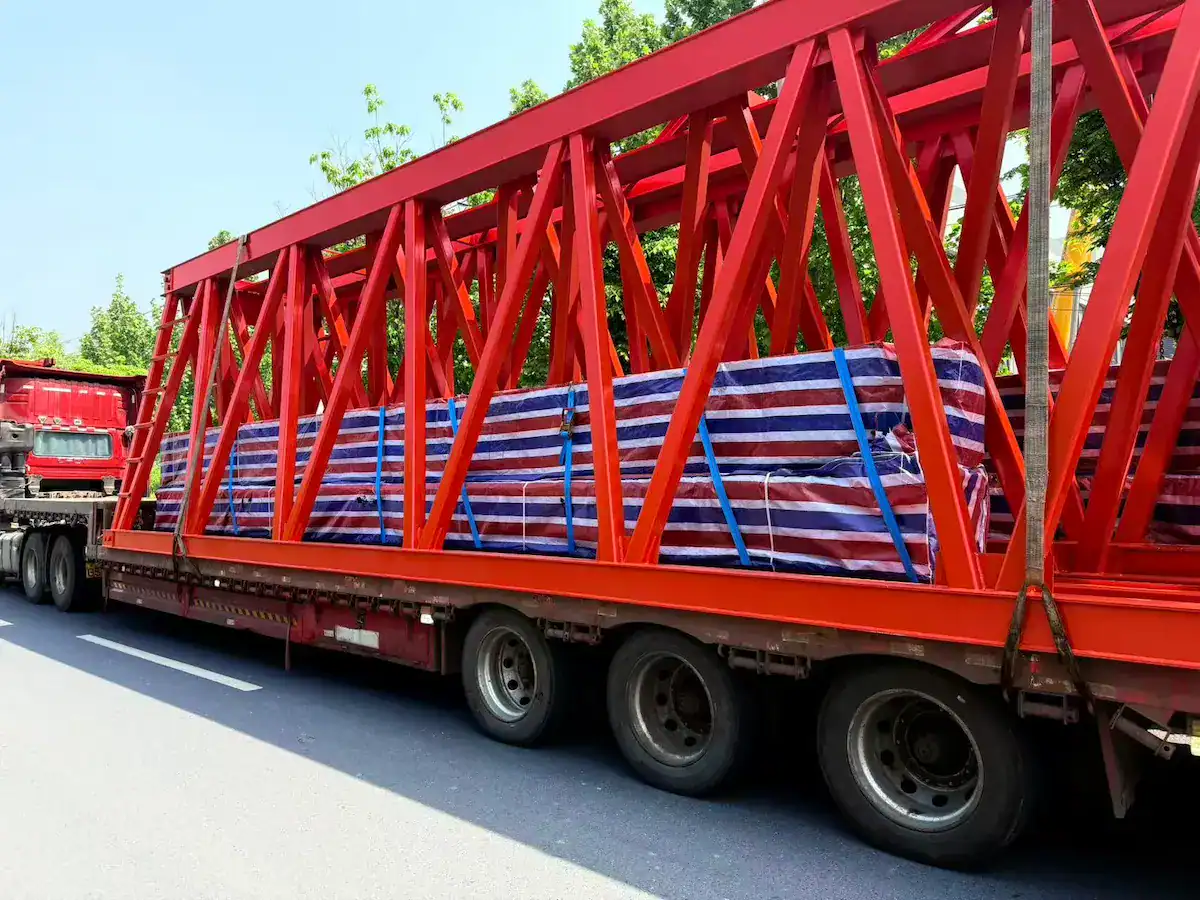
Buying the equipment does not mean you can transport it into the site. A bridge launching gantry easily weighs hundreds of tons. If you are going to remote mountains, tunnel entrances, or overseas infrastructure sites with terrible road conditions, transport and site entry are often bigger headaches than buying the equipment. If the modular design is poorly done, you will spend heavily on special transport permits. You will also face severe schedule delays due to assembly failure on site.
- Find out extreme dimensions and overrun thresholds: Do not wait until shipping to find out the main girder cannot fit into standard containers or pass local height clearance bars. You must clarify the maximum length, width, and weight of a single component with the manufacturer. If it can be hauled by standard flatbed trucks, never waste money on special heavy-duty transport vehicles.
- Calculate hidden shift fees for assembly and disassembly: How much tonnage of auxiliary truck cranes must be mobilized to cooperate with assembly on site? If the assembly nodes designed by the manufacturer are too complex and involve excessive high-altitude work, your daily crane rental fees will become a terrifying expense.
- Leave enough interchangeability options for the next project: High-quality modular design means the equipment can achieve fast reorganization by adding or subtracting standard sections across projects with different spans and environments. Examining the modular interchangeability of the equipment is the key to achieving long-term reuse from a single investment.
Question 9: How long are the delivery cycle and installation commissioning time?
In the infrastructure industry, time is money. Piers are already built and waiting for the bridge launching gantry to enter the site. If the manufacturer tells you production is tight or logistics are delayed, who will bear the huge fines and pressure? Delivery dates must never rely on verbal promises from salespeople. You must turn them into hard contractual constraints with liquidated damages.
- Break down the production cycle: Do not just accept a vague completion date. Force the supplier to provide a clear production schedule: How many days for drawing confirmation? How long for cutting and welding? When will core hydraulic and electronic procurement parts arrive? Locking down key milestones allows you to send staff to the factory to urge progress anytime.
- Verify logistics and customs clearance time: Especially for export projects, how long will it float at sea? How many days will it be delayed at the port? How long for inland transport? Demand that the supplier provide a mature end-to-end logistics solution rather than a casual statement like FOB delivery, fix the rest yourself.
- Assess the quality of the installation commissioning team: Once equipment arrives, does the manufacturer send an experienced chief engineer or a temporary outsourced team? Explicitly require the manufacturer to provide the qualifications and number of commissioning team members. Commissioning is highly technical, and a poor start leads to continuous minor flaws.
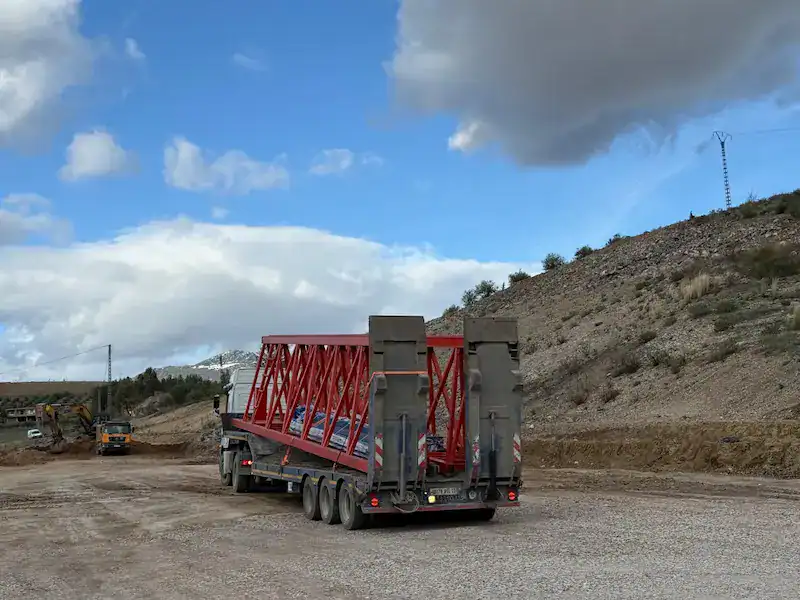
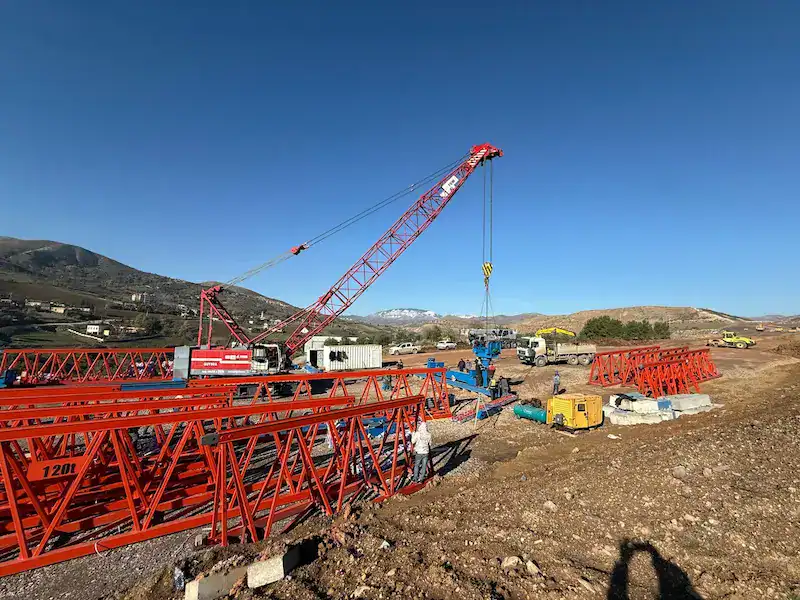
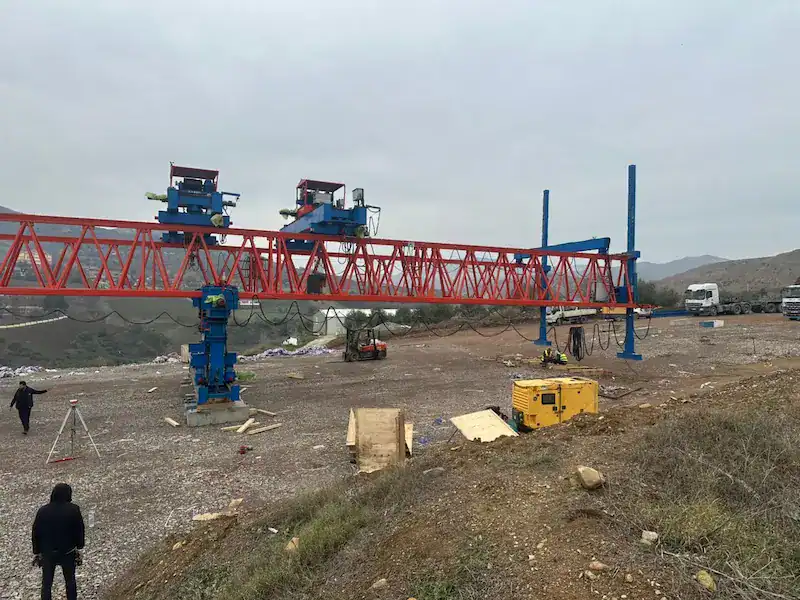
Question 10: What does the total lifecycle cost include?
Buying cheap but operating expensive is the most brutal lesson in the construction machinery industry. If you only look at the last line of figures on the quotation, you might step into the biggest procurement trap. Please calculate the economic account of this Total Cost of Ownership (TCO):
Buying cheap but operating expensive is the most brutal lesson in the construction machinery industry. If you only look at the last line of figures on the quotation, you might step into the biggest procurement trap. Please calculate the economic account of this Total Cost of Ownership (TCO):
| Cost Component | Conventional Routines of Manufacturers | Procurement Anti-Fraud Guide |
| One-time entry and hidden fees | Lowering bare machine prices during bidding, then charging high freight or guidance fees later under various names. | Demand an absolutely transparent detailed quotation, which must bundle bare equipment price, special transport fees, site installation guidance fees, and third-party NDT inspection fees. |
| Annual maintenance and consumable budget | Staying silent about high fuel consumption and expensive consumable replacement costs under high-load operations. | Have the manufacturer issue a recommended two-year operation spare parts list and quotation. Focus on the replacement frequency and official prices of wire ropes, brake shoes, and core hydraulic components. |
| Second-hand disposal and asset residual value | Treating equipment as a one-time consumable, letting it rust and scrap on site after the project ends. | Prioritize equipment with good versatility and standard modular design to increase second-hand resale rates. You can directly discuss the feasibility of a post-completion buyback agreement at the negotiation table. |
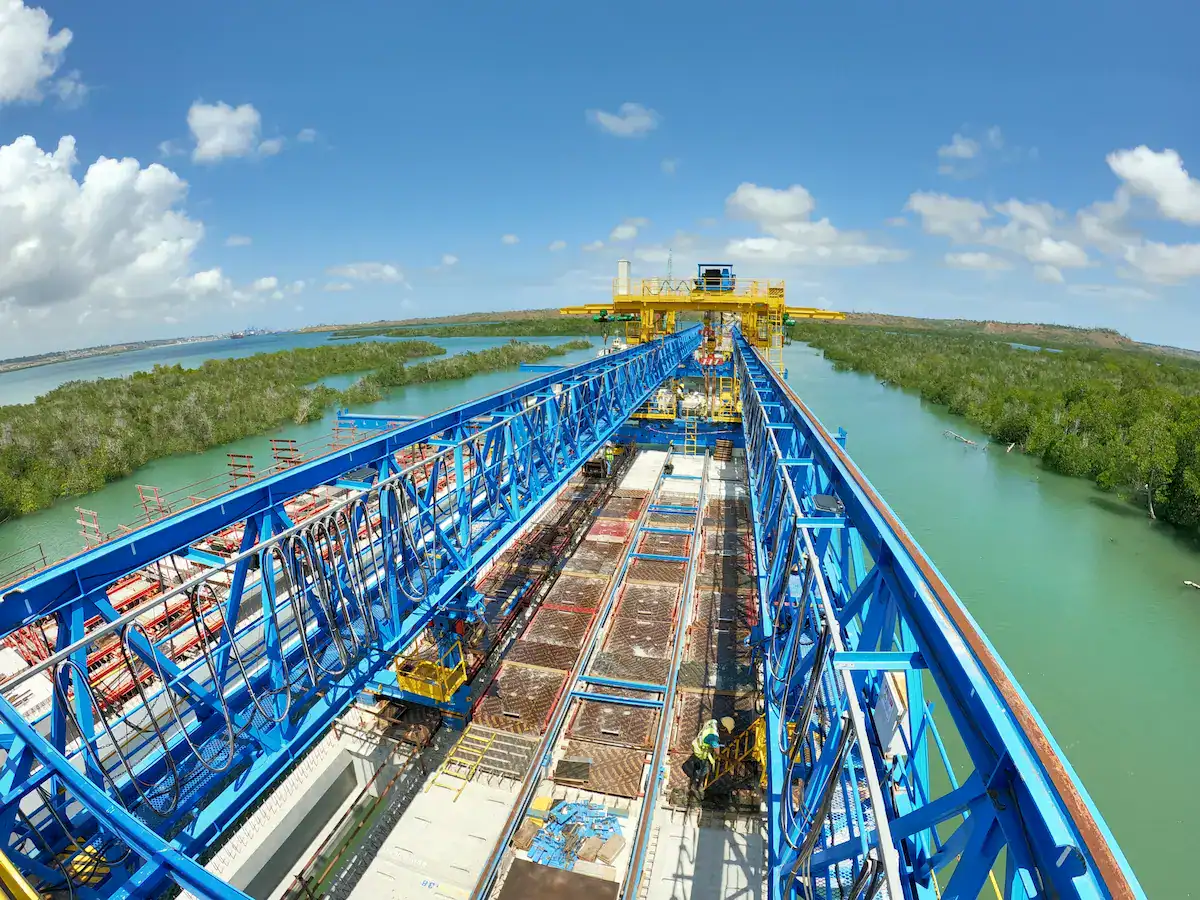
HSBRIDGE Core Advantages and Classic Case Study
Why are more overseas projects choosing HSBRIDGE bridge launching gantry?
After reading the previous 10 selection guides, you understand that stability and manufacturer backup are incredibly important. As an expert in bridge hoisting equipment, HSBRIDGE never tricks clients with theoretical laboratory data. Our confidence comes from real-world deliveries under countless complex working conditions.
Compared to homogenized products on the market, the HSBRIDGE bridge launching gantry solves three core pain points from the design stage:
- User-friendly modular assembly: We optimized the dimensions of core components like main girders and legs. They fit perfectly into standard shipping containers, saving expensive special freight. The foolproof connection design reduces on-site assembly crane fees and cycles by over 20%.
- Climate-adapted safety redundancy: For extreme high temperatures, high humidity, or strong wind environments common in overseas projects, our SIL-certified electrical control cabinets and hydraulic systems feature rigorous weather-resistance upgrades. This ensures zero downtime under harsh conditions.
- Dedicated transnational technical support: Selling the equipment is just the beginning. We provide a comprehensive turnkey service. This includes front-end non-standard drawing customization, port logistics clearance, and dispatching senior chief engineers to overseas sites for first-span guidance.
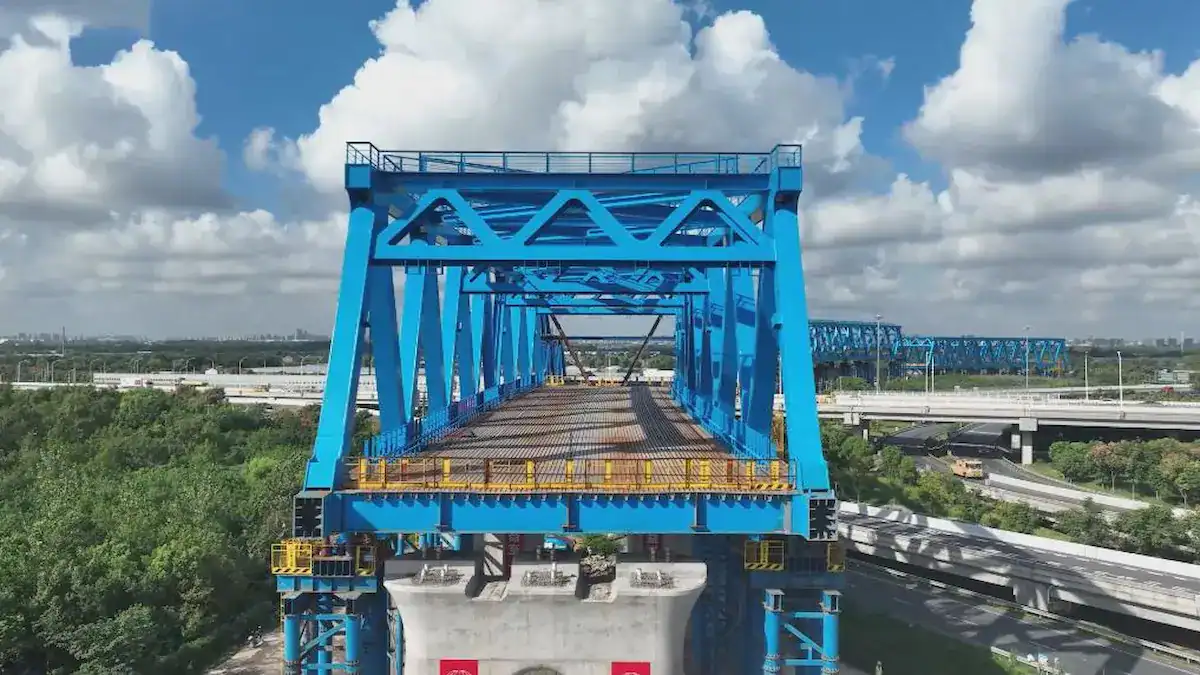
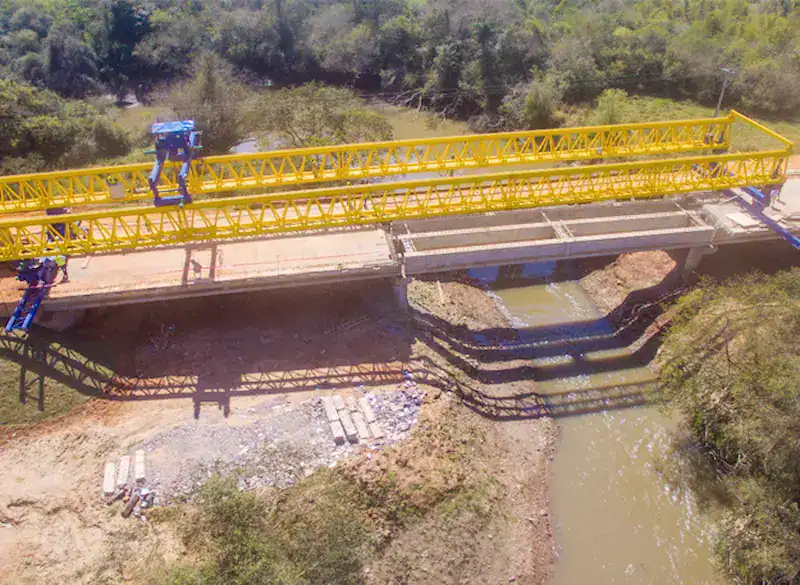
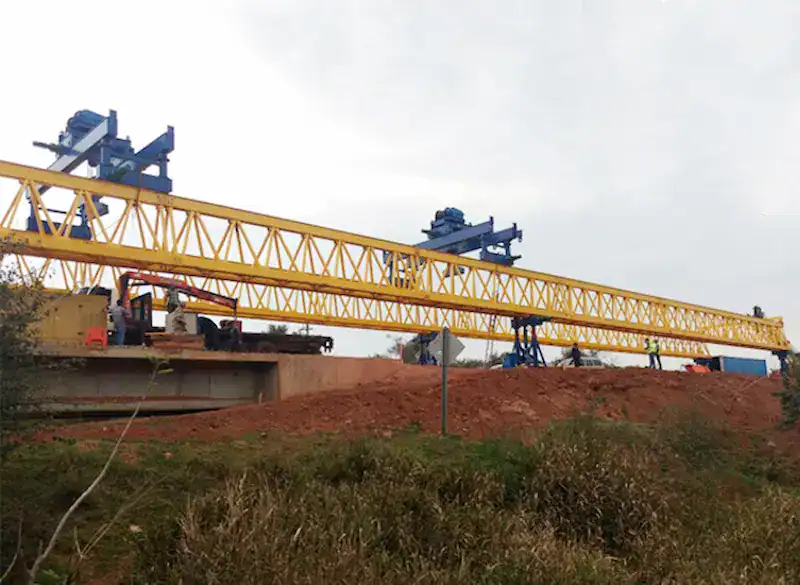
Classic Export Case: 150t Bridge Launching Gantry Delivery to Indonesia
150t Bridge Launching Gantry Export to Indonesia: HSCRANE Bridge Construction Case Study
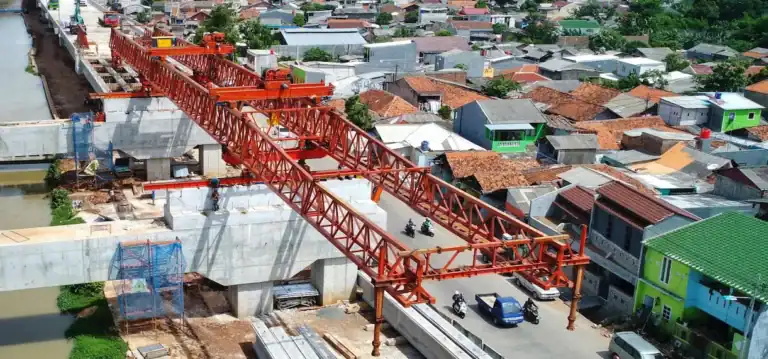
Project Background and Challenges: In a large infrastructure project in Indonesia, the client faced tight schedule pressure and complex island climate tests. The project required a bridge launching gantry with sufficient capacity. It also needed to withstand high temperature and humidity in tropical rainforests, and meet strict local special equipment admission standards.
HSBRIDGE Solutions:
- Customized weather resistance and corrosion protection: For the high salt spray and high humidity coastal environment in Indonesia, we performed deep anti-corrosion treatment on this 150t bridge launching gantry. Welds of critical load-bearing components passed high-standard non-destructive testing (NDT), ensuring the main structure life is safe from erosion.
- Precise logistics and assembly coordination: To avoid delaying the client’s pier progress, we worked backward to plan production. We used an optimized modular packing strategy to fit this massive machine into shipping containers. Once the equipment arrived in Indonesia, the HSBRIDGE overseas technical team entered the site simultaneously.
- Passing inspection on the first attempt: With close cooperation between local and Chinese teams, this 150t bridge launching gantry completed assembly, no-load commissioning, and heavy-load hole-crossing much faster than expected. The equipment passed the strict inspection of local supervisors on the first try. Its zero-fault performance secured the erection of the first span, earning high praise from the Indonesian client.
Project Inspiration: Do not let unproven equipment become the Achilles’ heel of your overseas project. From Indonesia to the world, HSBRIDGE is redefining reliability standards for exporting bridge launching gantries with solid real-world cases.
Summary
Procuring a bridge launching gantry is never a simple purchase order. It is a deep gamble concerning project success and profit margins. These 10 core questions seem like extreme pressure on the manufacturer’s technical capabilities. In reality, they clear mines ahead of time for your own bridge project.
No matter how confident the sales representatives sound, remember not to be led by fancy PPTs and cheap prices. Understand the site conditions, calculate the hidden costs of the full lifecycle, and lock after-sales maintenance with liquidated damages into the contract. These technical agreements and commercial clauses are your only guarantee for successful beam erection and timely fulfillment.
Are you holding troublesome drawings and unsure how to select equipment safely?
Theoretical discussions are never enough. Special terrain and bridge alignments require practical technical deduction. Do not waste valuable time comparing prices blindly. Send your construction drawings or project difficulties directly to us. Our senior crane equipment experts will perform a free engineering checkup and provide a tailored erection solution.
[Upload Drawings Now / Get 1-on-1 Technical Assessment]
Choosing the right bridge launching gantry means half of your bridge project is already successful.
To secure the other half, you still need a rigorous site coordination plan. Every node requires precise coordination, from site leveling and assembly marking to auxiliary crane entry and first span erection. Next, we prepared another essential guide for engineering managers:
Click to View: <Bridge Girder Launcher Project Planning: The Ultimate Guide for Engineers>
FAQ: Bridge Launching Gantry Procurement Frequently Asked Questions
Q1: Our project has a small-radius curved bridge. Can a standard bridge launching gantry handle it directly?
A: Absolutely not, as standard machines on curves cause eccentric loading and serious tipping risks. You must provide the minimum radius to the supplier and demand a custom technical solution for curved bridges.
Q2: The project timeline is under a year. Is it more cost-effective to rent a bridge launching gantry or buy a new one?
A: Renting reduces initial financial pressure for short, standard projects. However, for specialized or long-term conditions over 18 months, purchasing directly with a buyback agreement is a much smarter choice.
Q3: After the equipment arrives on site, how long does the assembly and commissioning take?
A: Standard machines usually take 10 to 15 days on flat ground with good crane coordination. This cycle can extend past three weeks in tight mountainous areas, so lock manufacturer on-site guidance into your contract.
Q4: We need to dispose of the equipment after the project. How do we evaluate the second-hand resale value of a bridge launching gantry?
A: Resale value depends on brand reputation, standard universal specifications, and easy modular assembly. Keep complete maintenance logs and discuss factory buyback options during early procurement negotiations to secure your exit channel.
This document is for reference only. Specific operations must strictly comply with local laws and regulations and equipment manuals.

Get Expert Advice for Your Bridge Project
Our engineering team brings decades of experience in bridge construction equipment. Let us help you find the right solution.

 Scan to chat