 EN_US
EN_US  Español
  Русский
  العربية
  Português do Brasil
  Français
  Bahasa Indonesia
  Türkçe
  Tiếng Việt
  Bahasa Melayu
  Українська


 Technical Insight
Technical Insight
Bridge Launching Gantry Solution: Segmental vs. Full-Span Launching Methods
Overview
At the bridge launching gantry site, technical issues are not the biggest headache. The real problem is wrong equipment selection. Segmental and full-span launching are mainstream bridge construction methods. Many teams only focus on equipment quotes before starting. They ignore transport conditions, site limits, and project schedule guarantees. Choosing the wrong plan can make even advanced equipment a burden. This will slow down the whole construction progress. We introduce two common bridge erection methods. These are Segmental Launching and Full-Span Launching. We analyze their differences in efficiency and cost control. We also compare equipment configuration, suitable bridges, and project management. This helps contractors and buyers choose the right bridge launching gantry plan.
Need a Bridge Launching Gantry for Your Project?
HSBRIDGE provides segmental and full-span bridge launching gantry systems. We also offer customized bridge construction equipment. We give expert selection advice based on bridge type, span, and environment.
[Contact HCRANE Engineers] to get free project plans and equipment configuration advice.
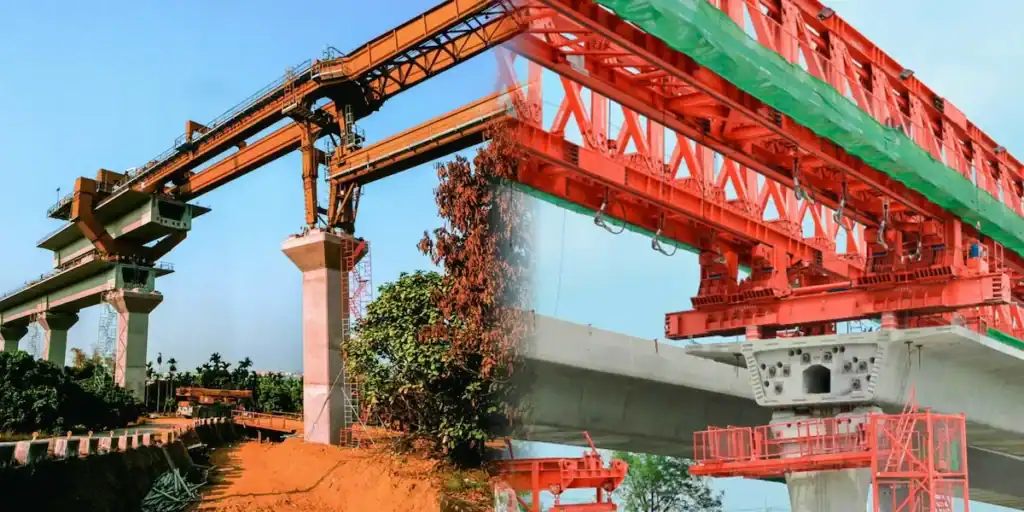
Why Choose the Right Erection Method?
In real projects, we often see contractors fall into a trap. They think a large bridge launching gantry builds anything. This is not true. Choosing the right erection method is never a simple choice. It is a game of balancing schedule, budget, site, and transport. Forcing full-span erection in mountains with narrow roads is bad. The temporary road cost alone can ruin the project. Conversely, using segmental launching for long, straight high-speed railways is slow. The slow speed will drive the project manager crazy. Therefore, before buying equipment, we must fully understand these two methods.
What is Segmental Launching?
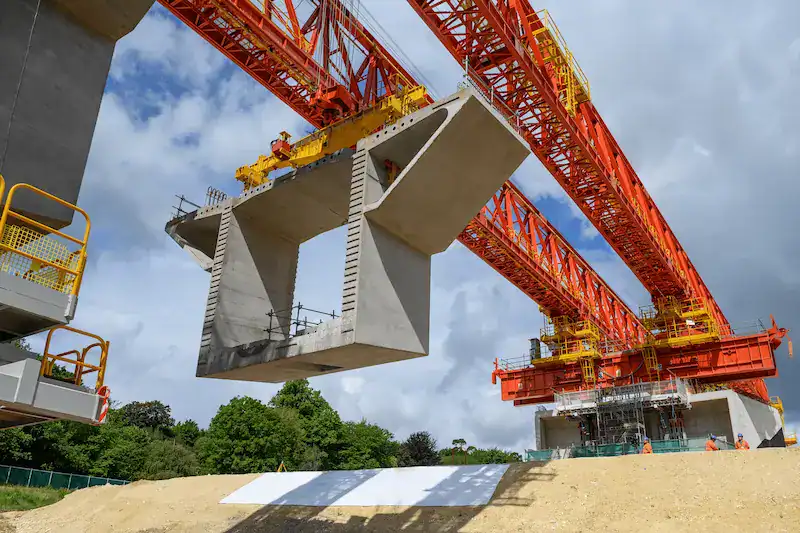
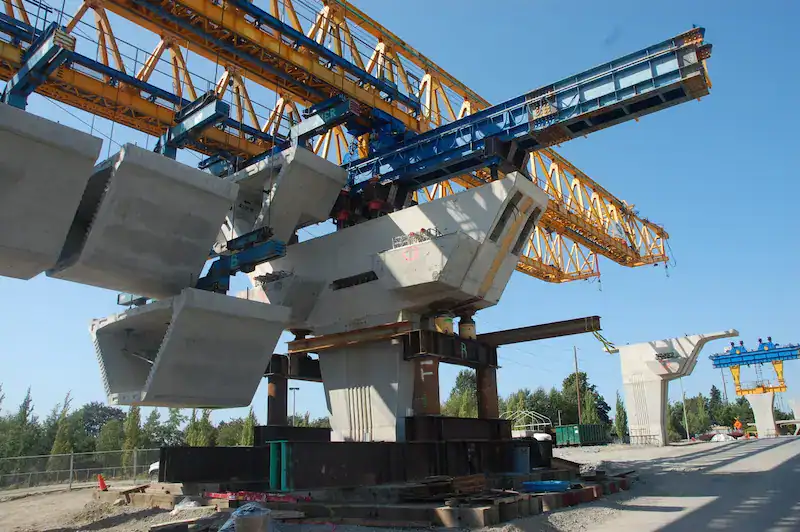
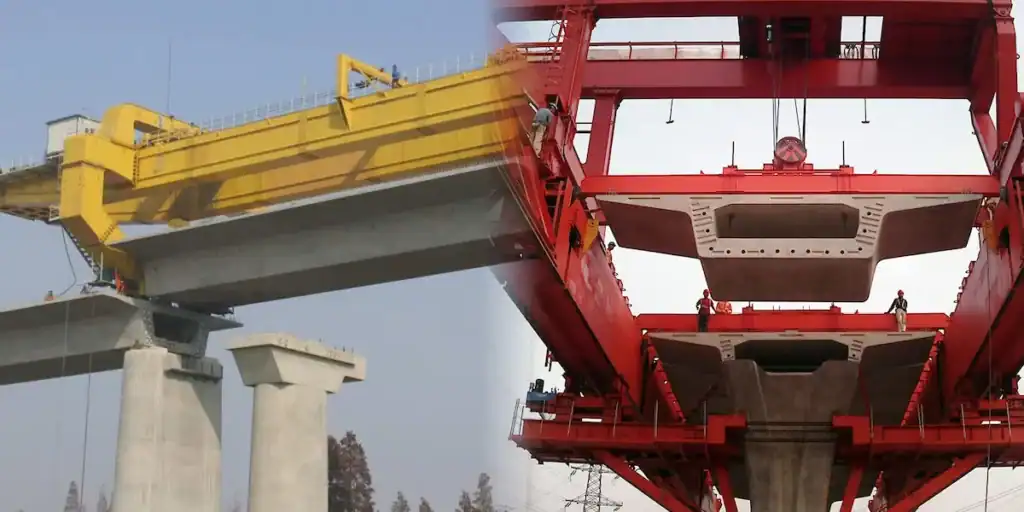
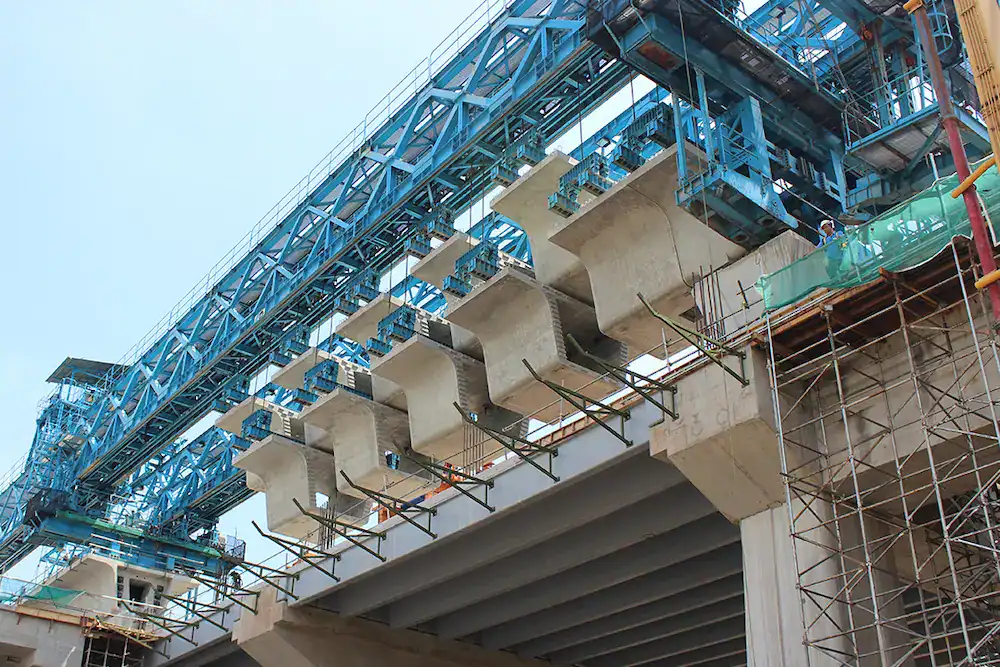
Simply put, segmental launching is like building blocks in mid-air. It does not cast a whole girder at the yard. Instead, it breaks the girder into short segments. These segments are shipped to the site. A bridge launching gantry suspends, joins, and tensions them together.
- Construction Principle: A segmental bridge launching gantry acts as an aerial platform. It lifts light precast concrete segments one by one. These segments usually weigh around 50t to 200t. Epoxy resin and prestressing force connect them into a complete span.
- Common Construction Process:
- Girder Delivery: Standard flatbed trailers transport segments below or behind the bridge launching gantry.
- Lifting and Positioning: The bridge launching gantry trolley grabs the segment. It lifts the segment to the designed height.
- Coating and Assembly: Special epoxy resin is applied to the section. It then precisely matches with the previous segment.
- Cable Tensioning: After hanging all segments, prestressing steel strands are inserted. Then, the entire span is tensioned together.
- Lowering and Moving: The whole girder lands on the bridge piers. The bridge launching gantry then moves to the next span.
- Supporting Equipment: You need a segmental bridge launching gantry. Segment transporters, epoxy tools, and prestressing jacks are also needed.
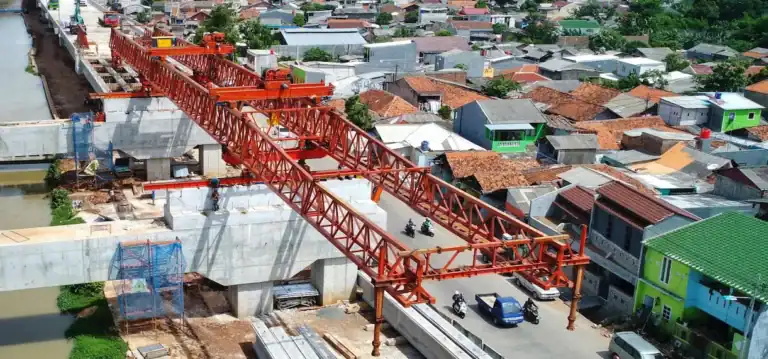
- Common Bridge Types: It has very low site and transport requirements. It is perfect for urban rail transit viaducts. It suits overpasses crossing existing roads and limited mountain sites.
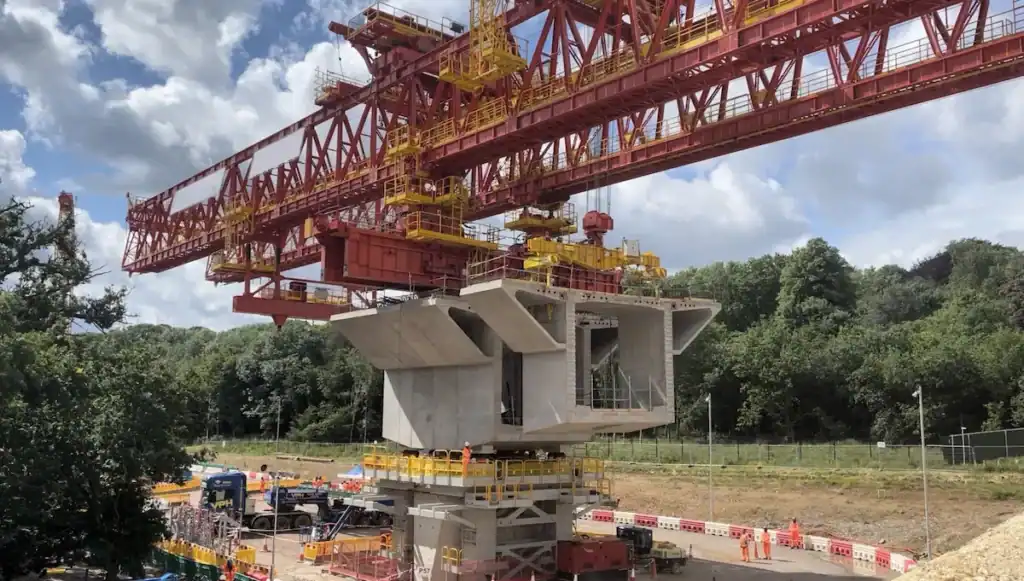
What is Full-Span Launching?
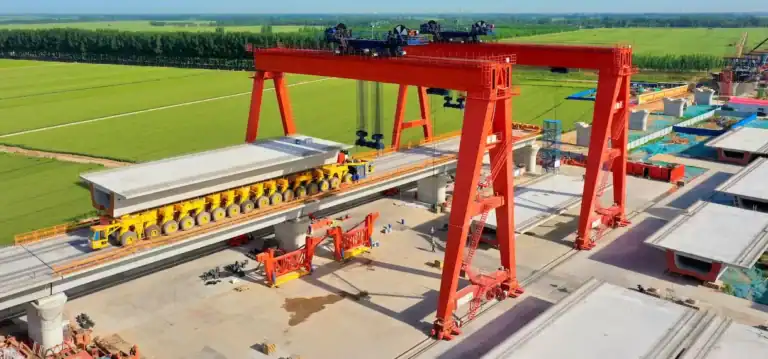
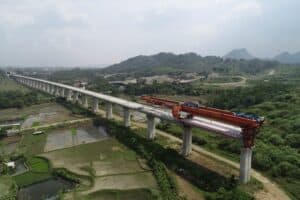
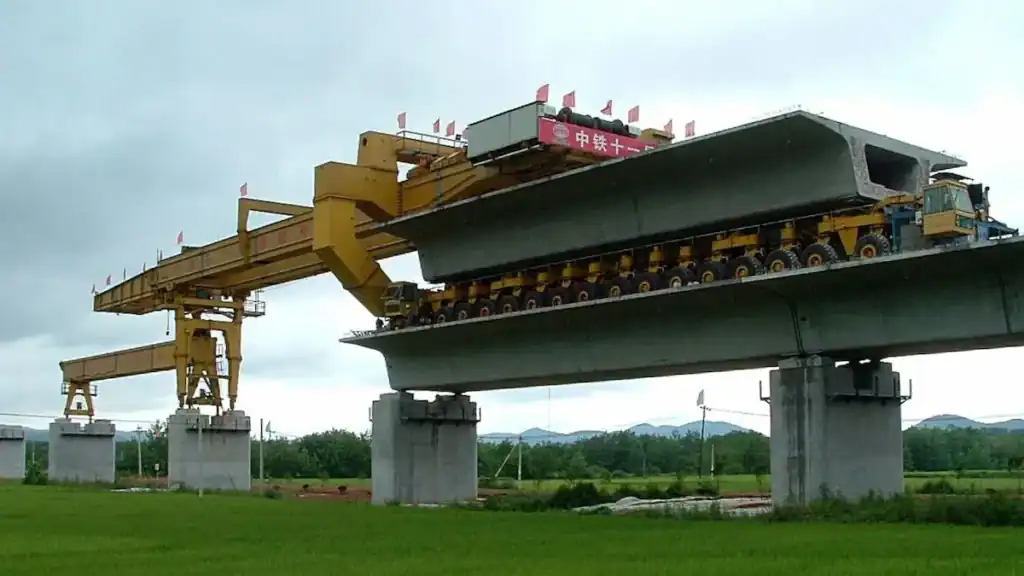
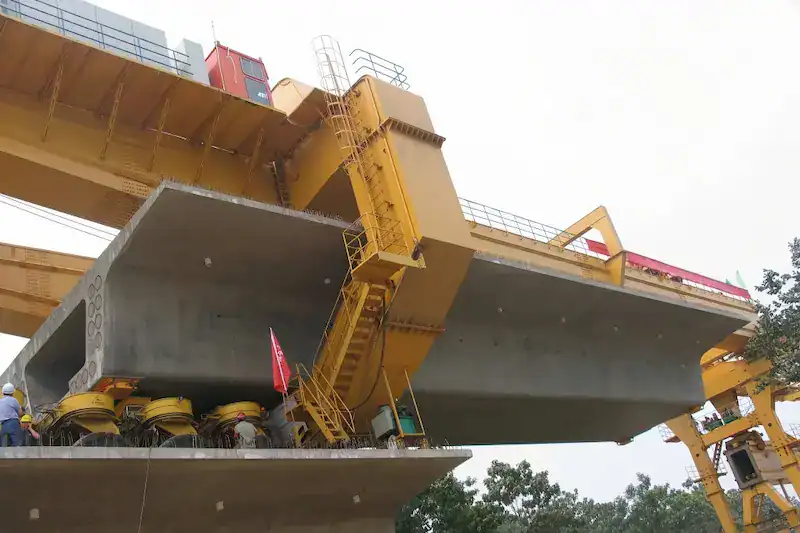
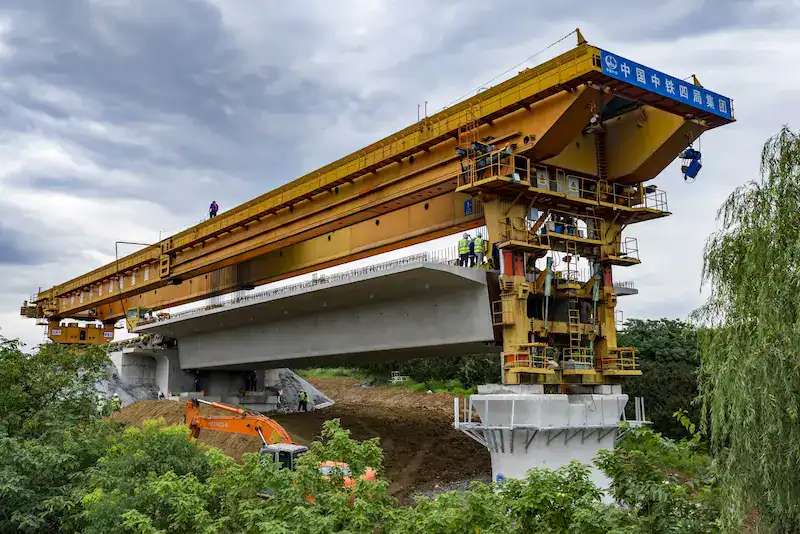
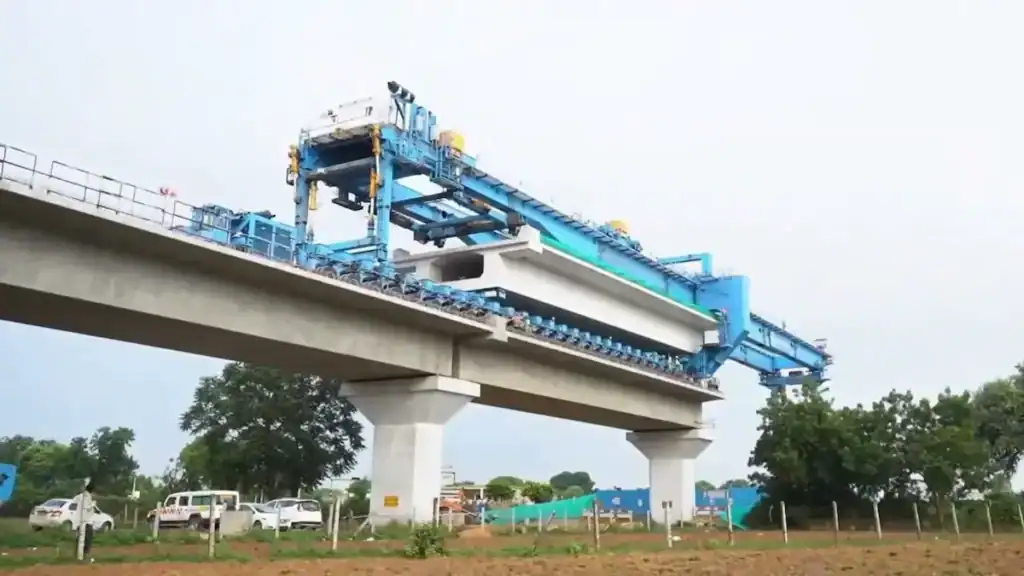
Unlike the delicate segmental method, full-span launching focuses on raw power. This method casts huge box girders directly in the yard. They can weigh hundreds or even thousands of tons. Massive equipment transports and lifts them in one go. It is the absolute main method in Chinese high-speed rail construction.
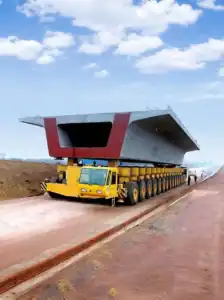
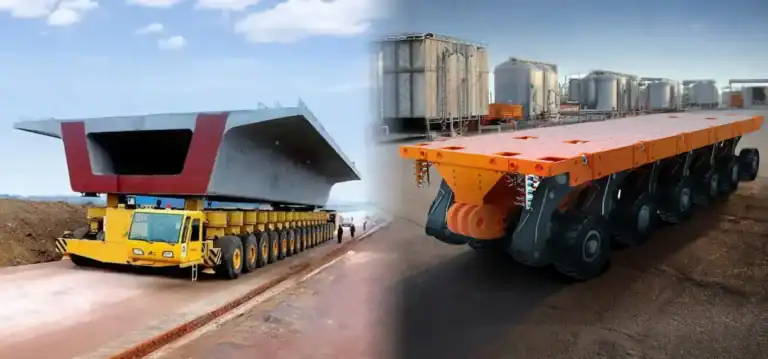
- Girder Transport: This is the biggest difficulty of this method. Giant tire-type transporters with hundreds of wheels are required. They carry massive girders and drive slowly to the bridge launching gantry.
- Lifting Process:
- Girder Feeding: The transporter sends the box girder into the bridge launching gantry. This is usually done through rear feeding.
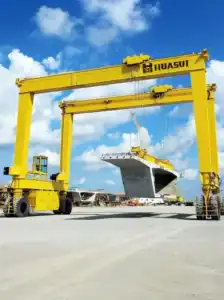
- Dual Lifting: Front and rear hoists of the bridge launching gantry lift the girder. The girder transporter then safely exits the area.
- Moving and Lowering: The bridge launching gantry finely adjusts the girder position. It accurately lands the girder on the pier bearings.
- Relocation Prep: After landing, the bridge launching gantry retracts its legs. It then moves forward to the next bridge pier.
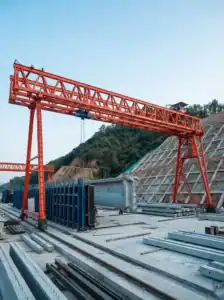
- Construction Features: It features high efficiency and controllable quality. Standardized precast production means no joints and better overall strength. But this method is a heavy asset game. You must invest heavily in large casting yards. You also need huge transporters and a massive bridge launching gantry.
- Suitable Bridge Types: It suits high-speed railways with flat terrain and standard spans. It is also ideal for sea-crossing approaches and long highway viaducts.
Comprehensive Comparison: Segmental Launching VS Full-Span Launching
We compared core indicators of both methods for managers. Check your project resources against this table.
| Comparison Item | Segmental Launching | Full-Span Launching |
| Efficiency | Medium. Many steps. One span takes days. | Very high. High automation. 1-2 spans daily. |
| Initial Investment | Low. Light weights and light bridge launching gantry. Smaller yards. | Very high. Needs heavy bridge launching gantry, transporters, and expensive yards. |
| Construction Cost | High labor and time costs. Needs skilled workers. | Low cost under scale. Great for continuous work. |
| Transport Requirements | Flexible. Small segments fit normal roads and curves. | Strict. Massive components need wide roads and huge radii. |
| Site Requirements | Adaptable. Works over crowded cities or rugged mountains. | High. Needs flat, open yards near the site. |
| Construction Accuracy | Challenging. Requires millimeter-level matching and tension control. | Simple. Prefabricated as a whole. Only placement accuracy matters. |
| Gantry Configuration | Focuses on multi-point synchronous control and 3D precision positioning. | Focuses on load capacity, wind resistance, and structural rigidity. |
| Applicable Span | Flexible. Adapts to varied spans (30m-80m) and variable cross-sections. | Standardized. Used for standard spans like 24m, 32m, 40m. |
| Safety | High-risk aerial work. Focus on fall prevention and tension safety. | Heavy lifting hazards. Monitor bridge launching gantry and transporter stability. |
| Suitable Bridge Types | Urban rail, variable viaducts, mountain curves, overpasses. | High-speed rail, long straight viaducts, sea approaches. |
Engineer’s Advice: Consider project scale first. Small projects face high equipment depreciation losses. For long high-speed rail, saved time brings huge profits.
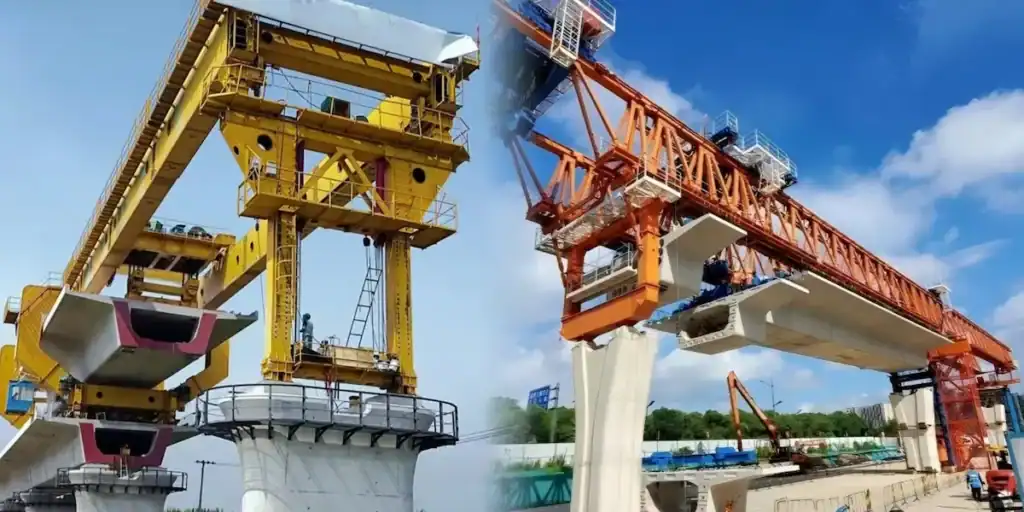
Which Bridge Projects Suit Each Method?
In real projects, no single method fits every scenario. See which path fits your project:
- Urban Rail Transit: Home field for segmental launching. Urban work avoids road closures. Small segments can be shipped at night using flatbed trucks. This barely disturbs daytime traffic. It also perfectly fits complex urban ramps and sharp curves.
- High-Speed Railway Bridges: Absolute territory for full-span launching. High-speed rail demands strict bridge settlement and overall strength control. Standardized precast box girders offer the most stable quality. For long sections over dozens of kilometers, this heavy production line maximizes construction speed.
- Highway Viaducts: Choose based on project scale. For standard main viaducts stretching dozens of kilometers in plains, full-span launching is more cost-effective. However, segmental launching is clearly more flexible for crossing existing highways, railways, or variable spans.
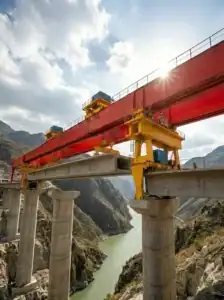
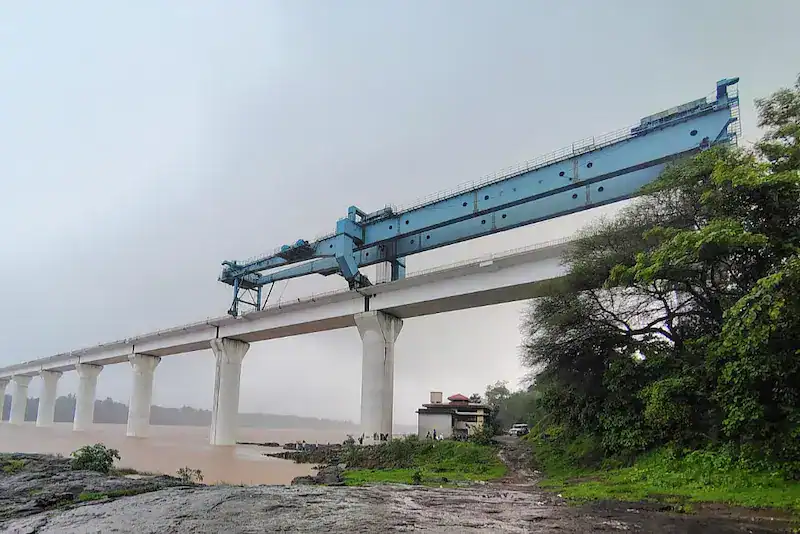
- Mountain Bridges: Often segmental launching is the only choice. Mountain terrain is rugged. Hundreds of tons of full-span transporters cannot enter the site. Breaking the bridge into pieces to transport uphill is best. Then the bridge launching gantry performs aerial assembly to beat terrain limits.
- Cross-River and Cross-Sea Bridges: Approach bridges mostly use full-span launching. Coastal or cross-river environments have strong winds and high humidity. Long-term aerial assembly poses high risks. Prefabricating thousand-ton girders at rear bases is better. Then large equipment places them in one go for safety and efficiency.
What are the Different Requirements for the Bridge Launching Gantry?
Different methods directly decide different equipment genes. Procurement teams must understand the core selling points of each bridge launching gantry type.
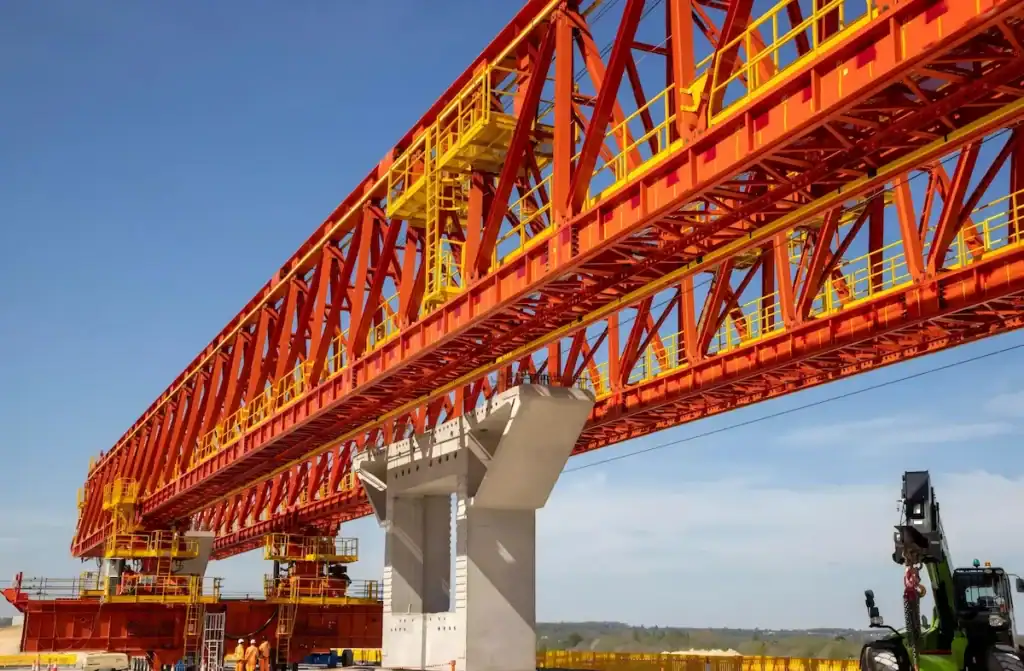
Segmental Bridge Launching Gantry Features
This equipment does not carry hundreds of tons of dead weight. Instead, it performs delicate, precise assembly work.
- Lifting Mechanism: It must grab, flip, and move individual segments within small ranges. Therefore, it usually has two or more independent lifting trolleys for flexible actions.
- Precision Positioning: This is the core technology. After applying epoxy resin, segment matching accuracy must reach the millimeter level. The bridge launching gantry must offer 3D fine-tuning and 6D rotation functions.
- Multi-Point Synchronous Control: When a dozen segments hang on the main beam together, the control system must act. It ensures balanced force on multiple winches. This prevents guide beam twisting deformations and safety accidents.
- Modular Design: To facilitate transfers in narrow mountains or crowded cities, the equipment is modular. Main beams and legs connect via pins for easy truck transport and fast assembly.
Full-Span Bridge Launching Gantry Features
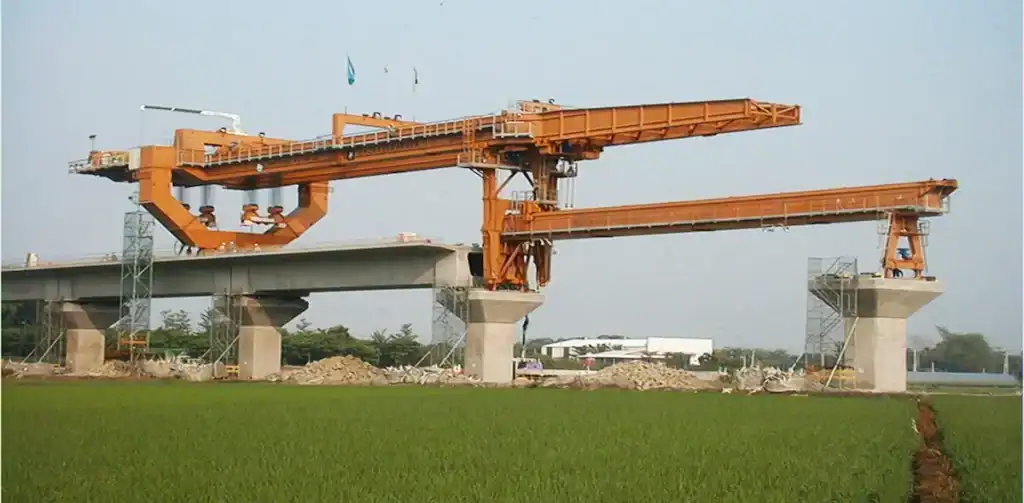
This equipment is a true steel beast. Its core goal is moving massive weight safely.
- Massive Load Capacity: Lifting capacity often exceeds 500 to 1000 tons. This demands extreme rigidity for the bridge launching gantry main beam. It also requires heavy-duty pressure resistance for hydraulic systems and high safety factors for wire ropes.
- Long-Span Structure: To erect high-speed rail box girders over 32 or 40 meters, the equipment needs a large cantilever length. The bridge launching gantry must strongly resist downward deflection during relocation.
- High Stability: Carrying heavy loads across high piers creates a high center of gravity. Thus, the equipment must have anti-tipping devices, high-strength cylinder legs, and excellent wind resistance. This ensures it stays stable even when top-heavy.
- Fast Erection Capability: To match assembly-line work, feeding, dual-trolley synchronous lifting, and longitudinal lowering must be seamless. This minimizes the bridge launching gantry idle time on the bridge deck.
Not Sure Which Erection Method Suits Your Project?
Theory is one thing, but real construction sites have many variables.
HSBRIDGE has rich design experience in bridge construction equipment. We do more than sell equipment. We provide workable engineering plans. Whether you face extreme transport, tight schedules, or complex bridges, we can help. We will evaluate and recommend more economic, efficient bridge launching gantry solutions.
[Click here to fill in your initial project parameters (such as bridge type, max span, girder weight)]. The HSBRIDGE engineering team will provide exclusive equipment configuration advice and initial quotes within 24 hours.
How to Select the Right Bridge Launching Gantry Based on Project Conditions?
Selecting equipment is essentially calculating comprehensive economic costs. We often tell clients not to just look at paper quotes. You must evaluate the equipment in the specific construction environment. Therefore, we created a selection decision table. Project managers can directly match their situations here:
| Core Decision Factor | Segmental Bridge Launching Gantry | Full-Span Bridge Launching Gantry |
| Bridge Span | Variable spans, or includes unconventional spans (like 45m, 60m, variable cross-section). | Highly standardized spans (like uniform 32m or 40m standard spans). |
| Girder Weight | Single segment weight is light (usually within 50t-200t). | Total girder weight is huge (usually 500t-1200t or higher). |
| Construction Site | Extremely limited sites, like dense urban areas or places lacking yards. | Enough land to build large, flat casting and storage yards. |
| Construction Schedule | Relaxed schedule, or fewer total spans, not seeking extreme speed. | Fixed tight deadlines, needing assembly-line erection of 1-2 spans daily. |
| Budget Considerations | Small overall project volume cannot dilute heavy equipment and infra costs. | Huge projects have scale effects that greatly dilute single span costs. |
| Transport Conditions | Narrow roads with poor capacity only allow standard trailer transport. | Can build dedicated heavy-duty roads for giant multi-wheel transporters. |
HSBRIDGE Bridge Launching Gantry Product Advantages
In the heavy bridge equipment field, the fault tolerance is almost zero. HSBRIDGE‘s confidence does not just stay on blueprints. It comes from combat experience across hundreds of global sites and strict standards.
- Rich Bridge Equipment Product Line: We range from 40t segmental equipment to 1200t high-speed rail full-span bridge launching gantries. From straddle carriers to heavy transporters, we provide complete turnkey deliveries. This stops projects from arguing back and forth between suppliers.
- Highly Reliable Structural Design: Main beams use lightweight high-strength steel design. This reduces dead weight and lowers extra pier loads. It also leaves ample safety redundancy for wind and torsional rigidity.
- Intelligent Control System: Say goodbye to relying solely on a master’s feel. Standard PLC control ensures high-precision synchronous lifting for multiple winches. Errors are kept at the millimeter level. Visual screens integrate wind monitoring, load limits, and real-time deflection alarms.
- Strict Adherence to International Standards: Our equipment is not made blindly. We strictly benchmark against top European and American engineering codes. This ensures smooth entry into the international market:
- FEM 1.001 (3rd Edition): European crane mechanical design code. We strictly execute Clause 3 and Clause 8 for fatigue calculations. This ensures ultra-long lifespan under high-frequency full-load operations.
- EN 13001-1 / EN 13001-2: European crane general design safety standards. Our electrical safety and wind load designs fully meet its strict terms.
- ISO 9001:2015: Full-process quality management system certification. All core welds undergo 100% non-destructive testing (NDT).
- Global Project Delivery Network: From humid Southeast Asian rainforests to dusty Middle Eastern environments. Our engineers provide turnkey services. This covers equipment supervision, customs, transport, assembly, and operation training.
HSBRIDGE Classic Bridge Construction Cases
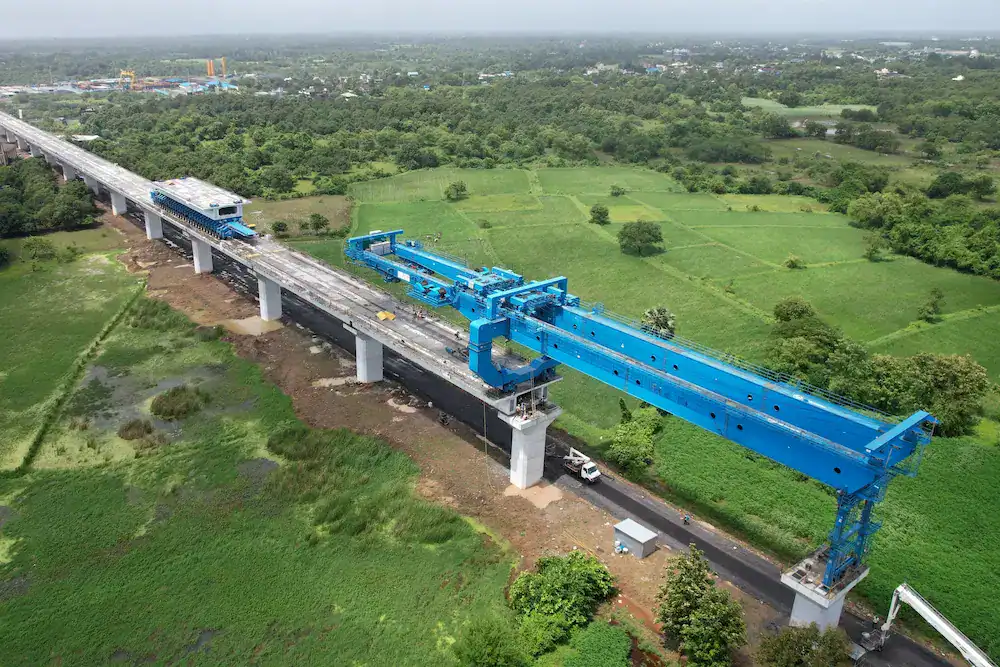
Case 1: High-Speed Rail Full-Span Launching Project
- Project Overview: A landmark Southeast Asian high-speed rail project. Bridges exceed 60%, with a 350km/h design speed. It needs 845 spans of 32m standard double-track box girders.
- Equipment Config: 900t full-span bridge launching gantry (1 unit). 900t tire transporter (1 unit) + 900t straddle carrier (2 units).
- Construction Difficulties: Extremely compressed schedule. Tropical rainforest climates cause frequent thunderstorms and short working hours. Some sections face massive bridge launching challenges on 20‰ slopes.
- Project Results: The HSBRIDGE bridge launching gantry has strong climbing and wind resistance. It set a section record of 52 spans in one month. This helped the project team finish 25 days ahead of schedule.
- Client Review: “HSBRIDGE equipment performs very stably during large slope operations. The braking and fine-tuning systems are excellent. After-sales engineers practically lived on-site with us. They ensured the smooth progress of this main line.” — Project Equipment & Material Dept. Manager
Case 2: Mountain Highway Segmental Assembly Project
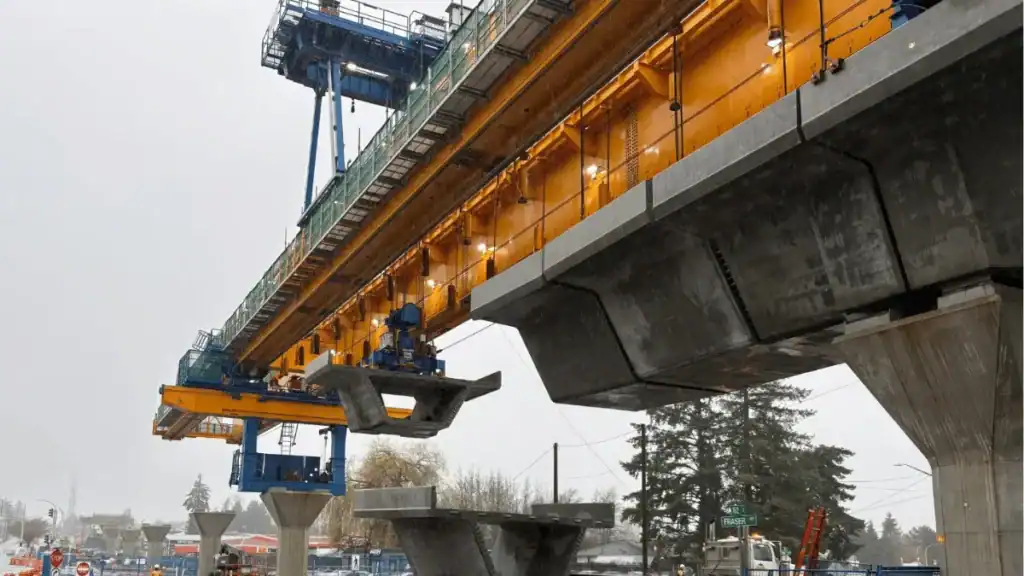
- Project Background: An expressway crossing high mountains and deep valleys. The bridge deck reaches 65m above the valley floor. Max span is 60m. It needs to assemble 2,100 precast concrete segments.
- Construction Challenges: Rugged mountain roads block large equipment entry. The bridge alignment is complex with small radius curves and steep slopes. This requires extremely high 3D matching accuracy for segment splicing.
- HSBRIDGE Solutions: We customized a 150t overhead segmental bridge launching gantry. The equipment uses modular pin connections. Standard trucks deliver it in batches for mountain assembly. The lifting trolley features a 6D posture fine-tuning system.
- Efficiency Boost: Compared to traditional scaffolding, it saved over 40% in temporary steel costs. It also compressed the single span assembly time to 5-7 days.
- Project Results: It achieved “zero-error” aerial closure under complex alignments. The excellent multi-point synchronous lifting capacity ensured zero high-altitude accidents.
Conclusion
An old engineering saying goes: there is no perfect method, only the most suitable plan for the site. Segmental launching offers precision and flexibility. Full-span launching pursues extreme efficiency and heavy loads. Each method has distinct traits and its own best field.
Contractors must fully review their resources before bringing in equipment. Check bridge types, span changes, transport routes, strict deadlines, and total budget. This is the only way to make the right choice. Choosing the right bridge launching gantry boosts project progress. It controls hidden costs and protects project quality and safety. You need an equipment supplier who understands both technology and construction sites.
Get Your Exclusive Bridge Construction Solution
Your next project might be a high-speed railway crossing large rivers. It might be urban rail in crowded downtowns or rugged mountain highway viaducts. HSBRIDGE provides professional bridge launching gantry solutions from design blueprints to on-site delivery.
[Click here to contact HSBRIDGE technical experts]. Submit your bridge drawings or parameters to get free customized selection plans and quotation lists.
Next Reading: You Decided to Use a Bridge Launching Gantry, What Next?
A bridge launching gantry boosts efficiency compared to traditional methods limited by terrain. But you need precise process matching for complex site conditions. Should you choose segmental launching or full-span launching?
Click for deep comparison: 《Bridge Launching Gantry vs Traditional Bridge Erection Methods: Which Construction Method Is More Efficient?》. It helps spend your budget wisely.
FAQ
Q: Which construction method saves more money in total cost?
A: Consider project scale first. Small projects face lower initial equipment and yard costs with segmental launching. But for long high-speed rail lines, full-span launching reduces single span costs significantly. This makes it more economical.
Q: Can the HSBRIDGE full-span bridge launching gantry adapt to changing bridge spans?
A: Yes. Our heavy bridge launching gantry design includes flexibility. For example, a 32m model can handle 24m spans. Adjusting local structures adapts the equipment to span changes. Our engineers will calculate precise modification plans.
Q: How far in advance should we plan when ordering a customized bridge launching gantry?
A: Delivery takes 3 to 6 months. This covers tech finalization, design, manufacturing, and shipping. It depends on tonnage and complexity. Setting up and testing takes time. We suggest contacting suppliers early in the project.
Q: Do you provide on-site installation guidance and operation training besides equipment delivery?
A: Absolutely. Heavy bridge launching gantry value lies in safe operation. HSBRIDGE provides global turnkey services. Our experienced engineers will stay on-site. They handle assembly, debugging, and span-crossing tests. They also train your team until the first span is erected.
This document is for reference only. Specific operations must strictly comply with local laws and regulations and equipment manuals.

Get Expert Advice for Your Bridge Project
Our engineering team brings decades of experience in bridge construction equipment. Let us help you find the right solution.