 EN_US
EN_US  Español
  Русский
  العربية
  Português do Brasil
  Français
  Bahasa Indonesia
  Türkçe
  Tiếng Việt
  Bahasa Melayu
  Українська



CE
ISO 9001
SGS
10-Year Structural Warranty
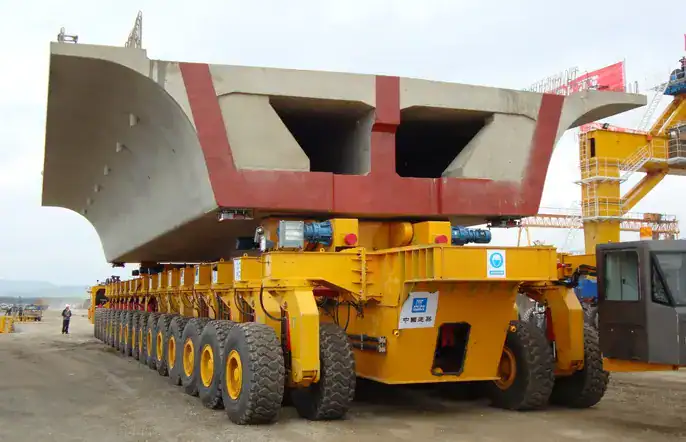
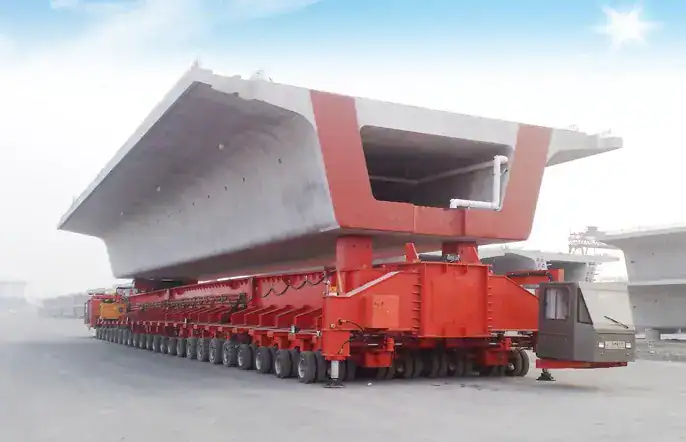
Box Girder Transporter
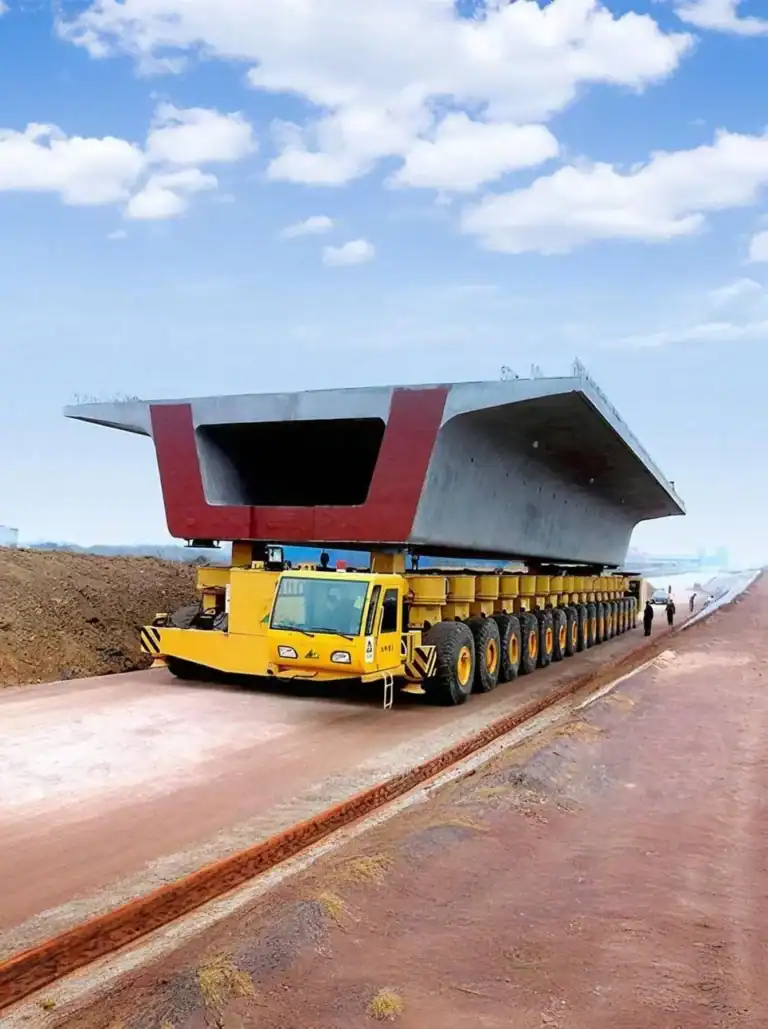
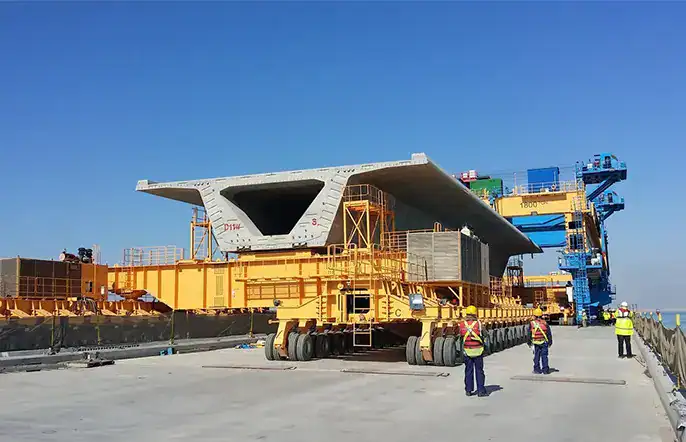
A heavy-duty mega-transporter exclusively engineered for the ultra-stable movement and precise feeding of massive 450t to 1000t precast box girders in high-speed railway projects.
450t - 1,000t
Capacity
64 - 128+
Tires
Tail-Direct
Feeding
Auto Hydraulic
Leveling
Fast global delivery · 24/7 engineering support · CE & ISO certified
What is a Box Girder Transporter?
A box girder transporter functions as a heavy-duty multi-axle industrial vehicle engineered for high-speed railway logistics. Infrastructure contractors utilize this specialized machinery to transport massive precast concrete box girders from casting yards directly to bridge launching gantries safely. It guarantees exceptional mobility across rugged terrain.
Equipment Overview
A box girder transporter accelerates massive highway viaduct construction logistics significantly. Engineers utilize this heavy precast concrete carrier to move massive bridge segments. Operators drive the high-capacity girder transport vehicle safely across rugged fabrication yard terrain. The massive box girder trailer navigates steep longitudinal access ramps with continuous traction. Your logistics team handles 900-ton concrete structures efficiently using this advanced transport vehicle. We manufacture the precast box beam transporter to ensure absolute structural stability continuously. Contractors maximize daily production rates reliably relying on our specialized bridge transport machinery globally.
Technical Specifications
| Parameter | Engineering Specification |
|---|---|
| Rated Payload Capacity | 450t – 1000t |
| Applicable Girder Length | 24m, 32m, 40m (Standard High-Speed Rail Spans) |
| Travel Speed (Unloaded) | 0 – 12 km/h |
| Travel Speed (Full Load) | 0 – 5 km/h |
| Maximum Longitudinal Gradient | Up to 5% (Under Full Load) |
| Axle Configuration | 32 to 64 Independent Axle Lines |
| Suspension Lifting Stroke | ± 300 mm (Active Hydraulic Compensation) |
| Steering Geometry | All-Wheel Hydraulic Steering (Ackermann Principle) |
| Primary Power Generation | Dual Cummins / Weichai Heavy-Duty Diesel Engines |
| Braking System | Dual-Line Pneumatic Drum Brakes with Engine Retarder |
Application Scenarios
Expansive Casting Yards
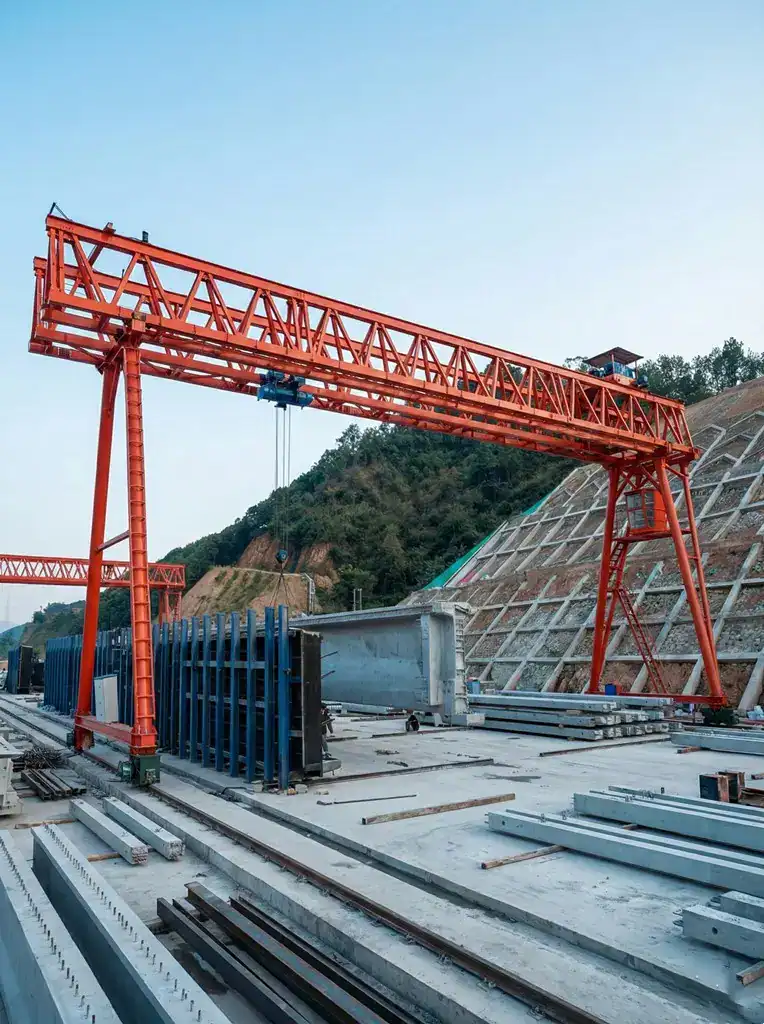
Workers transport massive freshly cured box girders from pouring stations directly to heavy storage pedestals efficiently.
High-Speed Railway Viaducts
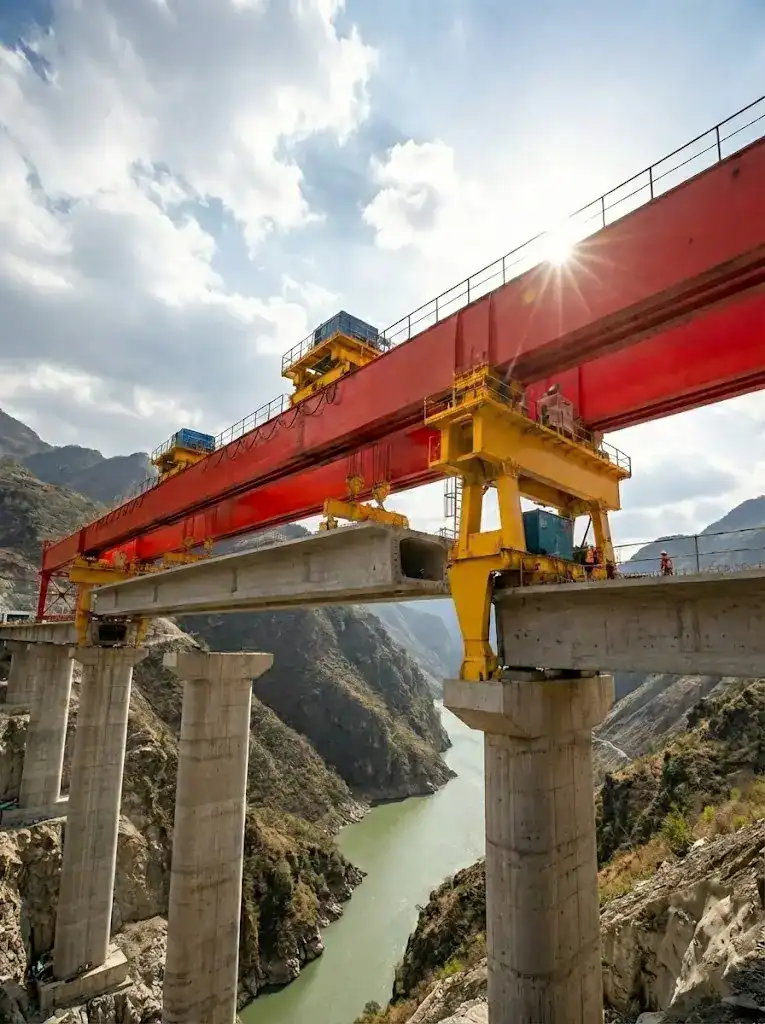
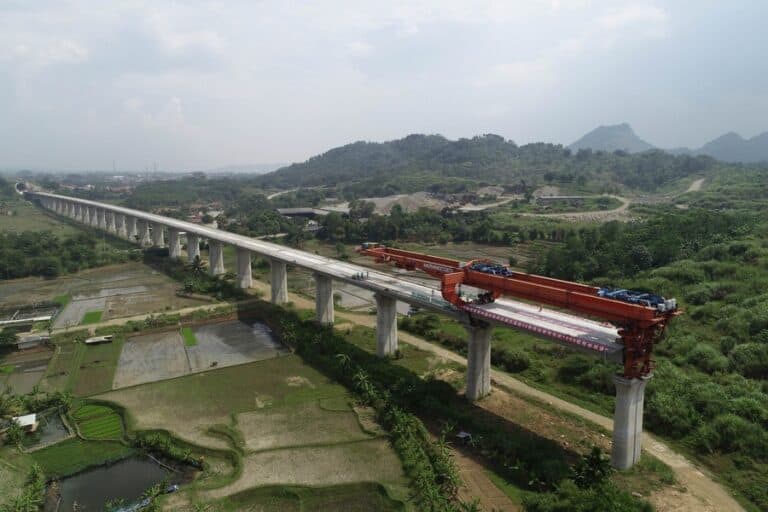
Logistics crews feed heavy concrete segments continuously to launching gantries along active elevated rail alignments.

Bridge Deck Replacement
Operators move colossal precast structures safely between temporary staging areas and final pier placement zones.
Why Engineers Choose This Equipment
Feature
Engineering Benefit
Omnidirectional Steering Maneuverability
Independent hydraulic wheel bogies execute complex transverse movements seamlessly. Operators navigate tight casting yards effortlessly.
Active Hydraulic Suspension
The box girder transporter distributes massive payloads evenly. This prevents severe ground subsidence during heavy transport operations.
Synchronous Multi-Vehicle Operation
Intelligent PLC networks synchronize dual tractor units flawlessly. You transport massive 32-meter box girders perfectly.
Integrated Braking Redundancy
Dual-circuit pneumatic braking systems secure the heavy precast concrete carrier instantly during emergency downhill stops.
High-Gradient Traction Control
Powerful diesel engines drive multi-axle mechanical transmissions directly. The precast box beam transporter climbs steep access ramps smoothly.
Real-Time Dynamic Monitoring
Wireless sensors track structural mechanical stresses continuously. The central controller alerts operators immediately during sudden overloads.
Frequently Asked Questions
How does the suspension system protect fragile concrete box girders from torsional stress?
Active hydraulic cylinders provide a continuous 300mm vertical compensation stroke. This system absorbs severe mechanical shocks instantly across uneven terrain. It prevents destructive torsional stress accumulation within the precast structure.
What synchronized control mechanisms manage the independent transport units for 32-meter segments?
The central PLC network communicates via secure wireless telemetry. It synchronizes engine throttle, steering angles, and braking pressure instantaneously. This prevents dangerous structural twisting on massive box girders completely.
How do operators negotiate sharp horizontal curves on temporary construction access roads?
All independent wheel bogies feature heavy-duty hydraulic steering cylinders. Operators execute crab steering and tight cornering maneuvers accurately. This navigates restrictive temporary access road geometries flawlessly.
What redundant braking protocols secure 900-ton payloads during steep viaduct descents?
The powertrain incorporates engine exhaust braking and hydraulic retarders. Dual-circuit pneumatic drum brakes engage automatically across all wheel groups instantaneously upon detecting excessive downhill acceleration velocities.
How does the equipment distribute heavy ground bearing pressure to protect temporary access roads?
Engineers configure up to 64 independent axle lines featuring heavy-duty pneumatic tires. This massive multi-wheel footprint distributes the 900-ton payload effectively. It minimizes ground bearing pressure below 0.6 MPa.
What is the typical lead time for delivery?
Standard lead time is 30-45 days depending on configuration and current production schedule. We provide a firm delivery date with every quotation.
Do you provide installation and commissioning support?
Yes. Our engineering team can travel to your project site to supervise installation, provide training for your crew, and commission the equipment. Remote video support is also available.
What warranty do you offer?
All our structural equipment comes with a 10-year structural warranty and 2-year comprehensive warranty covering manufacturing defects. Extended warranty options are available.
What shipping methods are available?
We ship worldwide via container (FCL/LCL), flat rack for oversized components, or RO-RO for self-propelled equipment. FOB, CIF, and DAP terms are available.
Do you offer custom engineering solutions?
Absolutely. Our engineering team works with your project specifications to customize span length, lifting capacity, and control systems to meet your exact bridge construction requirements.
Didn't find your answer? Contact our engineers →


Get a Quote Within 24 Hours
Fill out the form below and our engineering team will respond with a detailed quotation.
Related Equipment
Multi-Axle Beam Transporter
A premium transport solution featuring hydraulic suspension and all-wheel steering, guaranteeing zero-stress beam transportation over uneven terrain and complex site layouts.
View Details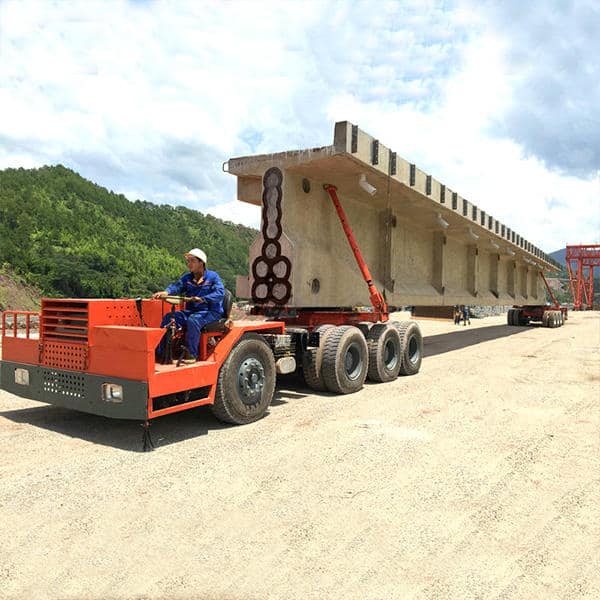
Articulated Beam Transporter
An agile, split-type transport system utilizing the precast beam as the connecting chassis, perfectly engineered for navigating sharp curves and narrow mountain roads.
View Details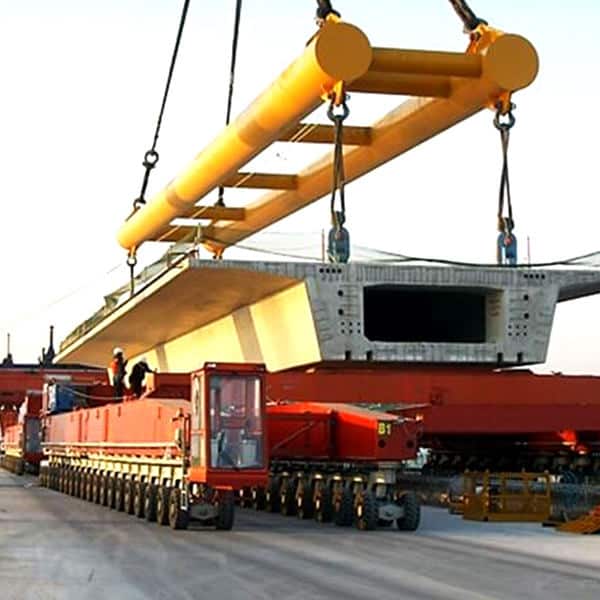
Highway Beam Transporter
A robust and cost-effective transport solution designed for the safe and efficient hauling of precast concrete T-beams and I-beams across standard highway and bridge construction sites.
View Details Scan to chat